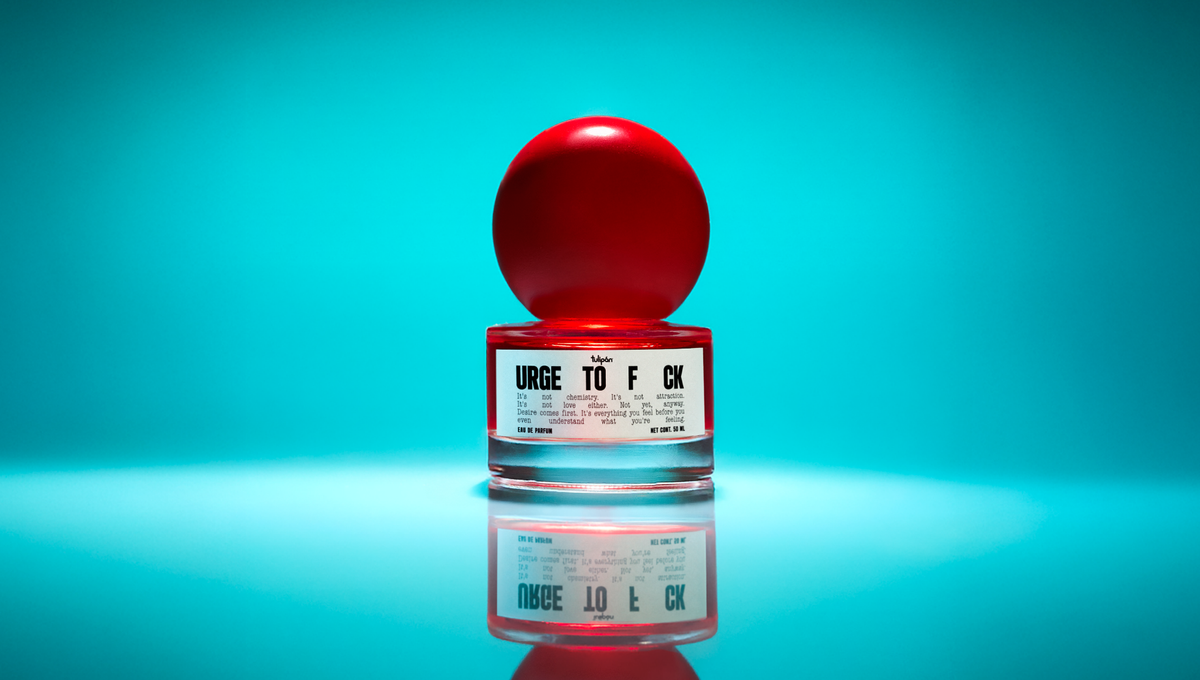
In late September 2026, around Argentina's Students' Day (September 21, the start of the southern spring and the brand's busiest date), Tulipán wiped its Instagram account. Little Black Book reports that the brand holds about 40% of Argentina's condom market. It replaced its bio with "we don't know what else to do to get you to have sex" and issued a public apology to young Argentines. Then it launched its first fragrance, "Ganas de Coger" ("The Urge to F***"). Buenos Aires independent agency Zurda created the campaign, which runs across social, out-of-home, streaming and TV, with a mock documentary produced by Mamá Húngara. Muse by Clios covered the campaign on October 2. The perfume is a limited edition sold through all of Tulipán's channels.
Why It Matters
Condoms are the first product category whose core demand depends directly on how much sex people have, and a market leader is now saying publicly that this demand is shrinking. That fits what we've tracked all season: Kinsey/Playboy's Gen Z data on desire without dates, Singles in America finding half of US singles went on zero dates, and PrEP and long-acting contraception reducing condom use for STI and pregnancy prevention. For condom makers, the old growth story (convince people to use protection) has run out. The new one is to sell the reason to have sex at all. Expect more brands to follow Tulipán into adjacent "desire" categories such as fragrance, couples' games, lubricants and arousal products, and to market connection rather than protection. The pleasure-device makers already sell desire. The more interesting question is whether condom and contraception companies start competing with them for that budget, and whether an older 45–55 customer base becomes the growth segment.The joke rests on Tulipán's own Argentine study of desire, satisfaction, frequency and the economics of sex. LBB reports the brand found that only four in ten Argentines had sex in the past month, while more than half want a more active sex life than they have. The study also found the "golden age" of sex is not among the young but among people aged 45 to 55. "We have spent nearly 40 years telling Argentines to use protection. It did not occur to us that the problem would one day be getting them to need it," CEO Victoria Kopelowicz said. Zurda co-founder and CCO Diego Gueler Montero told Muse that the brand isn't claiming the scent is an aphrodisiac or "going to solve the sex recession," only that it is "an excuse to approach someone, get off the screen and start a conversation."
The campaign also cites US General Social Survey data analyzed by the Institute for Family Studies: the share of Americans aged 18 to 29 reporting no sex in the past year roughly doubled between 2010 and 2024, from about 12% to about 24%, and weekly sex among adults aged 18 to 64 fell from about 55% in 1990 to about 37% in 2024. Similar declines have been reported in Japan, the UK, Germany and Australia.
Sources
- Condom Brand Tulipán Unveils Perfume for a Generation That Isn't Having Sex — Little Black Book
- Argentinian Condom Brand Addresses the Lack of Sex Among Young People — Muse by Clios
Update — 2026-10-03
Initial entry — story first created.