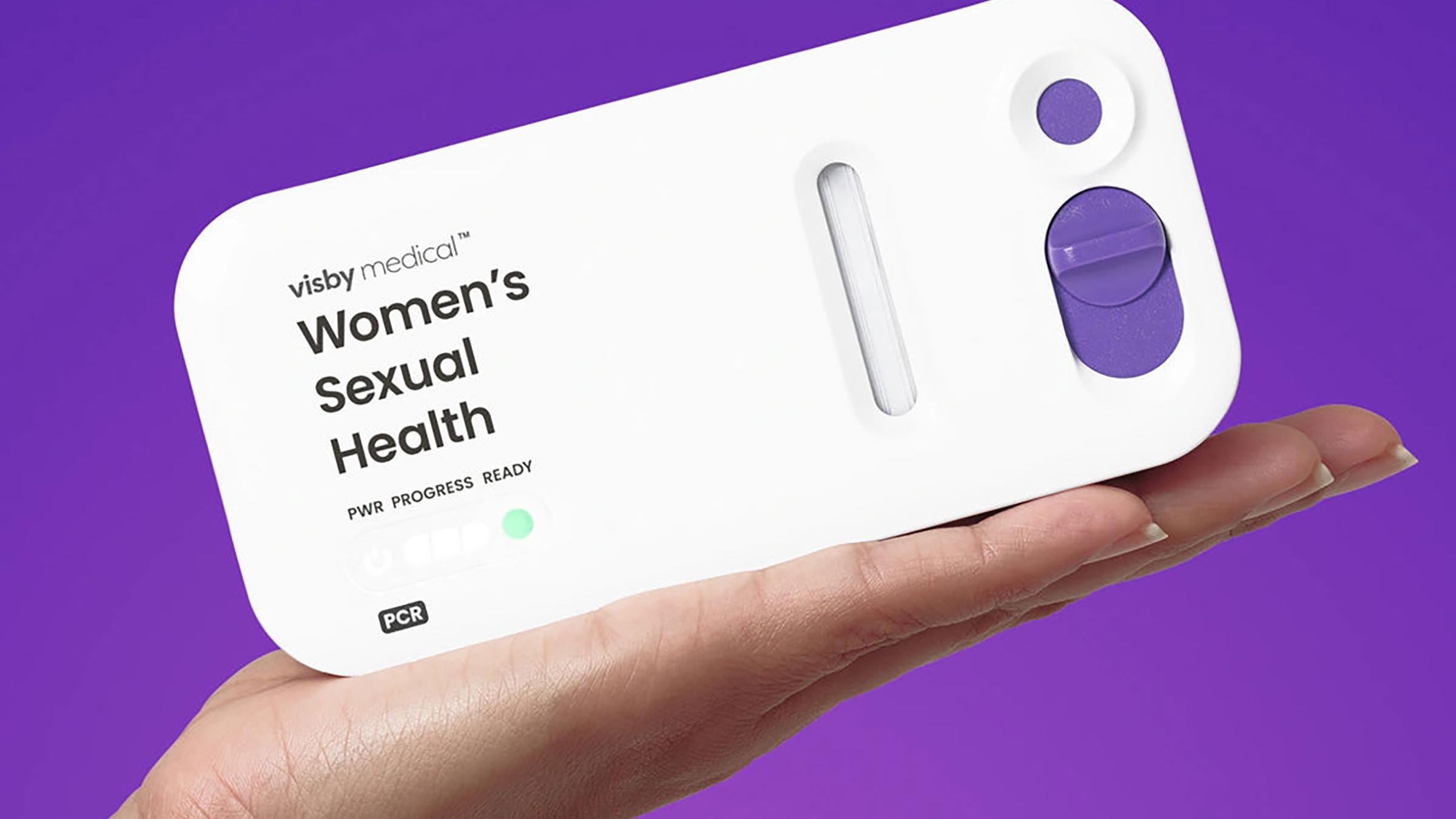
On October 15, 2026, TIME published its Best Inventions of 2026, a list of 300 products, plus 100 special mentions, selected from editor nominations and paid applications and judged on originality, efficacy, ambition and impact. This year it includes at least three intimate- and reproductive-health products. Visby Medical's Rapid PCR At-Home Women's STI Test detects chlamydia, gonorrhea and trichomoniasis from a vaginal swab in about 30 minutes without mailing a sample to a lab. Peri, a Dublin company, makes the first wearable built specifically for perimenopause; Afterglow covered its April launch, when the company appeared under the name IdentifyHer. Inertia Prism Pads are plastic-free menstrual pads developed by four KAIST scientists around a plant-based cellulose absorbent called Labocell.
Why It Matters
A list like this is marketing, and TIME's process includes a paid application route (entry fees run $575–$925 per category). It is still a useful signal of which **sexual- and reproductive-health products have reached general-interest credibility**. Visby is the one that matters most commercially. Point-of-care PCR in a consumer's hands, sold through DoorDash and the two largest US lab networks and connected straight to a prescription, closes the gap between "I'm worried" and "I'm treated" that mail-in kits from Everlywell, myLAB Box and Nurx have never closed. A male-STI version would put Visby up against the PrEP-and-testing bundles from Grindr, MISTR and the telehealth majors. Peri's selection, a week after Lovehoney took menopause into Boots and the same day ACOG strengthened its hormone-therapy recommendations, confirms that **perimenopause measurement** is now treated as a real category. Afterglow first covered Peri at its April launch at $449 with no subscription. The open question remains whether a dataset of 204 trial participants can support the clinical claims a $449 device will need to win payer coverage.TIME's Visby entry describes an FDA-authorized, single-use, disposable mini-PCR device launched in 2025 and paired with a telemedicine app, built with Google Cloud's Health + AI and Optum Now, that can get a user a prescription "in under two hours" if needed. Visby has since partnered with Everlywell, DoorDash, Quest Diagnostics and Labcorp to sell the test. TIME says the company plans versions for male STIs, respiratory illness and UTIs.
Peri's announcement describes a lightweight sensor worn under the breast. The company argues the placement matters because hot flashes and night sweats start in the upper body, and their signals fade toward the limbs, where rings and wristbands sit. Peri says its algorithms were developed in-house and trained only on continuous data from 204 women in perimenopause trials. It is working with universities on midlife-to-long-term-health research. "For too long, women have gone through perimenopause flying blind," CEO Heidi Davis said.
Sources
- Visby Rapid PCR At-Home Women's STI Test: The Best Inventions of 2026 — TIME (Oct 15, 2026)
- Peri Named to TIME's List of the Best Inventions of 2026 — Peri via PR Newswire (Oct 15, 2026)
- The Best Inventions of 2026 — TIME
- 15 Of TIME's Best Inventions Of 2026 That Could Change The World For Better (Inertia Prism Pads) — The Ethicalist
Update — 2026-10-16
Initial entry — story first created.