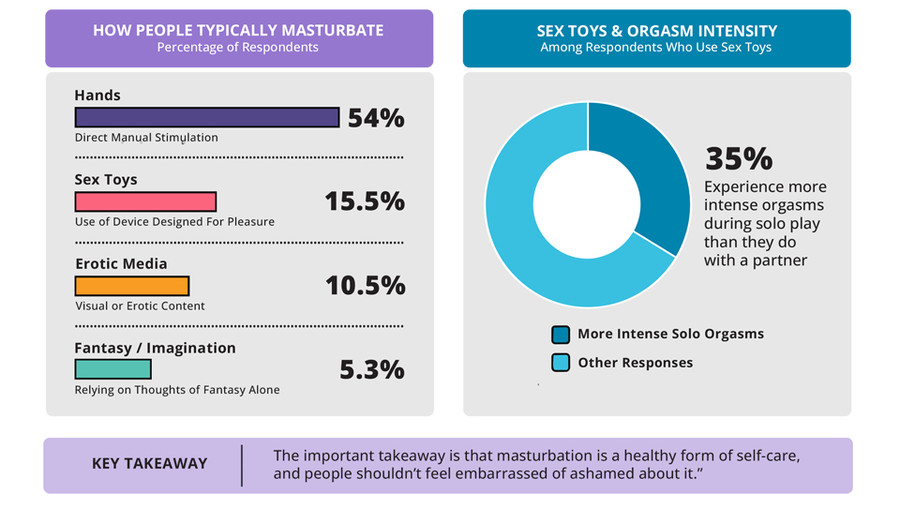
On July 27, 2026, Adam & Eve released the results of a survey of more than 2,000 American adults on how they prefer to masturbate, timed to National Orgasm Day (July 31). The headline number is a reality check for an industry that sometimes talks as though the vibrator has already won: 54% of respondents said they typically use their hands, while just 15.5% reported using sex toys. Another 10.5% said they rely on erotic media, and 5.3% on fantasy or imagination alone.
Why It Matters
Strip away the holiday-marketing packaging and this is a market-penetration datapoint, and a sobering one. If only about 15% of American adults reach for a device during solo sex, the pleasure products industry's total addressable market is far from saturated — the competition isn't Lelo versus Satisfyer, it's devices versus hands. That reframes what growth spending should target: not feature escalation for existing users, but first-purchase conversion among the majority who have simply never bothered. Which makes the retail and pricing news of the past week rhyme neatly. So Divine's £14.99–£29.99 range landing in Boots pharmacies nationwide, Womanizer's sub-$60 Peach putting air-pulse tech at impulse-buy prices, We-Vibe and Adam & Eve running an experiential pop-up tour — these are all first-purchase conversion plays aimed squarely at the 54%. The satisfaction stat is the other half of the argument: once someone crosses over, a third of them report better orgasms than partnered sex, which is about as strong a retention thesis as a consumer category can have. The industry's real bottleneck is trial, not loyalty. Note also the 10.5% relying on erotic media — a reminder that content platforms and device makers are competing for the same solo-sex occasion, which is exactly the overlap teledildonics and content-synced hardware are built to exploit.The more commercially interesting finding is buried in the cross-tab. Among respondents who do use sex toys, nearly 35% said they experience more intense orgasms during solo play than with a partner — a satisfaction signal that speaks directly to why the category retains customers once it acquires them.
"There isn't one 'right' way to masturbate," said Dr. Jenni Skyler, PhD, LMFT, C-PST, Adam & Eve's resident sex therapist. "For some people, their hands provide everything they need. Others enjoy the additional stimulation of a vibrator or stimulator, or the use of erotic content. The important takeaway is that masturbation is a healthy form of self-care, and people shouldn't feel embarrassed or ashamed about it."
The methodology deserves the usual caveats: it's a web-based survey of 2,000+ U.S. adults 18+, conducted by an independent third-party survey firm but commissioned by a sexual wellness retailer with an obvious interest in the topic. Percentages also don't sum to 100, and self-reported sexual behavior is notoriously subject to social-desirability effects. Treat it as directional, not definitive.
Sources
- New Adam & Eve Survey Reveals How Americans Prefer To Masturbate — PR Newswire
- Adam & Eve Reveals Results of 'Masturbation' Survey — XBIZ
Update — 2026-07-28
Initial entry — story first created.