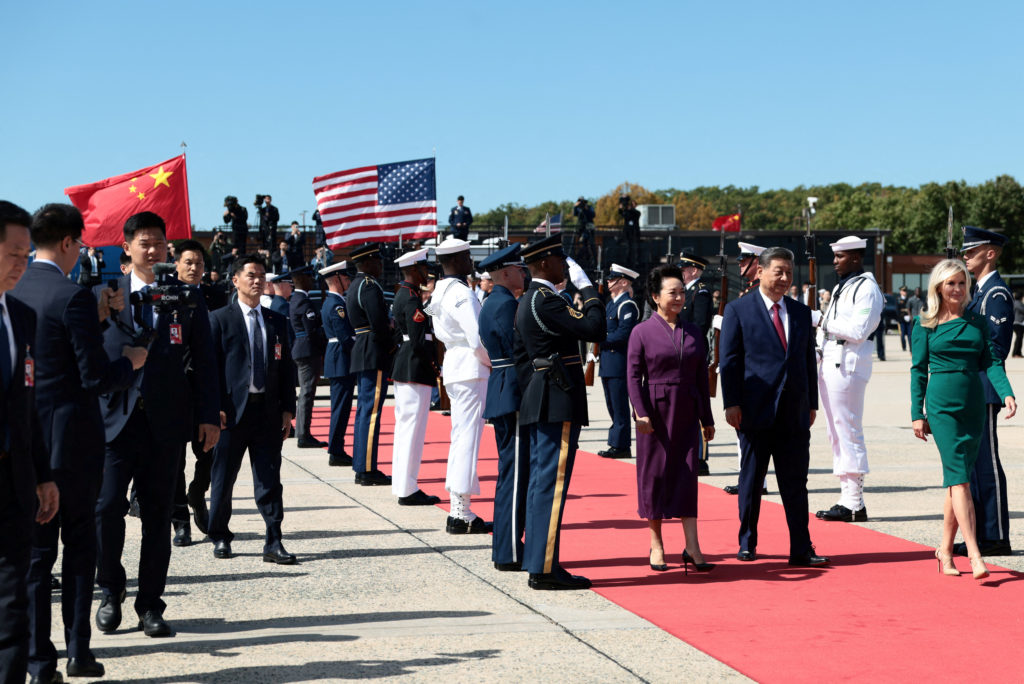
On September 27, 2026, the White House released the first product lists under the U.S.–China Board of Trade's "30-for-30" framework, according to trade-law firm Thompson Hine. Each side is recommending reduced tariffs on roughly $30 billion of the other's goods. The U.S. import list covers 77 Harmonized Tariff Schedule (HTS) lines of Chinese products. China's list covers 1,619 lines of U.S. goods. AP described the U.S. side as fireworks, tableware, "toys like dolls and puzzles," Christmas ornaments and soccer balls, and U.S. Trade Representative Jamieson Greer said the lists focused on "nonsensitive goods on each side."
Why It Matters
Almost the entire global pleasure-device supply chain runs through Shenzhen. Since the April tariff spike, U.S. brands from Dame to Vibratex have passed surcharges to customers or absorbed margin. The first concrete U.S.–China tariff relief explicitly reaches into household goods and toys and still leaves this category where it was going into Q4, the industry's biggest selling season. That is a pricing disadvantage against tariff-relieved consumer electronics and gift items competing for the same holiday budget. There is a strategic opening as well. The framework is designed to grow, and both governments are choosing "nonsensitive" goods. Heading 9019 massage apparatus, mostly back massagers and handheld wellness devices, is about as nonsensitive as a consumer import gets, and including it would carry vibrators with it without anyone saying the word. Trade associations and the wellness-device lobby have an obvious line item for the next round. Brands should check their own HTS classifications now, because which heading a product sits under decides whether it qualifies for any future relief.Afterglow read the published U.S. Import List line by line. Pleasure products are not on it. U.S. Customs has classified vibrators as massage apparatus under heading 9019. In a 2010 headquarters ruling (HQ H053896) it moved Church & Dwight's "Finger Vibrator" from the electrical-apparatus catch-all, 8543, into 9019.10.20, and no 9019 line appears on the list. Non-powered silicone and plastic products have been classified as "other articles of plastics" under 3926.90; a 2003 CBP ruling (J88031) put a Japanese "Male Masturbator" there. The only 3926.90 line on the list is 3926.90.35, beads and spangles. The broad toy heading (9503.00.00) is included, but it carries an explicit ex-out for "items enabled with radio frequency, Wi-Fi, Ethernet, or Bluetooth." So even in children's toys, the connected category is excluded. Electric shavers, hair-removal appliances and "electromechanical domestic appliances nesoi" made the cut. Personal massagers did not.
There are caveats on both sides. The list does not set rates. Thompson Hine notes the USTR will make the official announcement, that products already under Section 301 duties can still benefit if listed, and that the framework is "non-exhaustive" with room to expand, though modifications are unlikely more than once a year. Classification also depends on the product: CBP rulings are fact-specific, and a brand that classifies a device differently would get a different answer. The broader trade truce was extended last week to January, per AP.
Sources
- U.S. Import List (30-for-30) — The White House (PDF)
- U.S.-China Board of Trade "30-for-30" Identifies Products Recommended for Reduced Tariffs — Thompson Hine SmarTrade
- U.S. and China release product lists for tariff cuts after Trump-Xi meeting — PBS NewsHour (AP)
- HQ H053896: Classification of the "Finger Vibrator" — U.S. Customs and Border Protection CROSS
- NY J88031: Classification of the "Male Masturbator" from Japan — U.S. Customs and Border Protection CROSS
Update — 2026-10-01
Initial entry — story first created.