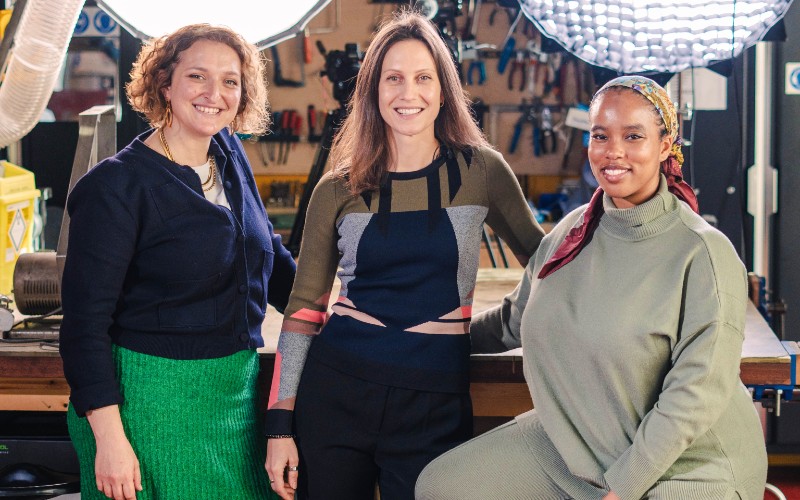
On October 16, 2026, London-based Unravel Health announced a £2.5 million (€2.96M) round. The company is building the Micro Lab, a palm-sized home device that reads several hormones from a saliva sample in minutes. Conduit EIS Impact Fund and Wrightwood led the round, with participation from Leo Capital, Embryo Ventures, Hermesa and returning investor Zinc VC, according to FemTech World, Femtech Insider and BusinessCloud. Femtech Insider says the company had already raised more than £1 million from Innovate UK and other investors.
Why It Matters
At-home hormone measurement is turning into a crowded lane, and this week shows the different technical approaches. **Lume Health** unveiled a cortisol-from-sweat wrist sensor at TechCrunch Disrupt on October 15, aiming for a 2027 launch. Business Insider reported on October 17 that Hims & Hers, Maximus and others are using **Tasso's** FDA-cleared push-button blood draw for at-home testosterone checks. Saliva is the hardest of these technically, because hormone concentrations are tiny, which is why the Glasgow patents and the equivalency studies matter more than the round size. If Unravel shows lab-grade agreement for estradiol, the commercial uses are concrete: cycle and fertility tracking, perimenopause staging, and HRT titration at a time when US prescribing is surging and estradiol patches are short. The 2027 timeline and the lack of published validation data mean this is a bet on the science for now.The device is being built to measure oestradiol alongside three other key hormones at the same time. The pitch is that it sits between a blood test, which captures one day, and a wearable, which only estimates hormone status from temperature and heart-rate proxies. The underlying technology was developed over ten years at the University of Glasgow and is protected by three granted patents. BusinessCloud reports it has already worked on other markers, including heart-health and prostate-cancer markers. Co-founder and CEO Veronika Bridgman says she built her own hormone tracker 15 years ago to manage PCOS (now renamed PMOS), "because a blood test told me almost nothing about what my body was doing." FemTech World lists the other co-founders as Liza Levy and Dr. Alexandra Oti.
The money pays for external equivalency studies comparing the device with lab methods, development of additional markers, and the start of regulatory approval. Femtech Insider specifically mentions the FDA process and says the company plans to expand into men's health testing. The first early-access devices are due in 2027 through pharmacy, digital-health and clinical-research partners. The company has not disclosed accuracy data or pricing.
Sources
- Hormone tracking startup Unravel Health raises €2.96 million — FemTech World (Oct 19, 2026)
- Unravel Health Raises £2.5M to Launch At-Home Saliva Hormone Test — Femtech Insider (Oct 16, 2026)
- Unravel's 'palm-sized lab' to track women's hormone data daily — BusinessCloud (Oct 19, 2026)
- Lume Health Unveils First Wearable to Continuously Measure Hormones Through Sweat — Lume Health press release via Fitt Insider (Oct 15, 2026, context)
- Men are lining up for a new on-the-go blood test that measures testosterone — Business Insider (Oct 17, 2026, context)
See also: Kahu/SiliconBio live hormone sensor grant · PeriPear pre-seed (same Hermesa/Zinc investor set).
Update — 2026-10-20
Initial entry — story first created.