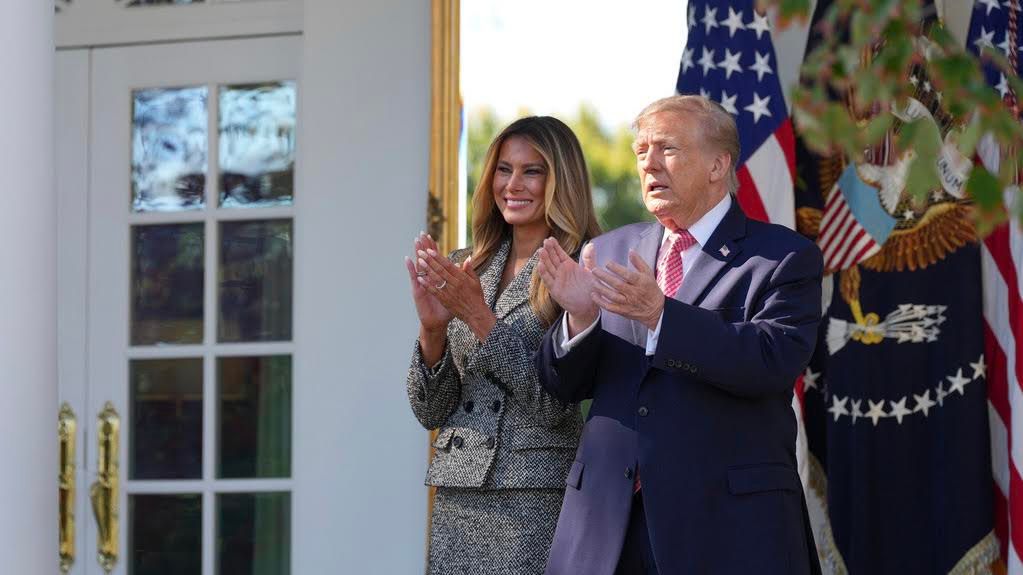
On October 19, 2026, President Trump signed an executive order, "Advancing Women's Health to Improve Outcomes in All Phases of Life," at a Rose Garden event led by First Lady Melania Trump. According to Spectrum News, the order directs HHS to set up a new Women's Health Division within the National Institutes of Health within 90 days. It also creates a White House Women's Health Task Force led by HHS Secretary Robert F. Kennedy Jr. and chief of staff Susie Wiles. HHS said the division will advance research into cardiovascular disease, cancer, autoimmune conditions, chronic pain, endometriosis, fibroids, infertility, maternal health, menopause, Alzheimer's and osteoporosis, and will increase the inclusion of women and girls in clinical trials.
Why It Matters
For femtech and menopause companies, the important word is "translate." A dedicated NIH division with a menopause mandate creates a federal research channel that midlife-health startups have never had: an institutional home for grants, trial infrastructure and, eventually, the evidence that payers ask for. That matters for categories that rely on cash-pay for lack of data, from hormone-tracking wearables to non-hormonal VMS drugs and vaginal-health products. Investors should still discount the announcement until money shows up. With no appropriation, the 90-day deadline only produces an organisational chart, and the task force is chaired by an HHS secretary whose department has cut contraception and teen-pregnancy-prevention funding this year. The strongest signal is the political one. Menopause now has backing from both parties, from the Senate's first menopause hearing to a White House order. That tends to come before insurance-coverage mandates, which are what would actually expand the market.The First Lady set out "Five Pillars of Women's Health Innovation," as Oprah Daily quoted them: research funding for conditions that affect women uniquely; using "superintelligence" to better understand female biology; faster movement of therapies "from laboratories to female patients, while maintaining strict safety standards"; affordable access "regardless of their financial circumstances"; and replacing "generations of silence with open conversation, education, and compassion."
There is no new money. Writing in Oprah Daily, menopause policy advocate Jennifer Weiss-Wolf says the order allocates no dedicated funding, unlike President Biden's 2024 menopause and midlife executive order, which it formally replaces. She notes that most of the Biden-era money stalled after the change of administration. She credits the order with explicitly naming menopause, midlife and aging and with calling for research to be translated "to clinical and community practice." She also lists claims in the order she considers dubious, including its framing of fertility drug discounts through TrumpRx.com and the moms.gov site. She notes the order fits a run of recent federal moves: the FDA removing the boxed warning on menopausal hormone therapy, its public meetings on female-dosed testosterone, the HHS response to the estradiol-patch supply crunch, and new VA menopause guidelines. On the state side, she counts 28 states acting on menopause policy over two years, and laws now on the books in 11 of them.
Reactions split along familiar lines. Spectrum News reports that ACOG, the Society for Women's Health Research and the Women First Research Coalition welcomed the order. The Menopause Society's medical director, Dr. Stephanie Faubion, said "significant gaps remain in the scientific understanding of women's health, including menopause." Planned Parenthood Action Fund called it "a desperate ploy from a flailing administration."
Sources
- Trump signs executive order aimed at improving women's health — Spectrum News (Oct 19, 2026)
- The White House Has Issued an Executive Order on Women's Health in Midlife — Oprah Daily, Jennifer Weiss-Wolf (Oct 19, 2026)
See also: ACP and ACOG put hormone therapy first-line · Estradiol patch shortage · FDA workshop on testosterone for women.
Update — 2026-10-20
Initial entry — story first created.