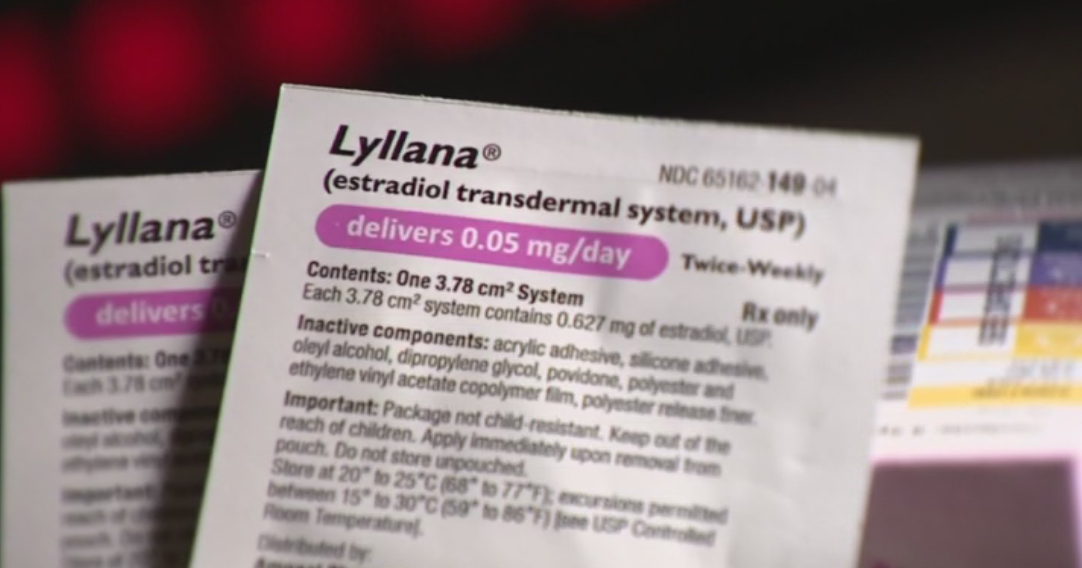
On September 3, 2026, the FDA posted an update acknowledging it is working with manufacturers to increase the supply of estradiol transdermal patches — while pointedly declining to use the word "shortage." CBS News reported the same day that doctors, patients and a group of Democratic House members are pressing the agency to formally add estradiol patches to its federal drug shortage database, arguing the current listing does not reflect what is actually happening at pharmacy counters. The gap between the agency's language and the pharmacy experience is now the story.
Why It Matters
This is what happens when a regulatory unlock outruns a supply chain. The black-box removal was the single biggest destigmatization event in menopause care in a generation, and it worked — arguably too well for the manufacturing base to absorb. Afterglow has tracked the demand side of this all year: the perimenopause telehealth boom (Midi, Winona, Alloy, Evernow), Hers's April entry into menopause care at $134/month, and Oura pushing its Menopause Impact Scale into ten clinical partners. All of those businesses are downstream of a molecule that patients currently cannot reliably fill. The shortage-declaration fight is not semantic. A formal designation changes manufacturer incentives, opens compounding pathways, and affects insurance handling of partial fills — which is precisely why physicians want it and why the agency's historic-demand methodology, tuned for gradual change, is the wrong instrument for a step function. For sexual-health specifically, estradiol is not only a vasomotor drug: it is the front line for genitourinary syndrome of menopause, vaginal dryness and painful sex, meaning a patch shortage lands directly on sexual function for millions of women. Watch for whether the FDA adds the listing, and whether any of the five-to-six US patch manufacturers announce capacity expansion.The demand curve is the cause. According to nationwide HealthVerity data cited by CBS, prescriptions for estrogen patches rose from roughly 594,000 in June 2024 to 1.6 million in May 2026 — close to a tripling in under two years. The trigger was regulatory: the FDA removed the 26-year-old "black box" warning from many menopausal hormone therapy products, with labeling changes taking effect in February 2026. Dr. Suzanne Hackenmiller, an Arizona OB-GYN quoted in the report, described the effect plainly: "More women felt safe to use estrogen. More doctors felt safe to prescribe it." Demand for progesterone, often co-prescribed, has grown alongside it, producing uneven supply across both.
The patient-side symptoms are the familiar ones of a shortage that has not been officially declared. Los Angeles patient Diane Harris told CBS she called "every pharmacy I could come up with," began stretching her twice-weekly patches to make supply last, and eventually found a pharmacy more than 25 miles away that could fill the prescription. Hackenmiller has started a petition urging a formal declaration, arguing it would give existing manufacturers an incentive to increase production and potentially draw new entrants. She also flagged a cost consequence: patients normally filling 90-day supplies are being handed 30-day supplies, paying the same copay multiple times for the same quarter of treatment.
The American Society of Health-System Pharmacists, which collects reports directly from pharmacists and providers, currently lists more than a dozen estradiol patch products on its active drug shortage list — a direct contradiction of the FDA database. In their letter to the agency, House lawmakers argued the methodology is the problem: "The FDA relies on historic demand data to determine if drug manufacturers are keeping pace, and these data may be lagging given how quickly demand for the patches has spiked."
The FDA's own framing is notably warm toward the underlying trend even as it resists the shortage label. In its update, the agency said it "views increased interest in menopause treatment as an important development for women's health and is working closely with manufacturers to help ensure that the supply of estradiol patches keeps pace with demand," while maintaining that although availability varies by pharmacy and location, the patches remain available. It recommends patients work with providers and pharmacists to find stock or alternatives.
Sources
- Estrogen patch shortage prompts doctors, lawmakers to seek FDA action as women struggle to find treatment — CBS News
- Surging demand for menopause patches prompts FDA action — FOX 5 New York
- FDA working with manufacturers to increase access to estradiol transdermal patches — Contemporary OB/GYN
Update — 2026-09-05
{Initial entry — story first created.}
Update — 2026-09-30
Congress escalates. On September 29, 2026, the House Democratic Women's Caucus sent a letter with 44 members to Acting FDA Commissioner Kyle Diamantas and HHS Secretary Robert F. Kennedy Jr. calling for immediate action on the estradiol transdermal patch shortage. It was led by Reps. Debbie Dingell (MI-06), Val Hoyle (OR-04), Ayanna Pressley (MA-07) and Yvette D. Clarke (NY-09). According to the caucus, estrogen-patch prescriptions have risen 162% over the past two years, driven partly by removal of the black-box warning. Members say constituents cannot fill prescriptions and are given "no clear timeline on when their medication will be back in stock." The letter notes Dingell first raised the shortage with HHS and FDA in July and says there has been "no significant assistance by the FDA." It acknowledges that FDA says it is helping manufacturers raise production but says patients "continue to report significant, ongoing difficulty… with no clear end in sight." Reuters also reported the letter.
Why it compounds: The letter comes days after a BMJ Danish registry study found oral HRT, not transdermal, carries the added clot risk (see our September 29 story). The clinical evidence is pushing prescribers toward the formulation that is hardest to get. Menopause telehealth platforms that sell patches, including Hers' $134/month patch offer covered in our archive, have an operational problem that is now also a congressional oversight issue.
New Sources
- DWC Members Demand HHS & FDA Take Immediate Action to Address Shortage of Critical Estradiol Patches — Democratic Women's Caucus
- Press Release: Rep. Val Hoyle Calls on FDA to Address Estrogen Patch Shortage — Quiver Quantitative
Update — 2026-10-23
The Senate asks for numbers, due November 16. In an October 20, 2026 letter released October 21–22, Sen. Kirsten Gillibrand (D-NY), ranking member of the Senate Special Committee on Aging, along with Sens. Tammy Duckworth (D-IL) and Adam Schiff (D-CA), asked Acting FDA Commissioner Kyle Diamantas for a detailed plan to fix estradiol patch supply. The questions are specific. They ask what conditions would lead FDA to formally list patches in its Drug Shortage Database. They ask for production figures comparing late 2025 with current capacity, a forecast for when supply will meet demand, and the number of manufacturing-expansion submissions since November 2025, with average review times. They also ask whether FDA is considering temporary imports and expedited inspections of overseas plants, and how many staff are assigned to estradiol supply. Written answers are due November 16. Citing ASHP, the senators said nearly 20 formulations have had supply disruptions over the past year. Fingerlakes1 notes that FDA's own September 3 update said supply of approved patches had nearly doubled year over year across six manufacturers.
USA Today's reporting adds demand data. Per HealthVerity, estradiol patch prescriptions rose from about 594,000 in June 2024 to 1.6 million in May 2026. Doctors expect demand to rise further now that ACOG's October guideline strongly recommends hormone therapy. Midi CMO Kathleen Jordan told the paper the bottleneck is manufacturing, not demand, and "it could take years to solve it." Physicians are advising patients to try mail-order pharmacies, estrogen gels or sprays, or oral estrogen where it's safe.
What changed: Congressional pressure has moved from the House caucus letter (September 29) to Senate oversight with a deadline. The one concrete supply-side development this month is FDA's approval of the first generic Climara Pro combination patch on October 19. That adds a manufacturer for one formulation but does not touch the estradiol-only patches most women are trying to fill.
New Sources
- Gillibrand seeks FDA supply plan for estrogen patches, with answers due Nov. 16 — Fingerlakes1.com (Oct 22, 2026)
- U.S. Senators Kirsten Gillibrand, Adam Schiff Press Trump's FDA On Plan To Mitigate Estrogen Patch Shortage — Sierra Sun Times (Oct 22, 2026)
- Women can't find this medication. The problem isn't going away — USA Today (Laura Trujillo, Oct 21, 2026)
Update — 2026-10-25
The first patient-side numbers: rationing. At The Menopause Society's 2026 Annual Meeting in San Diego (October 20–24), Midi Health presented a survey of its newsletter subscribers on estradiol patches. The abstract will be published in Menopause. Among patch users, 44% reported trouble filling their prescription in 2026, and 34% of those said their pharmacy was out of stock. To cope, 55% changed or used multiple pharmacies, 28% rationed their medication and 10% stopped hormone therapy entirely. 39% said symptoms returned or worsened, 25% lost sleep, 12% reported lower productivity at work, and 69% lacked confidence they'd be able to get patches over the next three months. "A supply problem quickly becomes a patient health problem," Midi CMO Dr. Kathleen Jordan said. NBC News reported on October 23 that the FDA still says there is no estrogen patch shortage, even as women struggle to fill prescriptions. That is the same disagreement between FDA and ASHP we flagged when this story began.
The caveats are significant. This is a self-selected sample from a telehealth company's newsletter, not a population survey, and Midi issued a corrected version of the release on October 23. It is still the first quantified evidence of treatment interruption, and it lands alongside the CDC's first national count of the menopause treatment gap the same week.
What changed: The shortage now has measurable clinical effects, including rationing, stopping treatment and symptoms coming back. Those are the outcomes the Senate letter (FDA answers due November 16) can point to. For telehealth prescribers it is also a retention problem: a patient who stops therapy because the pharmacy is empty may not return. Expect more switching to gels, sprays and oral estradiol. The BMJ route-of-administration data makes moving to oral pills a clinical trade-off, not just a logistics choice.
New Sources
- Midi Health Survey Finds Women Rationing Hormone Therapy Amid Patch Shortage — Femtech Insider (Oct 22, 2026)
- The Menopause Society Features Midi Health Studies on Estrogen Patch Challenges and Symptom Research (corrected release) — PR Newswire via Yahoo Finance (Oct 22–23, 2026)
- The FDA says there's no estrogen patch shortage. Women are struggling to fill prescriptions. — NBC News (Oct 23, 2026)