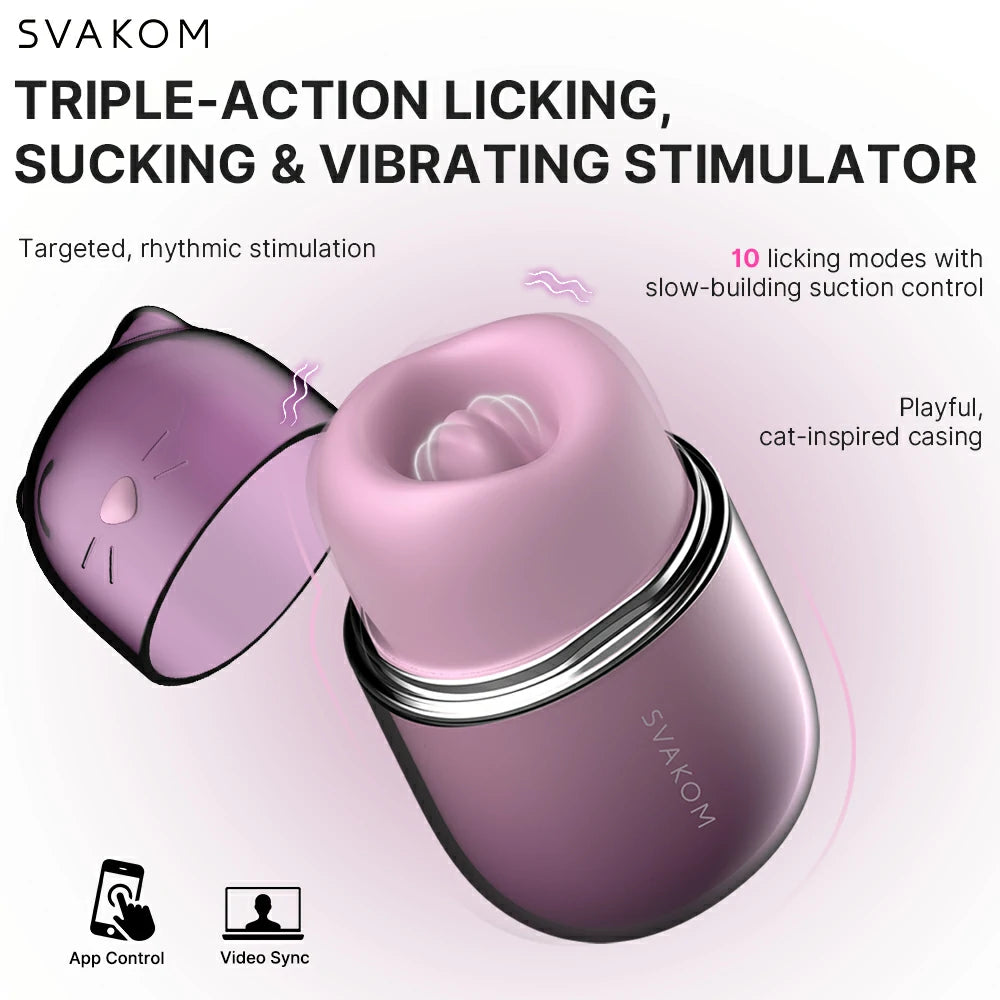
On September 11, 2026, Erotic Trade Only reported that SVAKOM has launched a custom engraving service, debuting it on Klitty — the brand's cat-inspired clitoral stimulator that combines licking, suction and vibration. Customers can add up to 10 characters (spaces count), covering names, initials, dates, nicknames or short messages, for a $20 fee through SVAKOM's own online store. SVAKOM's product page confirms Klitty is a current, actively promoted line, fronted by the brand's "Licking. Teasing. Purring." campaign.
Why It Matters
This is a margin and channel experiment dressed up as a cute feature, and both dimensions are worth watching. Pleasure-product hardware has been locked in a specs arms race — more motors, better app connectivity, new stimulation modalities — that is expensive to compete in and easy for Shenzhen contract manufacturers to copy within a season. Personalisation is a differentiator that cannot be reverse-engineered off a teardown, because it lives in the fulfilment operation rather than the product. It also signals something about where destigmatisation actually is. The entire retail architecture of this industry was built around concealment: plain packaging, unbranded card statements, discreet shipping. An engraving service bets, modestly, that a meaningful slice of customers now want the opposite — an object that is identifiably theirs. If SVAKOM's data supports that, expect the service to extend across the range and expect competitors to follow, because the implementation cost is low and the signal value is high. Watch for whether this holds up commercially. A $20 attach rate on a single SKU is easy to test and easy to kill. If SVAKOM extends engraving to its app-connected and male ranges over the next two quarters, that is evidence the gifting thesis is working; if Klitty remains the only engravable product by spring, it was a campaign, not a strategy.The move is small in isolation and interesting in aggregate. Personalisation has been standard in jewellery, leather goods and consumer electronics accessories for years, but it has been largely absent from pleasure products, where the operating assumption has long been the opposite — that discretion is the feature, and that the last thing a customer wants is their name permanently attached to a sex toy. SVAKOM is testing whether that assumption still holds for a generation that treats sexual wellness as a normal purchase category and, critically, as a giftable one. Per ETO, the brand frames the service as "exploring how personalisation can add another dimension to intimate products and create a closer connection between consumers and the products they choose."
The gifting angle is the commercial logic. A $20 engraving upcharge is unremarkable margin on its own; what it does is reposition a self-purchase item as a considered gift for a partner, anniversary or occasion — a category where perceived value scales with personalisation rather than with specs. It also creates a structural reason to buy direct from SVAKOM rather than from a distributor or marketplace, since engraving is only available through the brand's own store. For a manufacturer that sells heavily through wholesale channels, a DTC-exclusive customisation option is a quiet but pointed channel play.
The trade-offs are equally clear and worth naming. Engraved goods are functionally non-returnable, which matters in a category where returns policies are already fraught. Personalisation adds fulfilment time and complexity to what is otherwise a pick-and-pack operation. And the discretion calculus cuts both ways — a named toy is harder to explain if found, and impossible to resell or hand on.
Sources
Update — 2026-09-12
Initial entry — story first created.