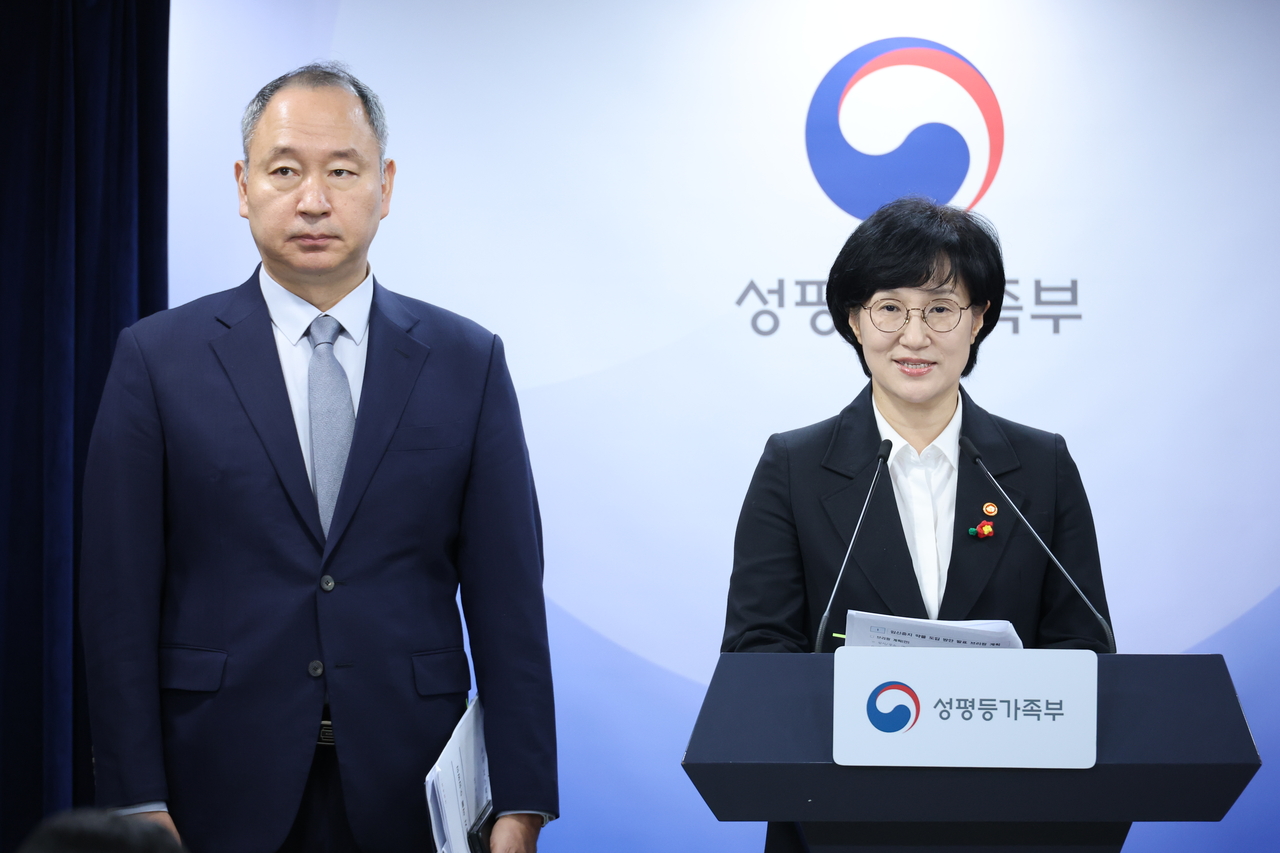
On September 16, 2026, South Korea's Ministry of Gender Equality and Family, Ministry of Health and Welfare, and Ministry of Food and Drug Safety (MFDS) presented a joint plan to bring oral abortion medication into the country's regulated healthcare system, per The Herald Business (Korea Herald group). The government aims to introduce the drug in the first quarter of 2027. Coverage over the following two weeks filled in the details. The Chosun Ilbo reported on September 30 that MFDS is reviewing "Mifegymiso", a combination pack of one 200 mg mifepristone tablet and four 200 μg misoprostol tablets, for pregnancies up to 9 weeks. Doctors at medical institutions would prescribe and dispense it.
Why It Matters
Korea is a wealthy, high-spending health market with a well-documented grey market in imported abortion pills, and this is the first time it will have a licensed product. Commercially, Hyundai Pharm gets a first-mover position in a market where nothing has been legally prescribable. For femtech, the hospital-only dispensing rule for the first two years shuts out telehealth delivery, the model that has reshaped access in the U.S. and UK. That makes Korea a useful counter-example to the U.S. shield-law fight. In Korea the state is legalizing the drug and keeping it in the clinic; in the U.S. the fight is over whether it can be mailed. The 9-week cutoff and the two-year review point are the dates that will show whether the policy reduces grey-market demand or just regulates around it.The access rules are the part to watch. According to Dong-A Science, President Lee Jae-myung said in July that "even if it is difficult for the government," the drug "must be made available for appropriate prescription." On September 4 he set out the rollout: "For the first two years, prescriptions and dispensing will be restricted to hospitals, and afterward we plan to switch to hospital prescriptions with dispensing at outside pharmacies." Hyundai Pharm has applied to MFDS for marketing approval. For comparison, the U.S. label runs to 10 weeks and Japan, which approved the regimen in 2023, also stops at 9.
The legal background explains the delay. Korea's Constitutional Court ruled the criminal abortion provisions unconstitutional on April 11, 2019, and gave lawmakers until December 31, 2020 to write replacement rules. They never did. For seven years abortion has been neither clearly legal nor clearly illegal, and regulators said they could not approve the pill without a legal framework. The executive branch is now moving ahead without the National Assembly settling the gestational limit or doctors' right to refuse.
Experts expect access to stay tight. Kim Jeong-hye of the Korean Women's Development Institute told The Herald Business that the 9-week ceiling, combined with in-clinic dispensing, doctors' refusal rights and few obstetric facilities in rural areas, could keep women buying pills through unofficial online channels. Physician groups are pulling in the opposite direction. The Korean Society of Obstetricians and Gynecologists (direct-election faction) told Chosun that excessive bleeding and incomplete abortion are "the most critical complications" and that an emergency-response pathway and a confirmation-of-completion step are essential.
Sources
- Abortion pill access faces hurdles despite government approval plan — The Herald Business
- South Korea Approves Two-Step Abortion Pill, Cautioning on Risks — The Chosun Ilbo
- Korea Debates Mifegyne Abortion Pill as President Lee Jae-myung Backs Access — Dong-A Science
Update — 2026-10-04
Initial entry — story first created.