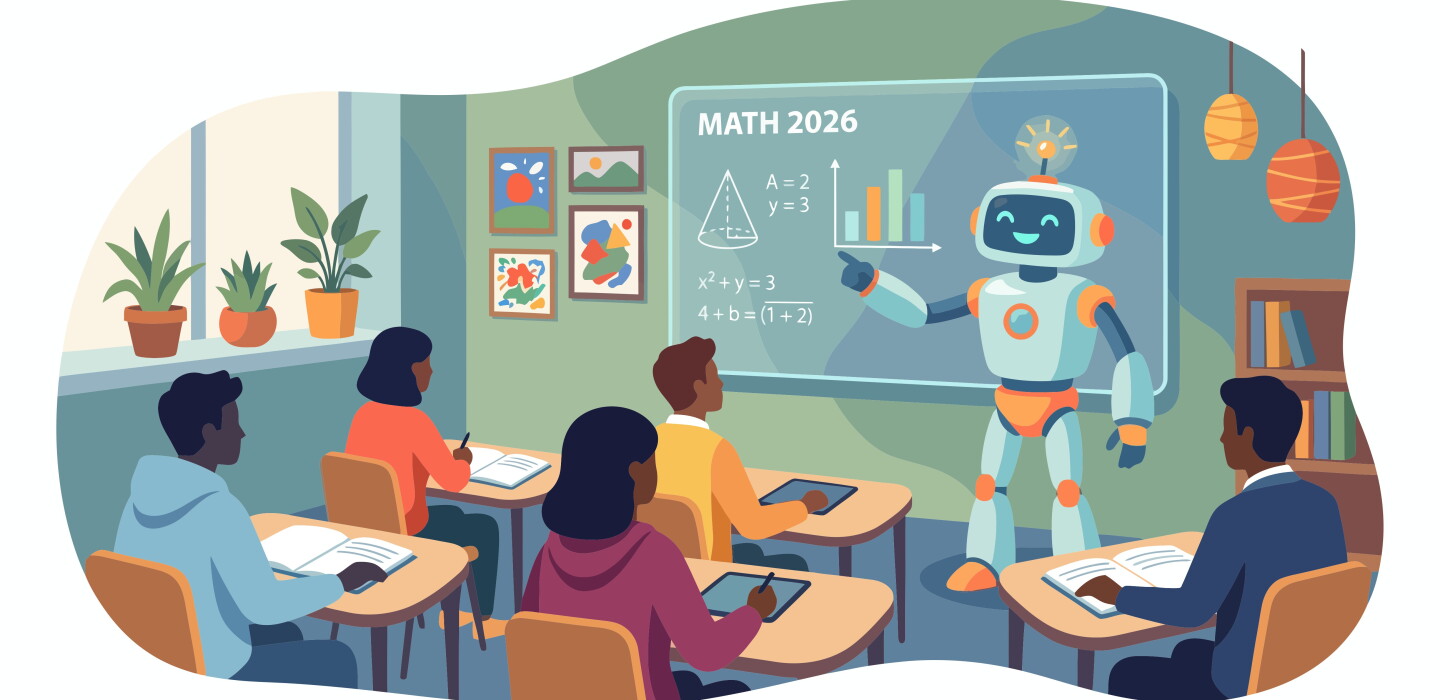
On July 14–15, 2026, reporting from New York Focus, NewsNation, Mashable, and GovTech revealed that the Salamanca City Central School District in Western New York has contracted Toronto-based Realbotix — the company behind the "Harmony" and "Aria" AI companion robots long marketed as high-end sex/companion dolls — to deploy a lifelike humanoid robot and an AI teaching-assistant program in classrooms this fall. The robot, nicknamed "Sally," will have silicone skin and long brown hair, cost the district $57,590 (a figure Realbotix CEO Andrew Kiguel called a discounted price), and will anchor AI and robotics courses at Salamanca High School using a STEM curriculum co-developed with Apple co-founder Steve Wozniak.
Why It Matters
For the sextech industry, this is a case study in the porous boundary between intimacy tech and general-purpose embodied AI — and in the reputational physics of crossing it. The uncanny, human-realistic hardware that companion-robot firms spent a decade perfecting (silicone skin, expressive faces, conversational LLMs) is directly transferable to retail, hospitality, healthcare, and now education, which is exactly the diversification path investors have pushed on a category starved of mainstream capital and payment access. But the coverage shows the tax: every mainstream deployment gets filtered through the "sex robot in a school" headline, a branding problem that will shape how Realbotix and peers (DS Doll Robotics, WMdoll) approach non-adult markets. It also raises real questions regulators are only beginning to ask — about consent, data capture from minors interacting with human-realistic AI avatars, and where "companion" hardware is appropriate — that echo the AI-companion-safety legislation sweeping U.S. states.Realbotix is not an education company. It is one of the most recognizable names in the AI-companion and adult-robotics space, publicly traded and best known for animatronic heads and full-body companions with conversational AI and, historically, intimacy-oriented positioning. The Salamanca deployment is the clearest sign yet that the same embodied-AI hardware developed for intimacy and companionship is being repackaged for mainstream, even taxpayer-funded, settings. "We are moving beyond lab demonstrations and pilots to deliver real, embodied AI directly into classrooms," Kiguel said in the company's release.
The move landed in a disadvantaged community and immediately drew backlash. Salamanca is the only incorporated U.S. city located entirely on a Native American reservation (the Seneca Nation); its ~1,300-student district is 32% American Indian/Alaska Native and 79% economically disadvantaged. After online criticism, the district posted to social media last month to address concerns. "Bringing it into the school district is contradicting everything we believe," local parent Sierra Abrams told New York Focus. Kotaku, GizaModo-adjacent outlets, and tabloids seized on the "sex doll company" framing, underscoring how hard it is for adult-adjacent robotics firms to shed that association even when pivoting to G-rated use cases.
Sources
- New York school district to deploy humanoid robot teacher this fall (NewsNation)
- Salamanca, N.Y., Schools to Pilot AI Robot Teaching Assistant (GovTech)
Update — 2026-07-18
Initial entry — story first created.
Update — 2026-07-30
The rollout is paused. On Friday, July 24, 2026 the Salamanca City Central School District posted to Facebook that the robot pilot is on hold while it works through "enhanced student data privacy agreements" with state education officials and continues community outreach. The Guardian reported the halt on July 27; NPR followed on July 29. State Education Commissioner Betty Rosa had publicly raised concerns about the robot's role, and parents and teachers on the Seneca Nation reservation objected on two grounds: how students' personal information would be handled, and Realbotix's corporate proximity to hyper-realistic sex doll manufacturing.
The sex-doll association proved to be the more quotable objection. Melinda Person, president of New York State United Teachers, put it flatly: "A robot built by a company associated with sex dolls has no business in our classrooms." On Monday, July 27, Person sent an open letter to top state education officials pressing for "clear, enforceable statewide guardrails" on classroom AI, including what she described as "heightened protections" against humanoid robots specifically. That is a policy ask with legs — a state teachers' union asking for humanoid-robot-specific rules is a new category of regulatory pressure on embodied AI, distinct from the chatbot statutes moving through 35+ state legislatures this year.
District officials have not conceded the framing. Superintendent Mark Beehler defended the pedagogical case on Tuesday, July 28: "Having a difficult time programming an Arduino board? Don't even know what an Arduino board is? Ask Sally and she can explain it." Both the district and Realbotix stressed that the robotics and sex-doll manufacturers operate independently. Gothamist reported the corporate history that made that argument hard to sustain: the company shed its previous name, Tokens.com, in 2024 while reportedly acquiring Simulacra — known for realistic sex dolls — for $16.7 million. CEO Andrew Kiguel said Realbotix respects the district's decision and that the company "understands the questions being raised by parents and believes they deserve clear, verifiable answers," maintaining that Realbotix is focused on humanoid systems for education, healthcare, hospitality, entertainment, customer service and wellness.
Two figures shifted slightly in the newer reporting: NPR and Gothamist describe the purchase as "nearly $60,000" and "$60K" respectively, against the $57,590 contract figure in the original July reporting — the same deal, rounded. Note also that NPR describes Sally as a stationary robot, a detail absent from earlier coverage.
The industry read: a companion-tech firm attempted the most legitimizing pivot available to it — publicly funded education — and got stopped not by regulators but by a labor union wielding the company's own product history. For every intimacy-adjacent hardware company eyeing mainstream verticals, the lesson is that corporate separation on paper does not survive contact with a parents' meeting. Diversification out of adult markets is real and rational, but the reputational balance sheet transfers with the hardware.
New Sources
- New York school pauses plan to deploy humanlike AI robot teacher after backlash — NPR
- Aborted plan for life-like robot in NY classroom alarms state teachers union — Gothamist
- New York school district halts plan to use humanoid robot amid backlash — The Guardian
Update — 2026-08-03
Two new developments, one of which reframes the whole story.
First, the pause hardened. FOX 5 New York, citing Associated Press reporting on July 29, 2026, confirms the district has kept the program on hold while it conducts community outreach and negotiates enhanced student data privacy agreements that comply with New York State standards. The district reiterated that the robot would not collect personal information and would not record video or audio; Realbotix told families that any student-linked data would be encrypted and remain strictly under district control, and explicitly denied that "Sally" was a repurposed sex doll — describing the unit instead as a "newly manufactured, purpose-built educational unit." Realbotix says its primary business now focuses on healthcare, education and non-adult commercial applications, though AP notes the company remains tied to Intima LLC, which holds an ownership stake in RealDoll. Superintendent Mark Beehler continued to defend the pedagogical case: "Having a difficult time programming an Arduino board? Don't even know what an Arduino board is? Ask Sally, and she can explain it."
Second, and far more consequential for the sector: on July 28, 2026 the FCC added "foreign-produced advanced robotic devices" to its Covered List, barring new models of humanoid and quadruped robots from receiving equipment authorization and therefore from being imported or marketed in the US. Salamanca's problem was a domestic vendor with an awkward heritage. Every district, hospital and hotel that might have bought a cheaper Chinese humanoid instead now has a much shorter menu. See fcc-covered-list-foreign-robots.
The combination is worth sitting with. American companion-robotics firms just received meaningful import protection at exactly the moment their most visible institutional deal collapsed over provenance. Protectionism hands Realbotix and its US peers a captive market; the Salamanca reversal demonstrates they may not be able to sell into it. A trade barrier does not fix a trust problem.
New Sources
- NY school halts AI robot purchase over privacy fears, sex doll maker ties — FOX 5 New York
- New York high school pauses plan for AI robot teacher that looks suspiciously like a RealDoll — Boing Boing
Update — 2026-09-29
Two months on: still paused, and now a bill. NPR's September 28, 2026 feature on AI experiments in schools returned to Salamanca. It confirmed the district paid Realbotix nearly $58,000 for the humanoid robot "Sally," that Superintendent Mark Beehler had planned to bring it into high school classrooms this fall, and that the plan was put on hold by the end of July. Beehler did not respond to NPR's follow-up requests. The report gives no sign the pilot has resumed.
The episode has also produced legislation Afterglow had not previously recorded. On July 30, 2026, State Sen. Shelley Mayer, chair of the Senate Education Committee, introduced S.10671. It would require every New York school district, charter school and BOCES to adopt written policies barring AI humanoid robots from teacher duties: delivering instruction, one-on-one tutoring, educational support services and grading. Per WRGB, Senate Internet and Technology chair Kristen Gonzalez and the New York State PTA backed the measure. WRGB also reported that the robot was designed to look like a woman between 16 and 24. NYSUT has since made "No robot teachers!" a feature in its September/October member magazine.
What changed: the pause now has a legislative backstop. If S.10671 advances, New York would have the first statewide rule specifically barring humanoid robots from instructional roles. That is narrow, but it sets a precedent: a category of embodied AI is being restricted in a public-sector market partly because of its maker's ties to the companion-doll industry. For Realbotix and its peers, it is a reminder that institutional sales in sensitive settings will draw scrutiny of the vendor's product history, not just the product.