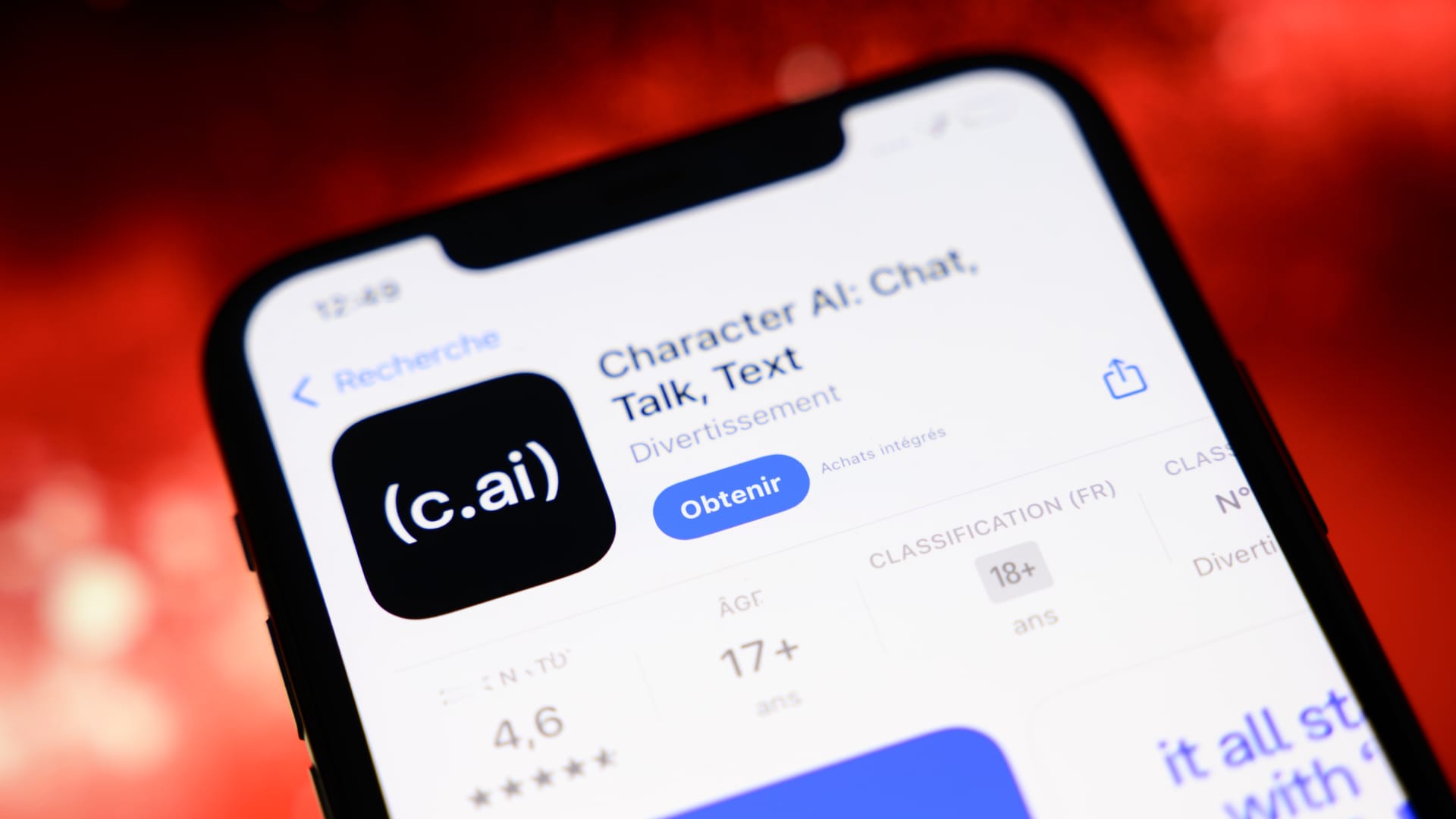
On October 12, 2026, Character.ai, one of the largest AI companion platforms, started a voluntary Chapter 11 case in Delaware bankruptcy court to run a court-supervised sale of the company. The company's blog post was blunt: if the sale does not produce "an actionable proposal that will allow continued operations of the Character.ai platform," then "the platform will be wound down." Disney is the stalking-horse bidder, offering $20 million to license some of Character.ai's intellectual property, per CNBC. TechCrunch describes the deal as an asset sale plus a non-exclusive, perpetual licence to the technology. Disney will also provide transition services through former Character.ai staff who joined it last month with former CEO Karandeep Singh Anand. SEXTECHGUIDE notes that Disney's bid on its own would not keep the platform running, so users who want their characters to survive need a rival buyer to appear.
Why It Matters
This is the first big bankruptcy in AI companions, and the cause is the business model more than any one scandal. TechCrunch's diagnosis applies to every companion app, including the NSFW ones: **inference costs grow with engagement**, so the users who chat longest cost the most to serve. Add litigation reserves and a patchwork of laws ([the twelve-state companion-bot map](/stories/twelve-state-companion-bot-laws-map), [Denmark's likeness bill](/stories/denmark-deepfake-likeness-bill)) and margins disappear. Adult-oriented platforms such as Candy.ai and OurDream ([our Sydney coverage](/stories/sydney-ai-porn-ourdream-candy-ai)) usually charge more per user than Character.ai did, but they carry more legal risk, and investors will now check every pitch against these numbers. Two other issues matter for the whole intimacy-tech sector. The first is **data as an asset in bankruptcy**: years of private, often romantic chat logs now sit inside a sale process, and whatever the court allows will set a precedent. The second is **continuity risk**. SEXTECHGUIDE recalls the grief when Replika removed erotic roleplay, and that was only a feature change. Any companion product sold on emotional attachment, from chatbots to app-linked devices, now needs an answer to the question "what happens to my companion if you go bust?" Watch for rival bids before the sale deadline and for any objections from state attorneys general over how user data is handled.The filing makes the economics plain. The company told the court that AI entertainment "has proven to be costly to develop and grow," and that "these high costs, coupled with potential litigation related liabilities and regulatory engagement" left it unable to generate enough cash in its current form (CNBC). TechCrunch reports assets and liabilities of $50–100 million each. SEXTECHGUIDE, citing the petition, says Google is the largest unsecured creditor at about $4.15 million, and that law firms hold four of the ten largest claims. CEO Colin Adams says the sale should close by late November or early December 2026. Until then the service stays up, subscriptions stay active, billing is unchanged, and users can export or delete their data.
The company's history explains the fall. Character.ai was founded in late 2021 by former Google engineers Noam Shazeer and Daniel De Freitas and reached a unicorn valuation on a $150 million raise in 2022. In August 2024 Google paid $2.7 billion to license its models and rehired both founders, and the startup then shifted from building models to chasing growth (TechCrunch). It reported 20 million monthly active users in October 2024. The lawsuits followed. A Florida mother sued after her 14-year-old son's suicide and settled in January. Kentucky sued in January, alleging the platform "preyed on children and led them into self-harm." Pennsylvania sued over bots posing as doctors. The company banned open-ended chats for under-18s in 2025. It never allowed erotic roleplay, but its bots could flirt and play at relationships, and that is the territory now being regulated state by state.
Sources
- An Update on Character.ai — Character.ai Blog (Oct 12, 2026)
- AI companion startup Character.ai files for Chapter 11 bankruptcy, citing costs and litigation — CNBC (Oct 13, 2026)
- Just 5 years in, interactive chatbot platform Character.AI files for bankruptcy — TechCrunch (Oct 13, 2026)
- Character.ai's bankruptcy leaves 20 million users wondering if their AI companions will survive — SEXTECHGUIDE (Oct 13, 2026)
Update — 2026-10-14
Initial entry — story first created.
Update — 2026-10-16
The states have filed their terms for any buyer. On October 14, 2026, a coalition of 39 state attorneys general plus the District of Columbia, led by Colorado AG Phil Weiser and coordinated by bankruptcy counsel at the National Association of Attorneys General, filed a "Notice of Interest and Reservation of Rights" in In re Character Technologies, Inc. (Bankr. D. Del., No. 26-11603-BLS). It is a notice, not an objection. It warns the court, the debtor and any bidder that the states want nine protections attached to any sale of the product, technology or personal data:
- Age assurance that does not rely only on self-declared birthdates
- Continued restrictions on minors' open-ended chats, and protection from sexual and violent content
- Removal of characters posing as therapists, doctors, lawyers or other licensed professionals
- Crisis safeguards for self-harm content that "cannot be defeated with a simple click-through"
- A privacy program with consent before processing sensitive data, such as health disclosures in chats
- Account-level opt-outs from data sales and targeted ads, honoring past opt-outs
- No use of chat content to train models or for advertising beyond what users validly consented to
- Access and deletion rights, including a chance for every user to delete their data before any sale
- Truthful marketing about safety, suitability for minors and whether characters are human
The states reserve the right to seek a consumer privacy ombudsman under 11 U.S.C. §§ 332 and 363(b)(1) and to object to the bidding procedures, the sale or the plan. The filing says the states' investigation, prompted by the 2024 wrongful-death suit, found possible violations including chatbots posing as licensed professionals, minors' exposure to explicit sexual content and weak age assurance. It adds that "no resolution has been reached," and that so far only Kentucky has sued, naming the company and founders Noam Shazeer and Daniel De Freitas. "Bankruptcy cannot become a way for a company to walk away from its responsibility to protect children and consumers," Weiser said. Tech Times reports that Disney's $20M stalking-horse bid excludes the app, brand, user data and conversation logs, so the most sensitive assets remain available to other bidders.
What changed: Our October 14 entry flagged possible AG objections over user data. They have now arrived, with specific terms. Condition 7 matters most for the companion-AI market: if a buyer can't train on the chat logs, the estate's most distinctive asset is worth much less. For NSFW companion apps, the nine conditions amount to a draft compliance checklist that 40 jurisdictions have now signed. Expect it to show up in future AG settlements and state chatbot laws whether or not Character.ai sells.
New Sources
- Attorney General Weiser seeks consumer protections in Character.AI bankruptcy — Colorado Attorney General (Oct 14, 2026)
- Notice of Interest and Reservation of Rights by the Coalition of State Attorneys General (filed Oct 14, 2026) — PDF via Oregon DOJ
- Character.AI Bankruptcy Puts Intimate Chats of 21M Users on Auction Block, 40 AGs Warn — Tech Times (Oct 15, 2026)
Update — 2026-10-20
The bankruptcy was Disney's idea. On October 19, 2026, WIRED reported that court filings show Disney required its Character.AI deal to be "fully consummated" through Chapter 11, citing the startup's "diminishing cash reserve and significant litigation and regulatory risks." The deal has two linked parts. Before the filing (September): Disney paid $5.5 million plus a refundable $2 million deposit, hired the "majority" of staff including then-CEO Karandeep Anand (now Disney's first CTO, per the Times of India), and agreed to let some of them keep Character.AI running for five months. In bankruptcy: Disney is the stalking-horse bidder for a perpetual, worldwide, non-exclusive licence to Character.AI's code, tools and "other artifacts," including its trust-and-safety moderation stack, training infrastructure and age-prediction technology. It pays a further $12.5 million at closing if it wins. User data and the website are excluded.
The liability firewall. Disney drafted a proposed "363 Free and Clear Order" that would confirm the deal is not a merger and that Character.AI alone keeps "any liability or other obligation," including legal claims. WIRED reports that the multistate investigation has grown to 46 states and territories, and that the NAAG filing on behalf of 40 of them cites chatbots encouraging minors to hide self-harm and to kill their parents. Character.AI says the filing "is not an accurate portrayal of the safety of our platform." Former FTC competition official John Newman told WIRED the structure is one that corporate-law safeguards "really weren't built to guard against." WIRED also reports that a court-appointed referee approved the individual Google/Character.AI wrongful-death settlements on October 11, one day before the filing.
What changed: Our earlier entries treated this as a distressed sale. The filings show a planned "reverse acquihire" carried out through bankruptcy: the buyer takes the people and a licence to the code, and the lawsuits stay with the empty company. For companion-AI and NSFW chatbot operators, this has two consequences. Safety technology is now the asset an acquirer wants (Disney is paying for the moderation and age-prediction stack, not the characters). And plaintiffs' lawyers and state AGs will push for courts to treat these structures as successor liability. Expect the AG coalition to object to the free-and-clear language, not just the data terms.
New Sources
- Disney Asked Character.AI to Go Bankrupt for a Get-Out-of-Lawsuits Card — WIRED (Oct 19, 2026)
- Disney made Character.AI file for bankruptcy before buying its tech, court filings show — Times of India (Oct 19, 2026)
Update — 2026-10-24
The states object to the auction rules. On October 23, 2026, a coalition of 31 states plus the District of Columbia filed a 27-page objection (Docket No. 66, In re Character Technologies, Inc., Case 26-11603, D. Del.) to the bidding procedures for Disney's $20M stalking-horse deal, according to PPC Land's reading of the filing. The math is the core complaint. Character keeps the $5.5M Disney has already prepaid regardless of who wins, so any rival bid above roughly $15.2M would leave the estate better off. The proposed minimum overbid is about $21.7M, which the states say shuts out every bid in between. They want the court to cut Disney's $700,000 bid-protection fee, give competing bidders more time and data access, and refuse to use the bidding-procedures order to approve the releases Character granted Disney and its former CEO before filing. "The States do not ask the Court to unwind the Debtor's prepetition decisions on this Motion," the objection says. "The States ask something narrower: that the Court not use a bidding procedures order to bless them."
The filing also describes how far the company has been hollowed out. The states say 66 of about 86 full-time employees accepted Disney offers, and that Character now reports 18 active full-time staff, only 8 of whom are expected to stay through key parts of the case. The coalition is smaller than the 39-state-plus-DC group behind the October 14 notice of interest. Alaska, Georgia, Illinois, Indiana, South Dakota, Utah, Virginia and West Virginia did not sign, and the filing gives no reason. Individual AGs publicized their participation this week, including Tennessee's Jonathan Skrmetti and Wisconsin's Josh Kaul ("Companies with AI chatbots must ensure that they have adequate protections in place for users' safety and privacy"). The bidding-procedures hearing is set for October 30, 2026, at 10 a.m. ET.
What changed: The states have moved from reserving their rights to actively contesting the deal terms. They are targeting the two features we flagged last week as the template for "reverse acquihire" bankruptcies: a low overbid floor that protects the stalking horse, and releases granted before the filing. If the court lowers the floor, an operational buyer, possibly one interested in keeping the companion platform and its users, would have a realistic chance. For NSFW and companion-AI operators, the October 30 hearing is the first ruling on whether a chatbot company can sell its technology without its liabilities.
New Sources
- 32 states say Character.ai sale rules block bids that would beat Disney — PPC Land (Oct 23, 2026)
- DOJ seeks protections in Character.AI bankruptcy — Antigo Daily Journal (Wisconsin DOJ release, Oct 23, 2026)
- Tennessee Attorney General Leads Multistate Coalition to Protect Children and Consumers in Character.AI Bankruptcy — 3B Media News (Oct 23, 2026)