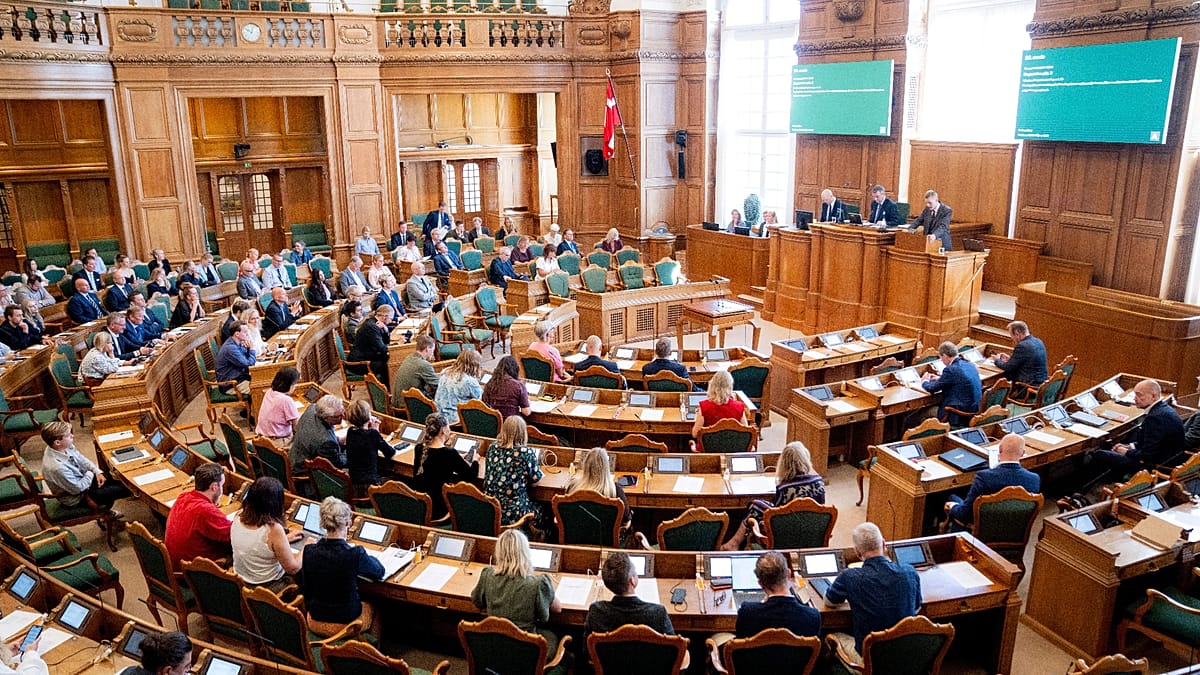
On October 8, 2026, Denmark's Minister of Culture Zenia Stampe introduced bill L 49 in the Folketing. It would amend the Danish Copyright Act from January 1, 2027 so that "realistic digitally generated imitations of a natural person's personal, physical characteristics may not be made available to the public without the consent of the imitated person." The bill covers appearance, voice and movements. It puts the burden of proving consent on whoever publishes the imitation, protects people for 50 years after death, and gives courts a new power to order unlawful content removed from the platform where it appears. It is the second attempt. According to Copenhagen lawyer Jakob Plesner Mathiasen (Gorrissen Federspiel), quoted by PPC Land, an earlier version lapsed when Denmark held a general election. The bill implements a cross-party political agreement from June 26, 2025.
Why It Matters
This is a different legal tool from the criminal approach most of our coverage has tracked: [Germany's creation offence](/stories/germany-criminalizes-deepfake-creation), the U.S. [TAKE IT DOWN Act](/stories/take-it-down-act-first-conviction) and the [EU nudifier ban](/stories/eu-bans-ai-nudification-apps). Denmark treats a person's face and voice as something close to a property right. Anyone who publishes a realistic imitation must be able to show consent. That shifts the compliance burden onto platforms and creators rather than victims, and it covers sexual and non-sexual fakes alike without the victim having to prove intent or harm. For the adult industry the implications cut both ways. AI-companion and AI-content platforms ([OurDream, Candy AI](/stories/sydney-ai-porn-ourdream-candy-ai), [Rogue Studio](/stories/rogue-studio-ai-adult-video-hbo)) serving Danish users would need provable consent for any realistic likeness, including "inspired by" performer lookalikes, with no criminal-intent defence available. Performers, meanwhile, get a civil weapon against cloned likenesses, and the right survives 50 years after death, which bears on estate-licensed "digital twin" deals. If Australia and others copy the model, proof of consent becomes a cross-border licensing requirement for synthetic adult content, not just a takedown issue. Watch the Folketing timetable: the January 1 start date leaves little time.The details, per PPC Land's reading of the 36-page bill and its explanatory notes: an imitation is "realistic" when it is "suitable to give rise to an obvious risk of confusion" with a real depiction. The ministry's own examples of what falls outside include a likeness with "neon green skin and pink eyes" or one set in an obviously fantastical world, though "discreet fangs or elf ears" may not be enough to escape. "Digitally generated" is read broadly, covering both AI and conventional editing tools. Making a deepfake is not unlawful in itself; publishing one is. No intent is required. Unlike Denmark's existing criminal identity-misuse provision, a breach of the new section 73 a is not a crime. Redress runs through civil courts, with damages and compensation for non-pecuniary harm. There is an exception for caricature, parody, satire and criticism of power, but it does not apply where an imitation is misinformation that could cause serious harm. The bill says it does not override EU AI Act obligations, and notes that the AI digital omnibus has introduced "two new prohibitions against sexualising deepfakes."
Stampe framed it as "securing the right to one's own body and voice," per Biometric Update, which also notes that Australia is pursuing legislation modelled on Denmark's. Euronews reported the bill's introduction on October 8.
Sources
- Denmark's deepfake bill makes publishers prove consent from January 2027 — PPC Land (Oct 9, 2026)
- Denmark moves to give people legal control over deepfake likenesses — Biometric Update (Oct 12, 2026)
- Denmark introduces bill to protect people's faces and voices from deepfakes — Euronews (Oct 8, 2026)
Update — 2026-10-13
Initial entry — story first created.
Update — 2026-10-22
Brussels picks up the Danish idea. On October 20, 2026, POLITICO Europe reported that a draft of the tech priorities of the Socialists and Democrats (S&D) group, the European Parliament's second-largest bloc, calls for an EU-wide ban on harmful, non-consensual or deceptive deepfakes. Platforms and AI providers would have to prevent their spread proactively rather than wait for victims to complain. The draft does not say how the ban would work, and POLITICO notes that some observers see Denmark's copyright route (bill L 49, covered above) as the most effective model. German S&D MEP Tiemo Wölken, a lead legislator on Parliament's copyright-and-AI report, said "the current trend towards different national solutions only creates legal confusion bad actors could exploit." He told POLITICO he expects digital-replica protections in the Commission's upcoming copyright initiative. Danish S&D MEP Christel Schaldemose wants the Commission to assess whether common EU rules would add value. CDE News adds that the Commission's consultation on possible copyright changes is open until November 3.
The national picture is fragmenting quickly. Per POLITICO, Cyprus amended its copyright law in March to cover unauthorised digital imitations. Belgian lawmakers proposed a new neighbouring right over images and voices in September. The Netherlands consulted on draft legislation last year. Italy's Giorgia Meloni applied to trademark a recording of her voice. Legal scholars warn against the copyright framing. Copenhagen Business School's Stina Teilmann-Lock said "Don't bake it into copyright," and CDE News notes that rights which can be licensed could let studios or labels end up controlling performers' AI likenesses. Denmark's general protection can't be transferred, but its separate performers' right can be licensed. For adult performers that difference matters: a transferable likeness right could become a contract clause in production deals.
Why the update matters: The EU's December 2 nudifier ban deals only with sexual-image generation. The S&D push would cover every realistic non-consensual likeness and would make platforms responsible for prevention, not only for takedown. If it reaches the Commission's copyright package, AI-content and companion platforms serving EU users would need proof of consent for realistic likenesses across the bloc, not just in Denmark. Watch the November 3 consultation close.