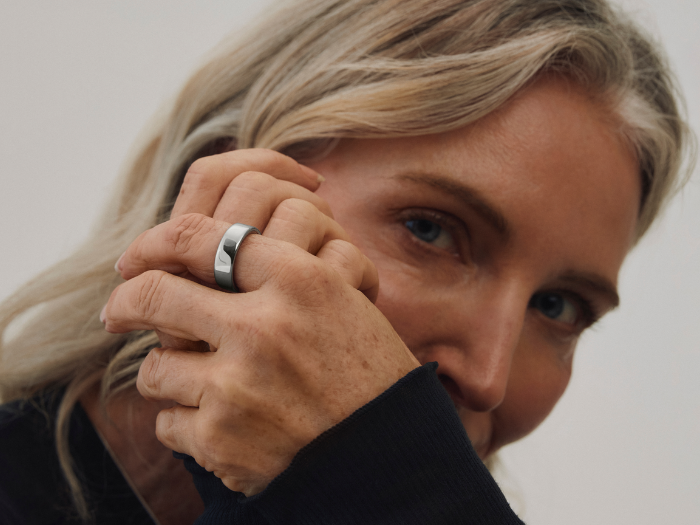
On Wednesday, September 2, 2026, Oura announced that its Menopause Impact Scale is leaving the app. The company is integrating the MIS into the clinical workflows of ten launch partners — menopause-focused providers Alloy Health, Gennev, Wisp and Pomelo; broader women's health platforms Maven, Tia and Xella; and hormone and biomarker tracking companies Oova, Mira and Hertility — so that a score generated on a member's ring app arrives in the exam room as structured data rather than a verbal recap.
Why It Matters
Sexual function and vaginal symptoms are one of seven equally weighted domains here, not a footnote — which is a meaningful positioning choice for a mainstream consumer wearable with a Best Buy shelf presence. Genitourinary syndrome of menopause is chronically under-raised in appointments precisely because patients don't volunteer it and standard intake forms don't ask. A validated instrument that asks by default, generates a number, and lands in a provider portal is a structural fix for an underreporting problem that no amount of awareness campaigning has solved. Commercially, this is Oura doing what it has done repeatedly in this category: turning a sensor-and-survey asset into distribution. Afterglow has already tracked its Maven ovulation-insight expansion and the Oova hormone integration, and both of those partners reappear on this list. The MIS play is more aggressive because the artifact being distributed is a **measurement standard**, not a data feed. If ten women's health companies start intaking patients on Oura's 0–28 scale, Oura owns the vocabulary of the category — the same position Apple built in fitness with the rings. Inc. framed the move as a bid for a bigger share of a $25 billion market, and that reads right. The context that makes this land is the one WIRED mapped on September 1: a perimenopause telehealth boom running on 490% traffic growth, largely cash-pay, largely compounded, with Mayo Clinic's Stephanie Faubion warning the hype "has gotten completely out of hand." Alloy, Gennev and Wisp all live in that boom. A standardized, longitudinal, patient-reported outcome measure is exactly the instrument that lets a clinician distinguish a woman with a 22 from a woman with a 4 — and by extension, lets a payer or a skeptic distinguish real symptom burden from marketing-manufactured demand. That is either the sector's best available credibility tool or its most elegant sales funnel, and probably both at once.The instrument itself launched in May 2026 and has been completed by more than 600,000 Oura members, with 35% of first-time takers going back for at least one reassessment. It asks about 22 symptoms across seven domains: sleep maintenance, cognitive function, body image, hot flashes, sexual function and vaginal symptoms, musculoskeletal pain, and urinary tract symptoms. Each symptom is rated by how much it affected quality of life over the past two weeks, on a five-point scale from none to extremely. Domain means run 0–4, and the seven sum to a total impact score from 0 to 28 — 0–7 minimal, 7–14 mild, 14–20 moderate, 21–28 high. A reminder fires 30 days later to re-run it and track the trend. Scores export as a PDF.
The design argument Oura is making is that legacy menopause assessment tools were built decades ago and measure symptom frequency and severity — how often, how bad — while the MIS measures impact on life, which is the thing patients actually show up complaining about. "Women navigating menopause can find themselves explaining the same symptoms to different providers, while the true impact on their daily lives gets reduced to a snapshot in time," said chief commercial officer Dorothy Kilroy. "That's why we developed the MIS: to give women and their providers a consistent way to track menopause's impact over time."
Oura's clinical director of women's health, Dr. Chris Curry, framed the integration as the point of the exercise rather than a feature bolt-on: "If data stays on the phone, it doesn't fulfill our vision of showing up for our members, even when things are hard. When that information can move with a woman into the care settings she already uses, it creates a more informed conversation between patients and clinicians." Curry also sketched the wider ambition — "we're moving from building individual features to building a connected, clinically informed layer that can support women across life stages." The usual caveat applies and Oura states it: the MIS is not a diagnostic, and treatment still requires a clinician.
Sources
- ŌURA Brings Menopause Impact Scale into Clinical Care through Expanding Partner Network — Oura Pulse Blog
- Oura's Menopause Impact Scale Expands Out of the App and Into Women's Health Care — CNET
- Oura Expands Menopause Symptom Tracking Into Clinical Care — Femtech Insider
Update — 2026-09-04
{Initial entry — story first created.}