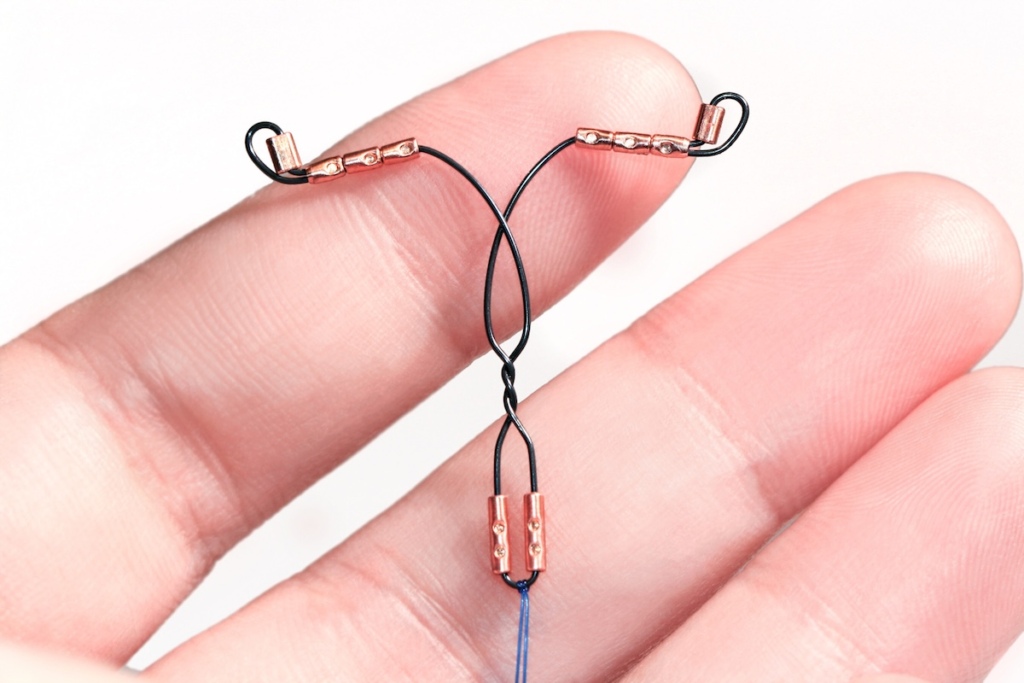
On June 22, 2026, women's health pharma giant Organon completed a global licensing agreement with Sebela Pharmaceuticals for exclusive rights to MIUDELLA, a hormone-free copper intrauterine device the companies bill as the first new hormone-free copper IUD introduced in the U.S. in more than 40 years. The FDA approved MIUDELLA on February 24, 2025, and Organon expects it to become commercially available in late 2026. The device is indicated to prevent pregnancy for up to three years and is rated 99% effective in clinical use.
Why It Matters
Non-hormonal contraception has been a thin product category for decades — Paragard has effectively had the U.S. copper-IUD market to itself since the 1980s, and it has faced thousands of product-liability lawsuits over breakage and migration complications. A well-capitalized, launch-ready competitor with a differentiated, easier-insertion design gives OB-GYNs and patients a genuine alternative for the first time in a generation, and gives Organon a category-defining asset just as its ownership structure shifts to Sun Pharma. For investors, MIUDELLA is a case study in how legacy pharma licenses innovation from smaller specialty players (Sebela) rather than building in-house — a pattern likely to repeat elsewhere in the increasingly crowded women's-health device space.MIUDELLA's pitch to physicians and patients centers on its SLIMSERT insertion technology: a highly flexible frame paired with a fully preloaded inserter that has a narrow 3.7mm tapered insertion tube, designed to make placement easier and less uncomfortable than legacy copper IUDs. In its Phase 3 study — a prospective, multicenter, single-arm, open-label trial run across 42 U.S. centers in 1,397 women aged 17 to 35 — the device posted a first-year Pearl Index of 0.94 and a cumulative three-year Pearl Index of 1.05, in line with the efficacy of existing copper IUDs. Like other copper IUDs, MIUDELLA's label carries a Risk Evaluation and Mitigation Strategy (REMS), meaning it will only be available through a dedicated REMS program to manage insertion-related complication risk.
"MIUDELLA represents an important hormone-free option in contraception, expanding choices for women seeking long-acting reversible birth control," said Organon CEO Joe Morrissey in the companies' joint announcement. Sebela Pharmaceuticals CEO and President Alan Cooke framed the deal as a distribution play: "Organon offers the scale, launch readiness and access capabilities needed to bring this valuable product efficiently into clinical practice and help ensure MIUDELLA reaches more women who are looking for hormone-free contraception options." Truist Securities advised Sebela on the transaction; terms were not disclosed beyond the licensing structure.
The timing is notable: the deal closed just weeks after Indian pharmaceutical giant Sun Pharma agreed to acquire Organon itself in an $11.75 billion transaction, meaning MIUDELLA's commercial launch will unfold under new ownership. It also lands amid renewed consumer interest in non-hormonal birth control, driven partly by younger patients wary of hormonal side effects and partly by post-Dobbs anxiety about data privacy tied to hormone-based fertility tracking — a hormone-free copper device sidesteps both concerns.
Sources
- Organon Completes Agreement to License MIUDELLA®, Sebela Pharmaceuticals' Hormone-Free Intrauterine Device — Organon, June 22, 2026
- Organon Licenses Hormone-Free Copper IUD MIUDELLA for Global Commercialization — Femtech Insider, July 7, 2026
Update — 2026-07-08
{Initial entry — story first created.}
Update — 2026-10-05
Organon wants a six-year label before the device even launches. On September 14, 2026, Organon announced that the FDA has accepted for review Sebela Women's Health's supplemental NDA to extend MIUDELLA's approved use from 3 years to up to 6 years. The PDUFA action date is expected in Q2 calendar 2027. MIUDELLA is still expected to be commercially available in late 2026 on its current 3-year label. That label includes a REMS program that requires providers, healthcare settings and specialty pharmacies to certify before insertion, intended to reduce complications from improper placement by untrained clinicians. Enrollment is now open. "If approved, MIUDELLA would offer up to six years of hormone-free contraception and the potential to expand a woman's contraceptive choices," said Organon CMO Juan Camilo Arjona Ferreira. Patient Care Online notes that the supporting data for the extension have not been disclosed.
Why it matters: How long a contraceptive lasts drives its value. The copper-IUD incumbent, Paragard, is labeled for 10 years, so a 3-year MIUDELLA was always going to be hard to sell to payers and clinicians, however novel its design. Filing the extension before launch shows Organon knows this. The REMS requirement is the bigger practical hurdle: certification adds friction at clinics, and telehealth contraception platforms cannot easily get around it. Expect a slow launch that depends on clinics.
New Sources
- Organon Announces US FDA Has Accepted for Review a Supplemental New Drug Application for MIUDELLA® — Organon (Sept 14, 2026)
- FDA Accepts Extended Duration sNDA for Miudella Hormone-Free IUD — Patient Care Online (Sept 14, 2026)
Update — 2026-10-19
The six-year data arrive. On October 16, 2026, Organon announced interim Phase 3 results supporting MIUDELLA's bid for a six-year label. Sebela Women's Health presented them on October 17 at the Society of Family Planning Annual Meeting in San Francisco. The single-arm study at 42 US sites evaluated six-year outcomes in 465 of 1,397 participants in the pregnancy-evaluable population and 592 of 1,601 in the safety population. The cumulative 6-year Pearl Index was 0.93 (95% CI 0.62–1.34), and the cumulative Kaplan-Meier pregnancy rate was 3.9% at six years. Reported adverse events included heavy menstrual bleeding, dysmenorrhea and pelvic discomfort. Bleeding- and pain-related discontinuations were 8.7% in year one and 1.9% in year six. Organon says there were no new safety signals over the extra three years. The FDA decision on the sNDA is still expected in Q2 calendar 2027, and commercial launch on the current three-year label is still slated for late 2026.
What changed: our October 5 update noted that the supporting data for the extension had not been disclosed. Now they have been, and the efficacy holds up, which strengthens Organon's hand with clinicians and payers. Two caveats. Only about a third of enrolled participants reached the six-year evaluation, which is normal for long IUD studies but worth noting. And year-one discontinuation for bleeding and pain (8.7%) is the figure clinicians will discuss with patients. Payer access is the other hurdle: a new National Women's Law Center report documents insurers refusing newer contraceptive methods on "we already cover something similar" grounds, a risk for a new copper IUD entering against Paragard.