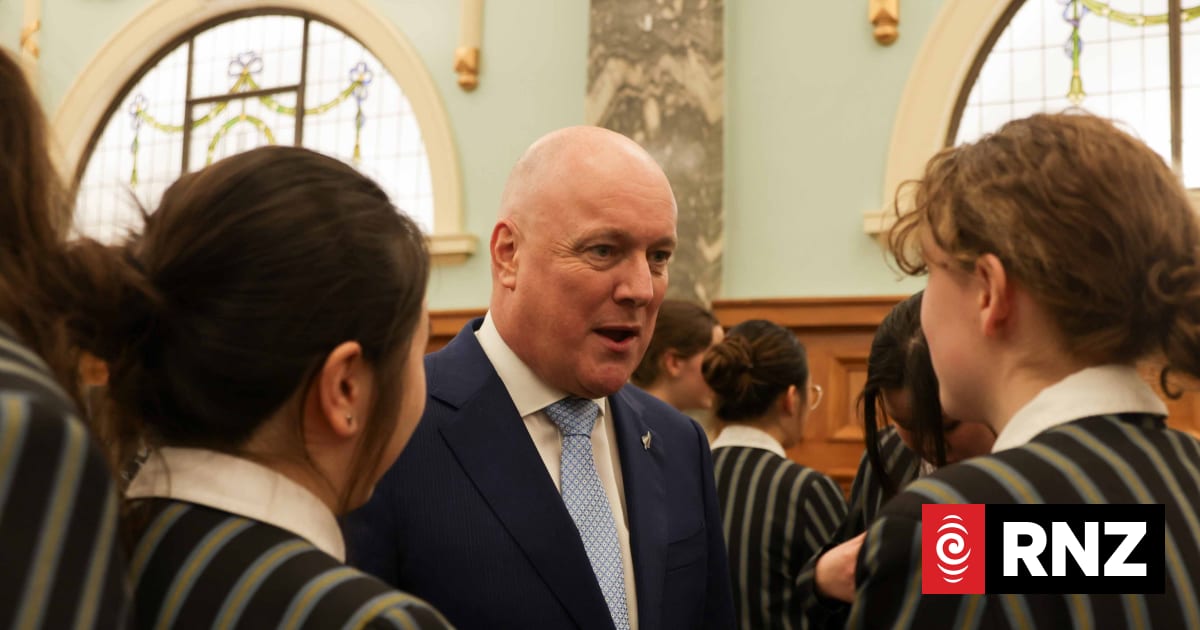
On August 24, 2026, New Zealand's government announced the Online Safety (Minimum Age and Child Safety Risk Assessment) Bill, introduced to Parliament by Prime Minister Christopher Luxon and Education Minister Erica Stanford. The bill would bar under-16s from services it classes as high risk — the government's announcement names Instagram, TikTok, Snapchat and Facebook — by requiring platforms to take "reasonable steps" to confirm users are over 16. Critically, a self-declared date of birth alone will not satisfy the duty. Permitted methods run from checking information a platform already holds on an account through to facial age estimation, digital ID services and formal identity documents.
Why It Matters
Two things make this significant beyond one country's pre-election positioning. First, the AI-companion inclusion. Age-assurance regimes have so far treated companion apps as an afterthought — the UK's approach has been criticised for hinging on an undefined "intimate functionality" phrase, and most US state chatbot bills legislate companions separately from minimum-age rules. New Zealand folding emotional-simulation AI into the same high-risk bucket as social platforms, while explicitly exempting general-purpose assistants, is a drafting choice other legislatures will copy or argue with. It also sets a boundary the industry will litigate: the difference between an assistant and a companion is a product-design question that a regulator inside Internal Affairs will now be asked to adjudicate. Second, the enforcement architecture is the export product. As ID Tech noted, Britain has set out plans for its own under-16 ban with age assurance at the centre, Canada's Bill C-34 would set the same minimum age, and Australia's eSafety Commissioner has been extracting platform-level undertakings — recently securing a Roblox commitment that includes a third-party audit of its age assurance. Meanwhile France's Constitutional Council struck down that country's under-15 ban on August 14 as disproportionate. The Anglosphere is converging on 16 as the number and platform-side duties as the mechanism, while the courts in civil-law Europe push back on proportionality grounds. For adult platforms and sex tech companies watching age verification metastasise from porn sites to the general internet, the direction of travel is unambiguous even when individual bills stall — and this one, by Luxon's own admission, is stalling until after the election.The detail that matters most for this beat sits in the scope carve-outs. A wide range of services falls outside the rule: messaging apps like WhatsApp and Discord, online multiplayer games including Roblox, music and podcast services, professional networking, education and health services, and general-purpose AI assistants such as ChatGPT. But AI companions designed to simulate an emotional connection with a user are explicitly captured. That makes New Zealand one of the first jurisdictions to write companion AI into a minimum-age statute by design rather than catching it incidentally through a definitional accident.
Age checking is not the only obligation. Platforms used by children must regularly assess the risks they present and report on how those risks are being identified and reduced — the "child safety risk assessment" half of the bill's title. Enforcement falls to a new online safety regulator to be established inside the Department of Internal Affairs, which will monitor compliance, investigate platforms and bring enforcement action. Non-compliant companies face penalties of up to 10 percent of global revenue. "The Bill places legal obligations on platforms. No penalties are proposed for children, their parents or caregivers," Stanford said. Luxon cited data that one in three children aged 13 to 17 now spend at least five hours a day on social media.
The politics are considerably messier than the policy. Both coalition partners have invoked the "agree to disagree" clause and will not vote for the bill. ACT leader David Seymour poured scorn on the penalty regime, noting that 10 percent of Meta's global revenue would be roughly $33 billion: "I don't think they're going to pay, and that small fact alone shows this is not a serious solution." NZ First leader Winston Peters called it a National Party bill rather than a government one and warned a ban would cost New Zealanders "all sorts of freedoms" through digital ID. That leaves National needing Labour's support, which has not been given — Labour tech spokesperson Reuben Davidson sent Stanford a letter raising 79 items, including the extent of consultation with young people, how an operator demonstrates compliance, whether a full privacy impact assessment will be published, and how penalties would be enforced. Luxon conceded the bill will not get a first reading before Parliament rises for the election.
Sources
- Govt pushes ahead with social media ban for under-16s (RNZ)
- New Zealand Bill Puts Age Assurance Duty on Social Media Platforms (ID Tech Wire)
- New Zealand joins global push for mandatory social media age checks (Biometric Update)
Update — 2026-08-25
{Initial entry — story first created.}
Update — 2026-10-23
Labour picks up the bill and adds porn sites. Our August story noted that Luxon's bill was stalled without Labour's votes. In mid-October, ahead of the 2026 election, Labour released its online safety policy, and the bill now looks set to pass whoever wins. Labour leader Chris Hipkins and tech spokesperson Reuben Davidson committed to taking National's under-16 bill through first reading within Labour's first 100 days in government. They also promised a separate Digital Duty of Care law within the first year and an independent online regulator, which would draw on the $30.7 million National set aside in Budget 2026. The duty of care would go well beyond the age ban. It would cover gaming platforms, a wider range of AI chatbots and pornography sites, requiring "reasonable steps" to manage risks to users. Davidson told BusinessDesk: "Pornography is one of the clearest harms to children, so services hosting it would need to take reasonable steps to keep children away from it." National's Erica Stanford said porn would be dealt with in an unspecified "phase two."
BusinessDesk points out the current gap. New Zealand has no mandatory age verification for adult sites. The only obligation comes from the Films, Videos, and Publications Classification Act 1993 and is met with a self-declaration landing page. National's bill does not cover porn sites, while Australia has enforced adult-site age verification since March. Labour has not said what "reasonable steps" would mean in practice. Lobby group B416 asked that any regime let adults prove they are over 18 "without unnecessarily disclosing their identity or browsing activity."
What changed: In August, AI companions were the novel part of this bill. The bigger change is now that adult sites, which were outside the debate, are on the agenda of a major party. That is the same path as Australia, where an age ban was followed by a duty of care and then adult-site verification. Adult platforms serving New Zealand should plan for age assurance in 2027–28 if Labour wins, and later if National does.
New Sources
- Porn sites face age checks under Labour's online safety policy; National defers action to phase two — BusinessDesk (Oct 21, 2026)
- Policy probability: Social media ban for children highly likely to happen — BusinessDesk (Oct 22, 2026)
- Labour backs under-16 social media ban and letting users opt out of algorithms — interest.co.nz (Oct 19, 2026)
- Labour goes beyond social media ban with plan to tackle tech giants — Newsroom (Oct 20, 2026)