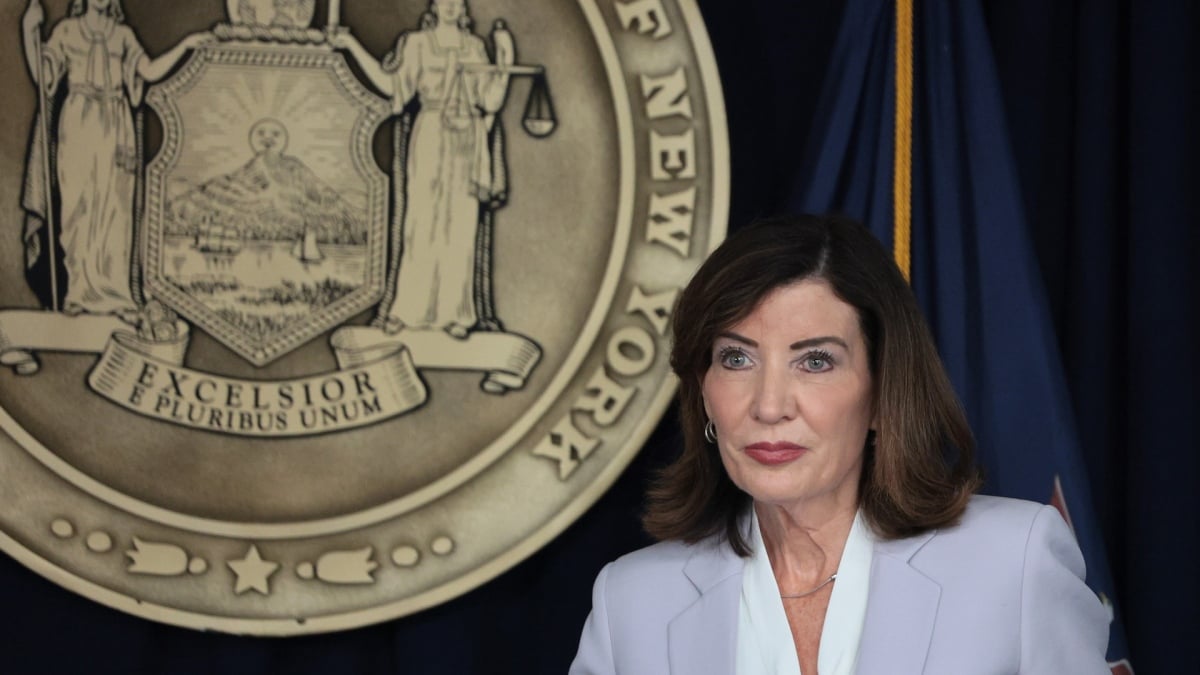
On October 28, 2026, New York Governor Kathy Hochul signed S9051B/A10379C, a youth chatbot-safety law. Mashable and IAPP both reported it. The law bars chatbot developers from offering minors 12 categories of "unsafe features." Under it, a chatbot used by someone under 18 can't pretend to be a real person or to feel human emotions. It can't give "people-pleasing" or flattering responses, ask unprompted emotional questions, or bring up a child's private health information from earlier conversations. It also can't encourage secrecy, promote self-harm, suicide, eating disorders or drug and alcohol use, or discuss sexually explicit content or child sexual abuse material with a minor. "No longer will minors have access to chatbots that pretend to be their friends, boyfriends and girlfriends," Hochul said at the signing, according to IAPP.
Why It Matters
For AI-companion and adult-chat products, New York has written the most specific behavioral rulebook so far. Several of the banned features, including simulated feelings, flattery, memory of personal disclosures and "girlfriend/boyfriend" framing, are what companion apps are built on. Legitimately 18+ platforms are already supposed to keep minors out. New York now requires those gates to use multiple verification methods and delete the data afterward, with real money behind it. General-purpose assistants that let 13-year-olds in (Mashable notes Google and OpenAI do) now have to remove companion behavior for minor accounts. That is the same adult/minor split that sextech-adjacent AI features such as erotica modes and flirty personas depend on. Add Texas suing OpenAI under its SCOPE Act and the trend is clear. States now treat companion-style AI as a regulated product category, and age assurance is the entry requirement. See our [twelve-state companion-bot compliance map](/stories/twelve-state-companion-bot-laws-map) and [California's Adam's Law package](/stories/newsom-signs-adams-law-chatbot-package).Age verification is built in. Covered providers have to verify users' ages and offer more than one method. At least one method can't rely solely on government-issued ID, and IAPP reports that providers must delete age data once verification is done. The New York attorney general will run a public complaint portal. Penalties go up to $25,000 per violation, plus injunctive relief such as orders to delete unlawfully collected data. The law takes effect January 1, 2027, per IAPP, which leaves about two months to comply. State Sen. Kristen Gonzalez and Assemblymember Alex Bores sponsored it. Common Sense Media's Jim Steyer called it the "strongest kids' AI safety bill in the country."
Critics say the definitions are vague. Justine Gluck of the Future of Privacy Forum told IAPP that New York's approach is "sweeping," with prohibitions that are "broadly worded and somewhat undefined." She said it's "unclear where ordinary conversational responsiveness ends and prohibited behavior begins." That contrasts with California's Adam's Law, which uses a governance model of risk assessments, audits and crisis protocols. New York instead bans categories of behavior outright.
Texas is going after the same target in court. On October 23, Texas Attorney General Ken Paxton sued OpenAI and Sam Altman in Collin County, Biometric Update reported. The suit alleges ChatGPT lacks adequate age verification and parental-consent mechanisms under Texas's SCOPE Act, along with deceptive-trade-practice violations. Texas wants ChatGPT barred for minors in the state, new models held back until a court-approved independent evaluator signs off, civil penalties of $10,000 per violation, and Altman held personally liable.
Sources
- NY governor signs major chatbot safety bill into law — Mashable (Oct 28, 2026)
- New York's governor signs youth AI chatbot safety bill — IAPP (Oct 28, 2026)
- Texas sues OpenAI, Sam Altman over ChatGPT safety and age verification — Biometric Update (Oct 28, 2026)
Update — 2026-10-29
Initial entry — story first created.