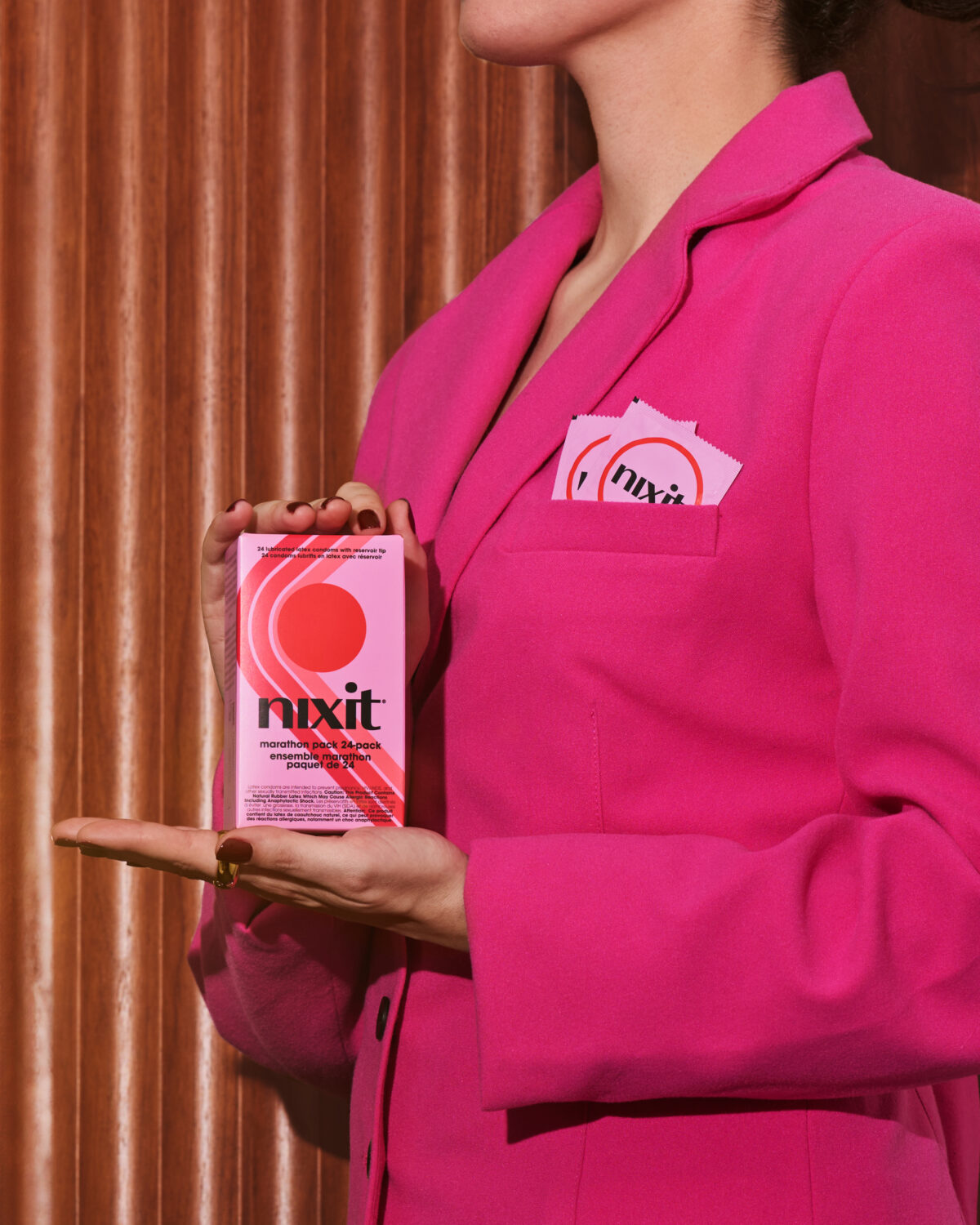
On August 20, 2026, Toronto-based intimate-care brand nixit announced it is rolling its condoms into nearly 2,000 Walmart stores across the United States — the largest retail expansion in the company's history, and a considerable jump from the roughly 400 Canadian Loblaw doors it confirmed in July. The pitch is a category inversion: nixit markets what it trademarks as "vagina-friendly condoms," designed around the vaginal microbiome rather than around the wearer.
Why It Matters
Walmart is the hardest and most valuable door in American mass retail for this category, and the significance here is less the shelf space than the merchandising logic. nixit is not selling a condom on thinness or sensation, the two axes the category has competed on for forty years. It is selling on ingredient deck — the same argument that reorganized skincare, deodorant, and tampons — and it is aiming that argument at the person who has historically not been the purchaser. That reframing matters commercially because it creates a premium tier in a commoditized aisle. Trojan's August 18 launch of a new non-latex material was a technology play; nixit's is a formulation-transparency play. Both are attempts to escape price-per-unit competition, and both suggest the condom category is finally getting the segmentation that the rest of personal care got a decade ago. For the wider sexual-wellness sector, this is another data point in the mass-retail land grab that has defined 2026: plusOne into 1,300 Ulta stores in July, plusOne again into campus quick-commerce in August, Bird&Be into Ulta and now a fertility pharmacy chain. Self-funded brands are reaching national distribution without venture capital, which quietly undercuts the long-standing assumption that this category needs patient institutional money to escape DTC.The formulation argument is the whole product. nixit's position, stated in its announcement, is that most condoms are designed without regard for vaginal health and can carry fragrances, glycerin, spermicides, casein, and warming agents such as capsaicin — ingredients the brand links to irritation and discomfort. Its own condoms are natural rubber latex, ultra-thin, lubricated with pure silicone oil, and formulated without those additions. Note the casein detail: excluding it makes the product vegan, which is not incidental in a category where animal-derived processing agents are rarely disclosed on pack.
Founder Rachael Newton framed the Walmart rollout around access rather than novelty: cleaner sexual wellness products, she said, have been harder to find than they should be, and condoms have been treated as a male-first category for too long. nixit also cites a decline in US birth control pill use — from 33% of women aged 18–49 in 2022 to 29% in 2024 — as the demand driver, arguing that as pill use falls, condom use rises and buyers reconsider what they are actually putting in their bodies.
The corporate detail worth flagging: nixit says it has remained self-funded since Newton founded it in 2019, which makes a two-thousand-door mass-retail placement an unusually capital-efficient outcome. The brand started with a one-size, suction-free reusable menstrual disc and has since extended into intimate wash, water-based lubricant, and condoms — a period-care-to-sexual-wellness path that is becoming the standard route into the mainstream aisle.
Sources
- nixit Debuts in Walmart Nationwide With Its Vagina-Friendly Condoms in Its Largest Retail Rollout to Date — Fitt Insider
- nixit official site
Update — 2026-08-22
{Initial entry — story first created.}