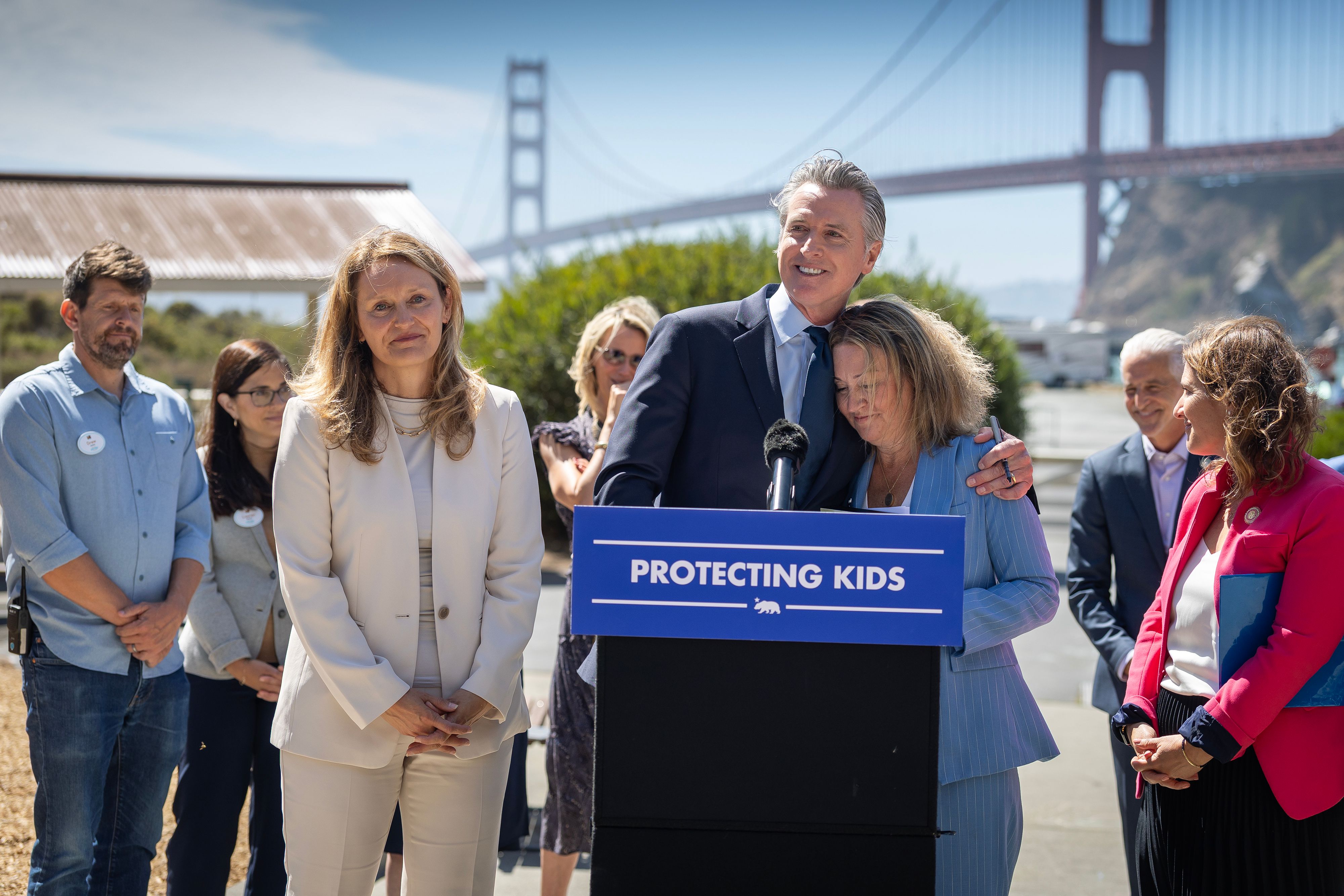
On September 10, 2026, Governor Gavin Newsom signed SB 1119 — "Adam's Law," named for Adam Raine — along with a package of thirteen bills that together constitute the most aggressive state-level regulation of companion chatbots and minors' social media in the United States. Afterglow has tracked SB 1119 since OpenAI publicly endorsed it on August 31 and AB 1709 since it cleared the legislature unanimously on August 31. Both are now law.
Why It Matters
The compliance architecture is now real, and it is Californian. Twelve states have companion-bot statutes on the books, with most taking effect in 2027 — but California has just paired substantive requirements (crisis protocols, no romantic simulation toward minors, parental controls) with an enforcement mechanism that has teeth and a paper trail: mandatory independent audits, annual risk assessments, and a state registry of the auditors who perform them. That combination — SB 1119 plus AB 1405's auditor registry plus SB 813's verification-organization framework — is the thing other legislatures will copy, because it solves the "who checks the checkers" problem that has hollowed out most AI self-governance schemes. For the AI companion sector, which includes a large and largely unexamined adult segment, the operating cost just changed shape. Age assurance, crisis detection, and audit readiness are now fixed costs of serving California, and California is not a market anyone opts out of. Expect consolidation: the compliance overhead is survivable for Replika or Character.AI and brutal for the long tail of small NSFW companion apps. AB 1856 is the sleeper. Device- and OS-level age signalling is the most plausible path to age verification that does not require every adult site to hold a database of government IDs — the exact "honeypot" risk EFF warned about in AB 1709. California mandating the signal layer while Google rolls out its Play age-signals API globally and Texas and Utah litigate app-store carding means the industry's age-verification future is being decided in the operating system, not the browser. And SB 867's reach into connected toys is a quiet preview of where companion AI in physical products — including the pleasure-device sector's flirtation with conversational interfaces — collides with child-safety law.Per the governor's office, Adam's Law requires companion chatbot operators to build in crisis protocols for suicidal ideation, parental controls, and notifications when a child disables safety settings. It is the first state law in the country to require companies to conduct independent child safety audits and annual risk assessments — a compliance obligation, not just a content rule, and one that creates an auditor market where none existed. The bill was authored by Senator Steve Padilla with Assemblymembers Buffy Wicks and Rebecca Bauer-Kahan.
AB 1709, by Assemblymember Josh Lowenthal, prohibits social platforms from serving users under 16 "addictive features" including autoplay, infinite scroll, and algorithmic feeds based on user history and profile. The Guardian reports platforms found to have harmed children can face fines of up to $1 million per child. EFF had urged a veto, warning the law pushes platforms toward government ID and biometric age checks and creates what it called "massive honeypots" of identity data; after signing, EFF state affairs associate director Rindala Alajaji called AB 1709 "a functional ban on social media use" for under-16s, arguing that "denying minors access to digital forums – or stripping out basic tools needed to navigate them – is not going to help make young people safer or healthier in the AI age." That argument did not carry.
Speaking at the signing in front of the Golden Gate Bridge, Newsom framed the package as targeting mechanics rather than content: "This is about actually addressing the problem, the scrolling, the algorithms. This is about addressing the substantive issue around the engineering." Adam Raine's mother, Maria Raine, spoke at the news conference: "Adam was an early adopter of AI, and so many of us parents did not understand the dangers back then. Now, we are all becoming more aware of the dangers of AI companionship and the need for our government to act to protect our children."
Three other bills in the package matter directly to this industry. AB 1856 (Wicks) addresses age verification signals in software applications — the operating-system-level signalling layer that Apple, Google and Microsoft have been building out, and which determines how adult sites and apps receive age information without collecting IDs themselves. SB 1276 (Senator Susan Rubio) expands the scope of child sexual exploitation offences to cover digitally altered or AI-generated material depicting a minor, closing the gap that generative tools opened. And SB 867, also by Padilla, regulates companion chatbots embedded in toys — physical connected products with conversational AI inside them.
The governor's office also recapped California's existing posture: expanded civil relief of up to $250,000 per action against third parties who knowingly facilitate distribution of nonconsensual sexually explicit material, and a required reporting mechanism for "sexually explicit digital identity theft." The day before, September 9, Newsom signed SB 813 (McNerney) establishing a framework for independent verification organizations that assess AI systems for compliance with state law, and AB 1405 (Bauer-Kahan) creating a state registry for AI auditors with independence and transparency standards.
Sources
- Governor Newsom signs the strongest child safety chatbot and social media laws in the nation — Office of Governor Gavin Newsom
- Gavin Newsom imposes strict new rules on AI, social media and chatbots for children — The Guardian
Update — 2026-09-11
{Initial entry — story first created.}