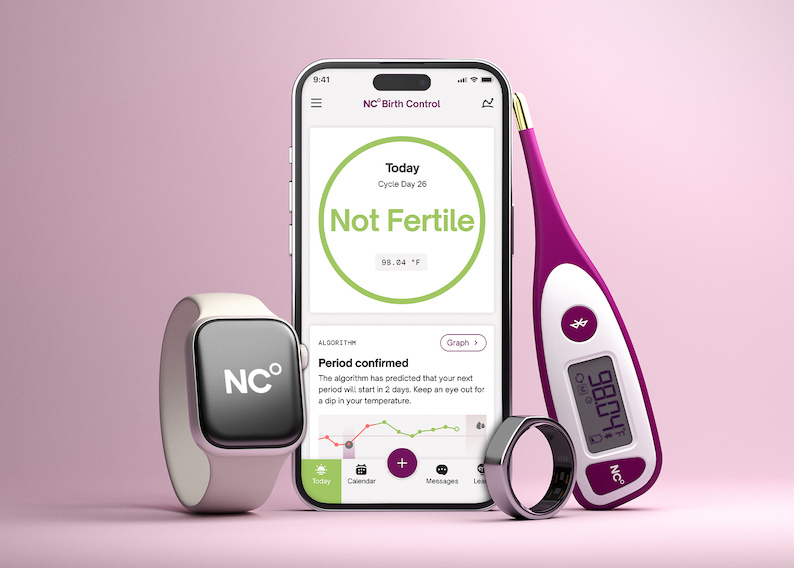
On July 28, 2026, Natural Cycles announced it had received its sixth FDA clearance — this one for an updated version of its NC° Fertility Algorithm, the machine-learning engine underneath the world's first FDA-cleared birth control app. The company has previously secured clearances for the core birth control app, integrations with Oura Ring and Apple Watch, and over-the-counter availability.
Why It Matters
Six FDA clearances is, at this point, a moat. Natural Cycles is compounding a regulatory asset that no competitor in the cycle-tracking space has attempted at anything like this scale, and each clearance extends the surface area — first the app, then hardware integrations (Oura, Apple Watch, Garmin), then OTC status, now the underlying algorithm itself. Every one of those is a filing a rival would have to replicate to reach parity. The strategic significance for the broader sector is the demonstration that a *software update* can be a regulated, cleared product improvement. Most consumer health apps ship changes continuously and stay carefully on the wellness side of the line to avoid FDA scrutiny. Natural Cycles has chosen the opposite path: submit the model, get it cleared, and use the clearance as marketing. That's an expensive strategy, but it converts algorithm improvements into defensible claims — and in a post-Dobbs environment where reproductive data and reproductive autonomy are both under pressure, a cleared, non-hormonal, non-prescription method with a documented regulatory trail is a meaningfully different product from a lifestyle tracker. Watch for the privacy question, which the clearance does not address. A contraceptive that runs on tens of millions of real-world fertility data points is, definitionally, an enormous reproductive data asset. This month's Mozilla Foundation findings on period-tracker data sharing are a reminder that the category's regulatory maturity on *safety* has run well ahead of its maturity on *data*.The technical claim is specific and, unusually for this category, measurable. The next-generation algorithm combines statistical modeling with machine learning trained on what the company describes as tens of millions of real-world fertility data points. The FDA determined the updated model maintained Natural Cycles' established safety and effectiveness while increasing users' "Green Days" — the non-fertile days on which no additional pregnancy protection is required. The company also says the new model improves guidance for users with irregular cycles, lower-quality temperature or biomarker data, and cycles that shift over time.
That last part is the real engineering story. Fertility-awareness algorithms fail at the edges: irregular cycles, shift workers, illness, poor sensor data, perimenopausal transition. A model that degrades gracefully on messy inputs is worth more to real users than one that performs beautifully on textbook 28-day cycles. Natural Cycles' effectiveness figures are unchanged — 98% effective with perfect use, 93% with typical use, which the company positions as on par with oral birth control — so the gain is delivered in usability rather than efficacy: fewer days of abstinence or barrier methods for the same protection.
CEO and co-founder Dr. Elina Berglund Scherwitzl framed the clearance as an argument for software as a contraceptive category: "People don't just want effective birth control; they want a method that fits naturally into their lives. One of the unique advantages of a software-based contraceptive is that it can continue to evolve." The app now supports more than six million registered users worldwide — up from the five million figure the company cited alongside its January 2026 launch of the NC Band wearable and its perimenopause mode.
Sources
- Natural Cycles Receives Sixth FDA Clearance for AI-Powered Fertility Algorithm — Femtech Insider
- Natural Cycles receives sixth FDA clearance for fertility algorithm — FemTech World
Update — 2026-07-29
Initial entry — story first created.