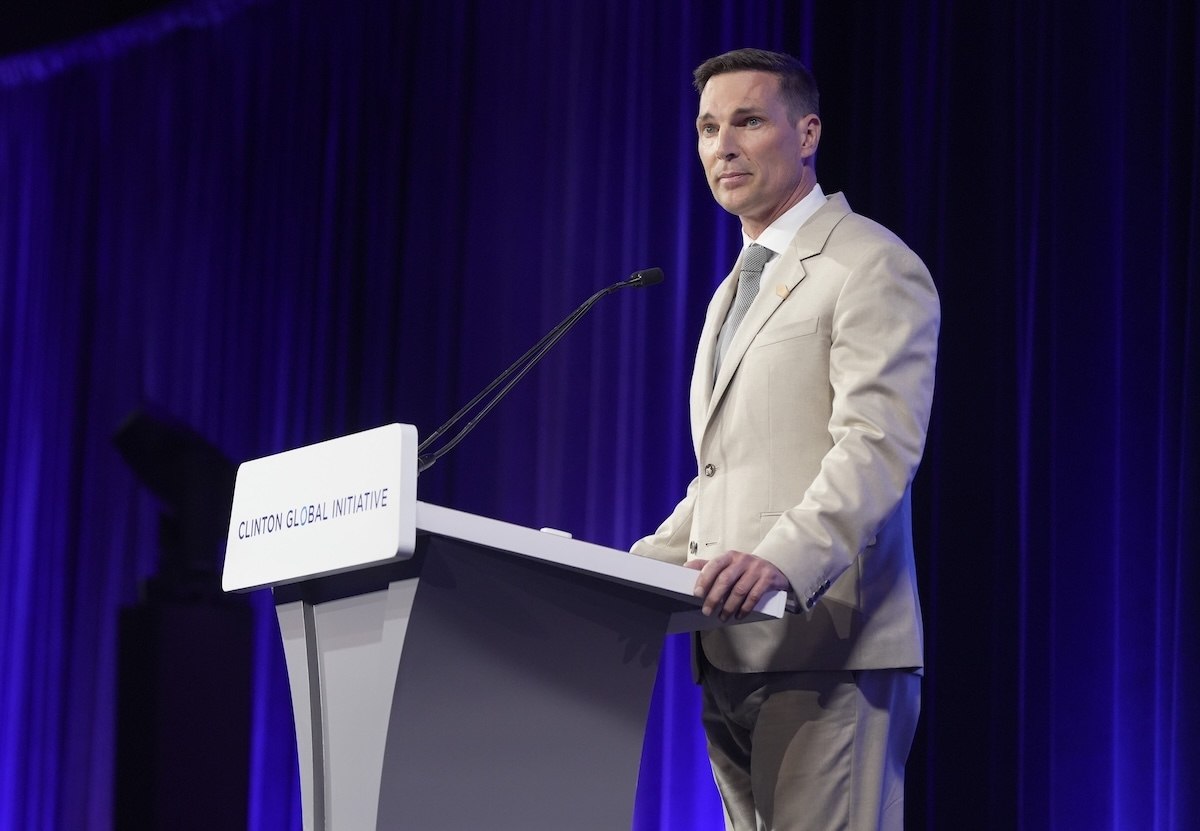
On September 22, 2026, MISTR — the San Juan, Puerto Rico-headquartered telehealth platform that built its business on free online PrEP — announced at the Clinton Global Initiative Annual Meeting that it will fund one million free HIV tests and one million free Hepatitis C tests across the United States by the end of 2027. The company says it will pay for all two million tests itself and is calling on large retailers, national pharmacy chains and major dating apps to help distribute them, with an initial focus on Ending the HIV Epidemic priority jurisdictions.
Why It Matters
Sexual-health infrastructure in the U.S. is being quietly privatized at the edges, and this is the clearest example yet. When a telehealth company can credibly tell fifty state health departments that it will absorb premium assistance for ADAP-eligible patients at zero marginal cost, the question stops being clinical and becomes fiscal — and fiscal questions get answered fast in a year when federal health funding is contracting. The upside is real: more people tested, more people on PrEP, more Hepatitis C cures, and a patient experience that beats a county clinic waiting room. The risk is concentration. A single private platform managing long-term HIV care for a large share of a formerly public caseload creates a dependency with no obvious unwind, and MISTR's incentives on prescribing volume, data and cross-sell are not the same as a health department's. For the rest of the sector, the strategic read is channel. MISTR is not asking for better reimbursement; it is asking Walgreens, Target-scale retail and Tinder-scale dating apps to become sexual-health distribution. If any of those partnerships land, the precedent matters well beyond HIV — the same shelf and the same in-app placement work for at-home STI panels, HPV self-collection and contraception. Watch for named retail or dating-app partners, and watch whether any state actually signs, because the first ADAP transition agreement will be the template everyone else negotiates against.The distribution ask is the interesting part. Mail-in at-home testing has a well-documented leak in the middle of the funnel: kits get ordered and never returned. Routing free kits through pharmacy counters, retail shelves and dating apps puts them where sexual decisions actually get made, and it is the same channel logic ProDx used this month when it ran blood draws out of a booth at Folsom Street Fair. MISTR's version is a national-scale bet on the same insight — that the binding constraint on testing volume is friction and cost, not willingness.
Results are wired straight into care rather than handed back as a PDF. People who test negative for HIV can move onto free online PrEP through MISTR; people who test positive can be connected to long-term HIV care; people diagnosed with active Hepatitis C can be referred into curative treatment. Founder and CEO Tristan Schukraft framed it bluntly in the announcement: "We have the science to prevent HIV, treat HIV and cure Hepatitis C. What we need is a better way to get it to people." The company puts the Hepatitis C economics at roughly $65,841 in reduced lifetime medical costs per person cured, which it extrapolates to approximately $658 million in potential lifetime health-system savings if 10,000 people with active infections complete treatment — a company estimate, not an independently modelled figure.
Bundled into the same announcement is a considerably more aggressive proposal aimed at state health departments. MISTR notes that AIDS Drug Assistance Programs spend nearly $800 million a year on insurance premium assistance and cost sharing for people living with HIV, and says it has already built infrastructure to do that work at no cost to the state or the patient: one intake form, enrollment in subsidized coverage, up to $250 per month in premium assistance, and ongoing HIV care management with no co-pays or deductibles. "We aren't proposing a pilot program," Schukraft said. "The infrastructure is already built, and we have the capacity to do this nationally." He also pre-empted the obvious objection — "This isn't about taking people off the safety net. It's about preserving it for the people who need it most."
This is an escalation of a playbook MISTR ran regionally in April 2026, when it offered free long-term HIV care plus premium support to Florida residents squeezed by tightened ADAP eligibility. That was backfilling one state's cuts. This is a standing national offer to substitute a private telehealth platform for a public program's premium-assistance function, pitched to state budget offices in the language of savings.
Sources
- MISTR to Fund 2 Million Free HIV & Hepatitis C Tests and Help States Save Hundreds of Millions in ADAP Costs — GlobeNewswire release, via The Manila Times
- MISTR Announces Groundbreaking Funding for 2 Million Free HIV and Hepatitis C Tests — Love B. Scott
Update — 2026-09-28
Initial entry — story first created.