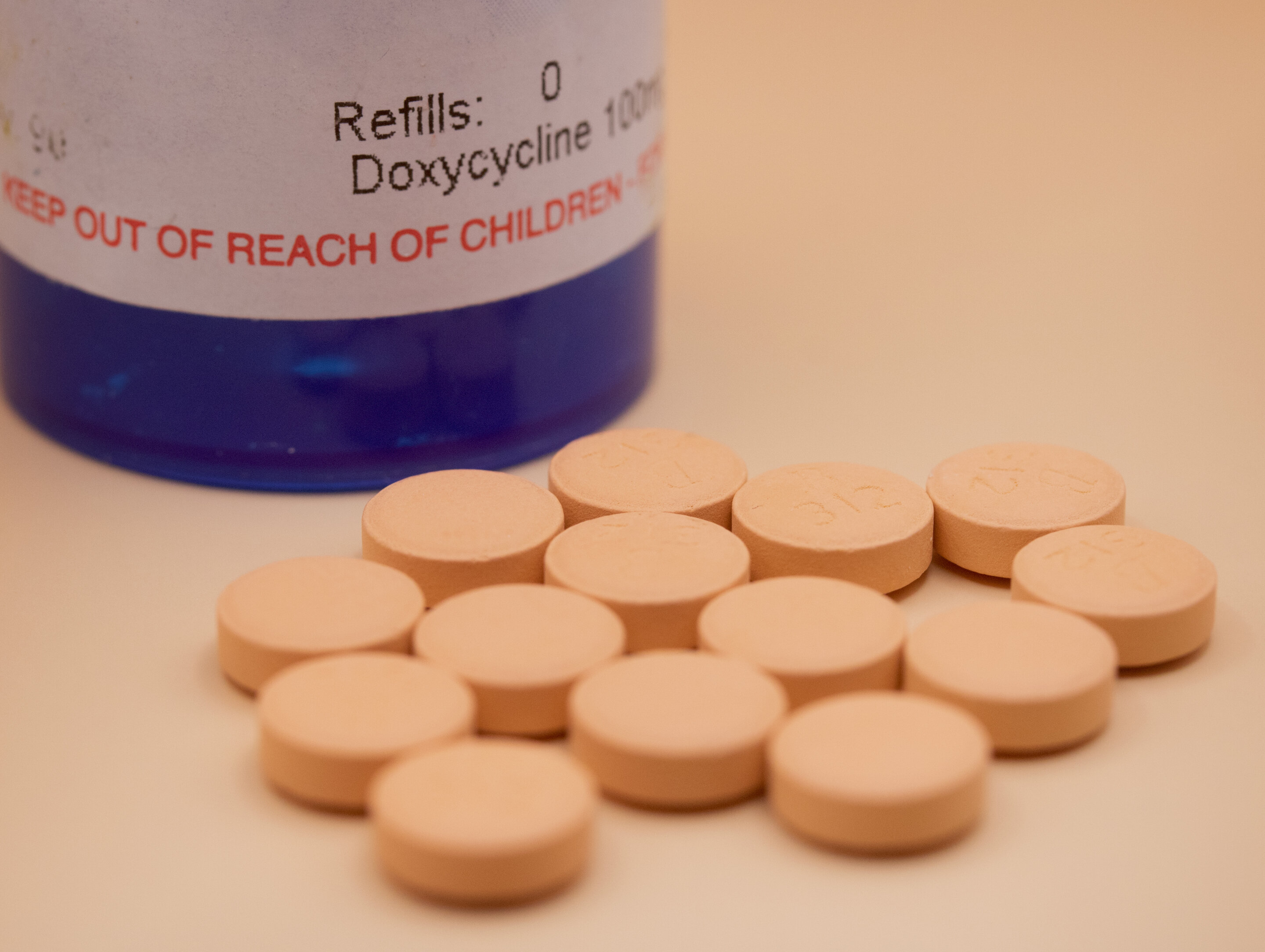
On October 21, 2026, Nature Health published the first country-level evidence that doxycycline post-exposure prophylaxis (doxyPEP) can bend national STI curves. A team led by the Burnet Institute and first-authored by Dr. Michael Traeger examined sentinel surveillance data from 29 sexual health and general practice services across Australia. The data covered 78,560 gay and bisexual men (GBM) between January 2022 and December 2025. Using interrupted time-series analysis, the authors compared actual diagnoses with what pre-guidance trends would have predicted. In the 27 months after national doxyPEP guidance was released in September 2023, syphilis diagnoses were 55% lower than expected (rate ratio 0.45; 95% CI 0.35–0.55) and chlamydia 36% lower (RR 0.64; 95% CI 0.45–0.84). Gonorrhoea showed no significant change (RR 1.11).
Why It Matters
DoxyPEP trials showed it protects individuals. This study is the first evidence that a national guideline can reduce syphilis across a whole population. [San Francisco's 2025 numbers](/stories/sf-sti-decline-doxy-pep-2025) pointed the same way at city scale. Australia now shows it across a country with a national guideline and sentinel surveillance, and with WHO having issued its first doxyPEP recommendation this year. That will put pressure on health systems still debating whether to adopt it, including the NHS and much of Europe. Health authorities there are dealing with an [STI surge](/stories/europe-sti-surge-boots-gonorrhoea-vaccine) and have so far preferred vaccination and testing. For the sexual-health commercial ecosystem, the opportunity sits in the infrastructure. DoxyPEP needs regular STI testing, prescriptions that can be refilled, and resistance surveillance. That suits at-home testing kits, PrEP-linked telehealth such as [MISTR](/stories/mistr-two-million-free-tests-adap) and [Grindr's new health arm](/stories/grindr-purposemed-freddie-250m), and sexual-health clinics that can bundle the service. The caution is antimicrobial resistance. Gonorrhoea has a long record of developing resistance, and [sexually transmitted Shigella is already outrunning antibiotics](/stories/sexually-transmitted-shigella-xdr-rise). Prevention programmes that skip the monitoring step risk losing a cheap, effective tool.The intervention is a single 200 mg dose of doxycycline taken within 72 hours of condomless sex. Australia issued an interim position statement in April 2023, and the Australasian Society for HIV, Viral Hepatitis and Sexual Health Medicine (ASHM) followed with national guidance that September. It recommends considering doxyPEP for GBM at higher risk, especially those with a recent STI. The background matters: Australian syphilis diagnoses rose 111% and gonorrhoea 139% between 2015 and 2024, according to the paper, and almost 6,000 syphilis diagnoses were recorded in 2025, per Kirby Institute surveillance cited by Burnet. "We already know from clinical trials that doxyPEP could substantially reduce an individual's risk," Traeger said. "What we haven't known until now is whether those benefits could translate into meaningful changes across a wider population."
The data come from ACCESS, a national surveillance collaboration run by Burnet, the Kirby Institute at UNSW Sydney and the National Reference Laboratory. The authors describe the result as an association rather than proof of causation. They also say the lack of any effect on gonorrhoea shows that other prevention tools and antibiotic-resistance monitoring are still needed. A PLOS Medicine policy forum published the same week by Harvard's Yonatan Grad and the WHO's Remco Peters sets out what that monitoring should involve. It notes that trial efficacy against gonorrhoea ranged from 0% to 55%, with much of the variation explained by local tetracycline resistance.
Sources
- Population-level impact of doxycycline post-exposure prophylaxis on bacterial sexually transmitted infections — Nature Health (Traeger et al., Oct 21, 2026)
- STI rates drop following antibiotic use recommendations for gay and bisexual men — Medical Xpress / Burnet Institute (Oct 21, 2026)
- How do we monitor doxy-PEP impact and when should we consider revisiting guidelines? — PLOS Medicine (Grad, Mittelstaedt, Peters, Oct 2026)
Update — 2026-10-22
Initial entry — story first created.