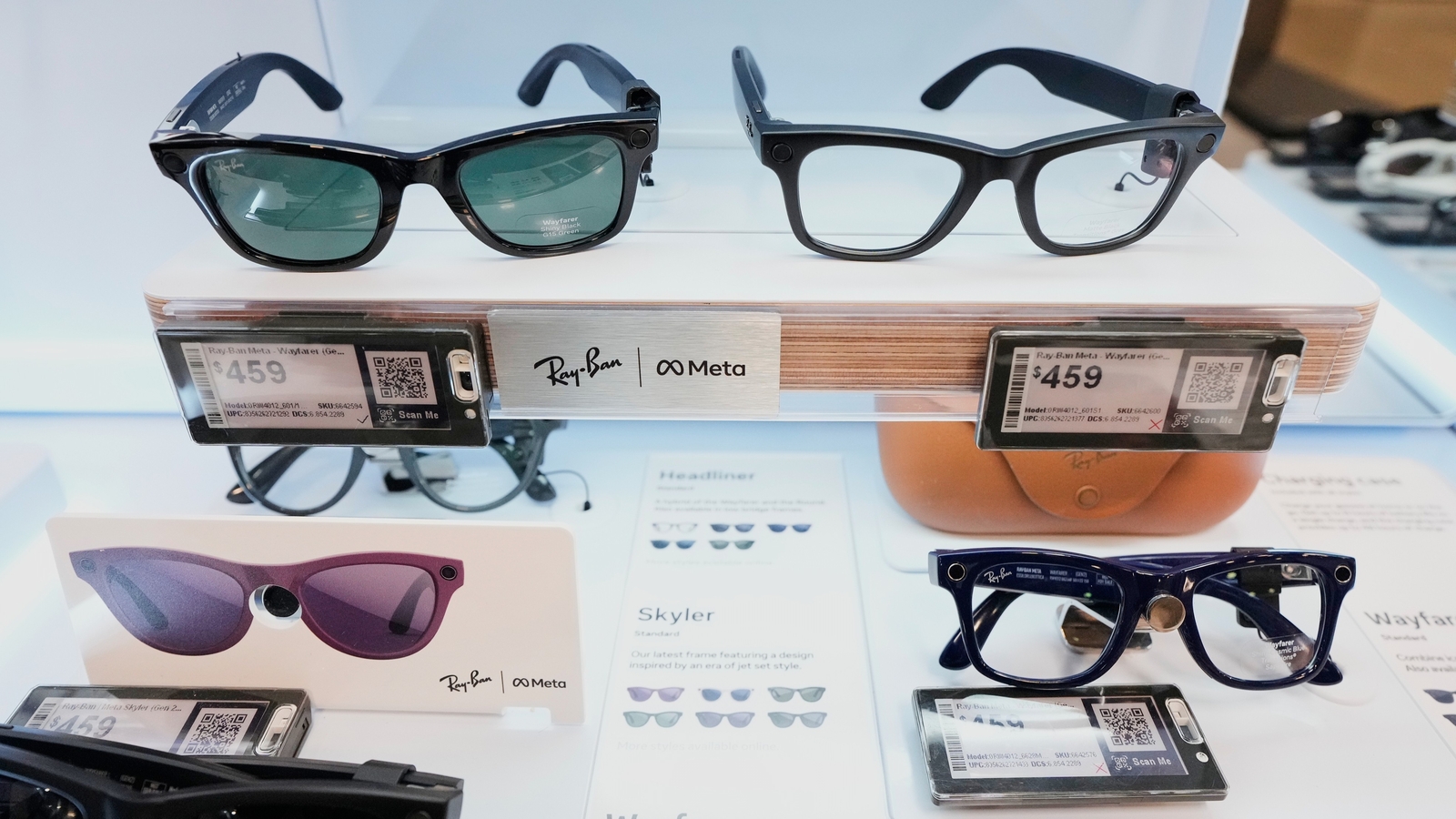
On September 18, 2026, the Los Angeles Times reported — and MediaPost and Law Commentary followed over the weekend of September 18–19 — that more than 70 people who bought, used or were recorded by Meta's AI smart glasses are suing the company in federal court in Northern California, alleging the devices captured them "undressing, going to the bathroom, having sex and entering passwords" and routed some of that footage to overseas contractors who reviewed and labeled it to train Meta's AI. The consolidated proposed class action names Meta and Luxottica and pleads fraud, false advertising and violations of consumer-protection laws across multiple states.
Why It Matters
This is the intimate-data breach the connected-device segment has spent a decade warning about, and it did not come from a sex tech company. It came from a mainstream consumer wearable with over 7 million units sold last year, whose failure mode was ambient always-available capture plus a human-in-the-loop training pipeline. Every argument the pleasure-device industry has made about why intimate telemetry demands a higher bar — local processing, minimal retention, no third-party review, explicit consent per capture event — is now being litigated on much larger and more sympathetic facts. The practical read for sextech operators is threefold. First, the liability theory is disclosure-based rather than breach-based: nobody hacked Meta. The claim is that the data flow worked exactly as designed and users were never told, which is a materially easier case to bring and a materially harder one to engineer around after launch. Second, "we anonymize before review" is now on trial as a defense — the Kenyan workers reportedly said faces sometimes remained visible despite privacy measures. Third, and most consequentially, Meta is reportedly responding by stripping cameras out of the product. When a company with Meta's resources concludes the cheapest fix is deleting the sensor, that is a signal about how expensive intimate-context sensing is to do defensibly — a signal that lands directly on any roadmap involving biofeedback, in-device cameras, or AI companions with always-on input.The alleged mechanism is what distinguishes this from a generic privacy complaint. According to the complaint as reported, every activation of the glasses' AI features — intentional or accidental — captures video and audio that is transmitted to Meta's servers, routed overseas, and reviewed by human workers who watch, label and embed those moments into Meta's models. Plaintiffs say the disclosures they received never explained that recordings made inside homes could reach outside contractors. One plaintiff identified as PL18 says he set his glasses on a bathroom counter without realizing they were recording and later found images of family members bathing and using the toilet. California plaintiff Steven Beltran alleges his glasses falsely activated roughly twice a day, generating recordings he never intended to make. U.S. District Judge Edward M. Chen has allowed most plaintiffs seeking anonymity to proceed under pseudonyms.
The Kenya thread is not new, which is why it is damaging. In February 2026, Swedish newspapers reported that Kenyan workers employed by a Meta subcontractor reviewing smart-glasses footage saw "someone going to the toilet, or getting undressed," with other workers describing sexual encounters that users did not appear to know they were recording. That reporting drew scrutiny from the UK Information Commissioner's Office and seeded the current litigation. Plaintiffs' counsel Tina Wolfson put the theory of the case plainly to the LA Times: "People who bought these glasses and thought that they were cool gadgets weren't aware that every time they activated AI, video was sent to train Meta's AI."
Meta disputes the characterization. A spokesperson said the company "may review" consumers' Meta AI interactions to "help improve our products," but that it filters user data to "help remove identifying information and to protect people's privacy," and points to the capture light as a visible recording indicator. The company plans to fight the allegations. The legal pressure is stacking: a separate proposed class action filed in Illinois in early September accuses Meta of using public Facebook and Instagram photos to build biometric identifiers supporting its in-development "NameTag" facial-recognition feature, and the amended complaint here targets that program too. Meanwhile His Majesty's Courts & Tribunals Service confirmed it will confiscate Meta glasses from people entering judicial buildings in England and Wales, and New York has banned them in courthouses. Meta is reportedly removing photo and video capture entirely from its newest glasses model, expected at Connect on September 23–24.
Sources
- Meta glasses users sue over alleged sharing of sensitive videos without consent — ABC7 / KABC
- Lawsuits Mount Over Meta's Smart Glasses — MediaPost
- Meta Smart Glasses Lawsuit Claims Sex, Bathroom Footage Was Sent to Overseas AI Workers — Law Commentary
Update — 2026-09-22
Initial entry — story first created.
Update — 2026-09-24
They actually did it: Meta shipped glasses with no camera. At Connect 2026 on September 23, Meta announced the Ray-Ban Meta Audio — its first pair of camera-free AI glasses — confirming the reports flagged in the original entry above. TechCrunch, which covered the keynote, was explicit about the causation: the devices are "designed to combat criticism around the more malicious use cases for AI glasses, which saw them nicknamed 'pervert glasses' by some." They are audio-only, offering music and podcasts, calls, speech translation and access to Meta's AI assistant Muse. Designed with EssilorLuxottica, they start at $349, weigh 43 grams, get up to 12 hours of battery (48 with the case), come in 23 colour and lens combinations across two new styles ("Clubmaster" and "Burbank"), and open for preorder October 13, 2026.
But the cameras did not go away — they got better. Meta simultaneously announced the Ray-Ban Meta (Gen 3), the camera-equipped line, with a 12MP camera supporting 3K Ultra HD video, a six-mic array, up to nine hours of battery, and two new frame styles (Aviator and Zena). So the actual product decision is segmentation, not retreat: Meta now sells a privacy-forward SKU alongside a higher-resolution capture SKU, and is expanding the camera line to more countries with a new brand partnership with the singer Lisa, following its earlier Kylie Jenner tie-up. TechCrunch also notes Meta's prior mitigation — an update disabling the camera if the recording-indicator LED is tampered with — and that "the creepiness factor remained."
What changed in our read. The original entry treated camera removal as a signal that intimate-context sensing is too expensive to do defensibly. The refined version: Meta has concluded the reputational cost is high enough to justify a separate camera-free product tier, while the capture business continues at higher fidelity. For sextech and wearables companies, the transferable lesson is the tiering itself — offering a sensor-free variant is now an established way to serve privacy-sensitive buyers without abandoning the data-collecting flagship. Mark Zuckerberg's own framing at the keynote was about audio quality, not privacy: "Once you get used to high quality audio, it's just a thing that you want all the time, right?" The litigation described above is unaffected by any of this; it concerns devices already in the field.