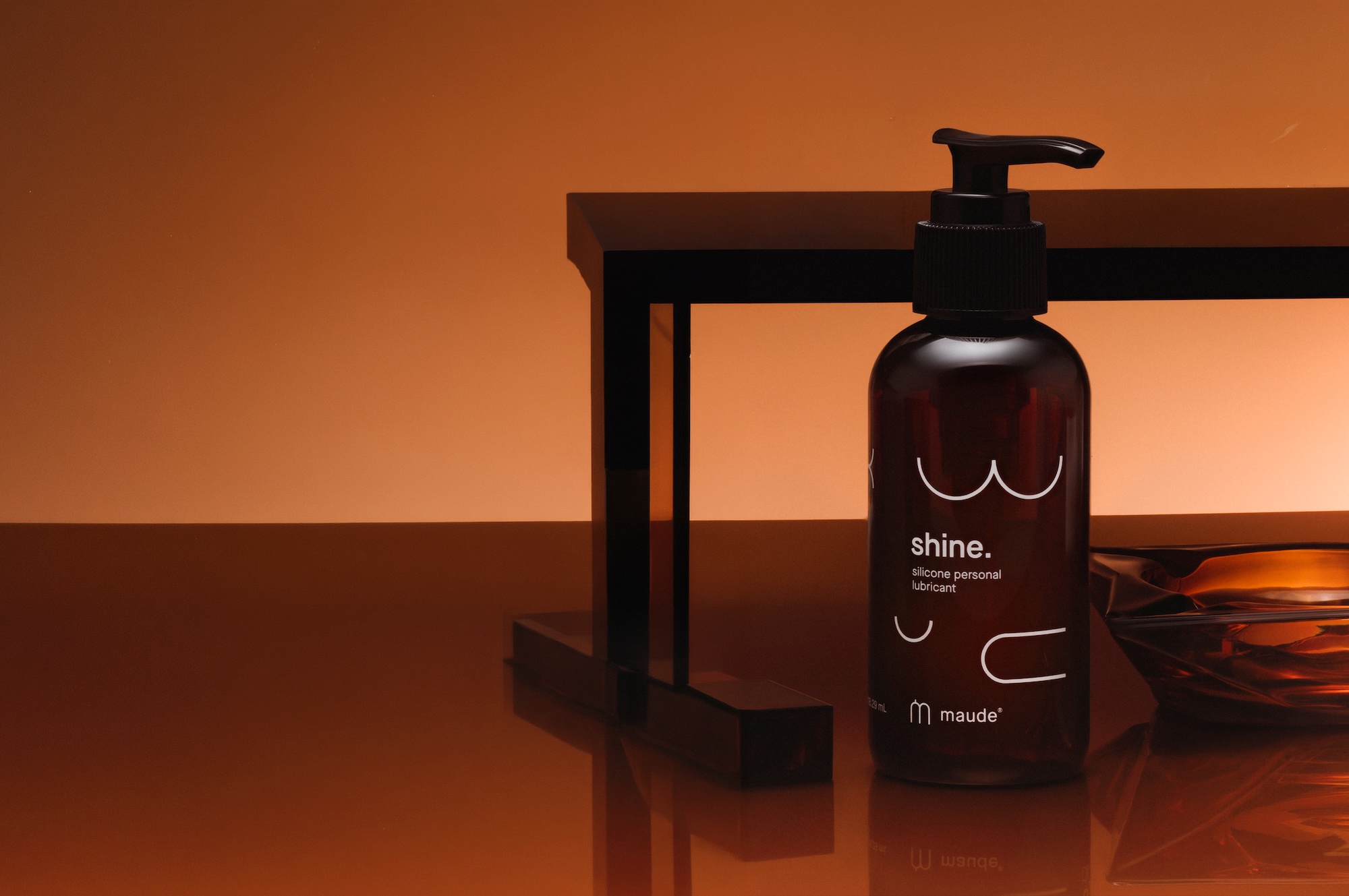
On September 18, 2026, Beauty Independent reported that sexual wellness brand Maude is entering more than 600 Target Beauty Studios and nearly 400 Ulta Beauty doors — the largest retail expansion in the brand's history, and one of the largest single distribution events the sexual wellness category has seen at mass retail. The two launches carry deliberately different assortments. At Target Beauty Studio — the concept Target launched earlier this month to replace its Ulta Beauty shop-in-shops — Maude is stocking body and massage oil, massage candles and lubricants. At Ulta, the brand joins the wellness selection with its hero Vibe vibrator, lubricants and body oil.
Why It Matters
Mass-retail shelf space is the scarcest resource in sexual wellness, because it is the one thing that cannot be bought around. A brand shut out of Meta and Google ads, throttled on TikTok and gated on Amazon can still be discovered by a shopper walking past an endcap — which is why door count, not ad spend, is the category's true distribution metric. Roughly 1,000 new doors in a single announcement is a step change for a DTC-native brand. The Target half is the subtler signal. Target's new Beauty Studio concept replaced its Ulta shop-in-shops, and Maude is in the founding assortment with oils, candles and lubricant — the "mood" SKUs rather than devices. That is a mass merchant deciding sexual wellness belongs in a beauty planogram, at general-merchandise scale, without a curtain. Ulta taking the Vibe vibrator is the harder ask and the bigger precedent: a powered device in a mainstream beauty retailer's wellness set. For operators, the number to track is Ulta's stated ambition to make wellness a $1 billion category, with intimate care one of four pillars. If that holds, the sexual wellness brands already on the shelf — Maude, PlusOne, Unbound, Crave, Smile Makers, Stripes, Playground — are competing for position inside a category that is being built, not tested. And Goicochea's disclosure that Maude is near profitability after four years without outside capital is a useful counterpoint to the broader women's-health funding contraction: at least one path to scale in this category now runs through retail buyers rather than venture partners.Founder and CEO Éva Goicochea told Beauty Independent that both retailers approached Maude in the spring, leaving a tight turnaround, and that the two doors serve complementary rather than overlapping shoppers. "Target lets us show up as a mood-setting brand for couples," Goicochea said. "Ulta feels like they have really been thoughtful about women's needs across categories. It allowed for us to have less of a Venn diagram of assortments and speak to a wider audience." She framed the deals as a read on the retail climate as much as on Maude: "Maude launching is actually a barometer of where retailers are, and the hope and the excitement that retailers still have." Per the report, Maude is approaching profitability after nearly four years without raising external capital. Actress Dakota Johnson, who joined as co-creative director and investor in 2020 alongside the brand's $2.2 million seed round, said in a statement that "intimacy belongs in the conversation around wellness because it's part of how we feel, connect and care for ourselves."
Maude is not arriving at Ulta alone. Per Beauty Independent, the retailer has added a growing roster of sexual wellness and intimate care brands this year including PlusOne, Unbound, Crave, Smile Makers, Naomi Watts' Stripes and Christina Aguilera's Playground. Ulta VP of wellness Laura Beres said in a statement that "as the lines between beauty, wellness and self-care continue to blur, we're seeing guests embrace a more holistic approach to their wellbeing, with intimate care becoming an increasingly important part of that conversation."
The corporate math behind that sentence is the real story. Speaking at Newtopia Now and covered by New Hope Network on September 11, 2026, Beres described a wellness business built on 47 million Ulta rewards members who account for 95% of sales — a data asset the retailer is using to decide what wellness categories to expand into next. She named menopause as a permanent fixture rather than a trend ("I don't even look at it as a trend anymore"), alongside fertility, pregnancy, post-pregnancy and perimenopause, and cited 57% of women actively seeking non-hormonal, more accessible care across key life stages. At the Barclays Global Consumer Conference this month, Ulta president and CEO Kecia Steelman named intimate care one of four areas the retailer is building within wellness and said the company believes wellness could become its next $1 billion category, against expected full-year sales of $13.1–13.2 billion.
Sources
- Maude Lands Its Biggest Retail Expansion Yet As Sexual Wellness Heats Up (Again) — Beauty Independent, September 18/21, 2026
- 5 takeaways from Ulta Beauty's wellness strategy — New Hope Network, September 11, 2026
- Ulta Beauty CEO Kecia Steelman on the Target Exit and How AI-Powered Loyalty Data will Drive its Next Growth Chapter — Retail TouchPoints, September 16, 2026
Update — 2026-09-21
Initial entry — story first created.