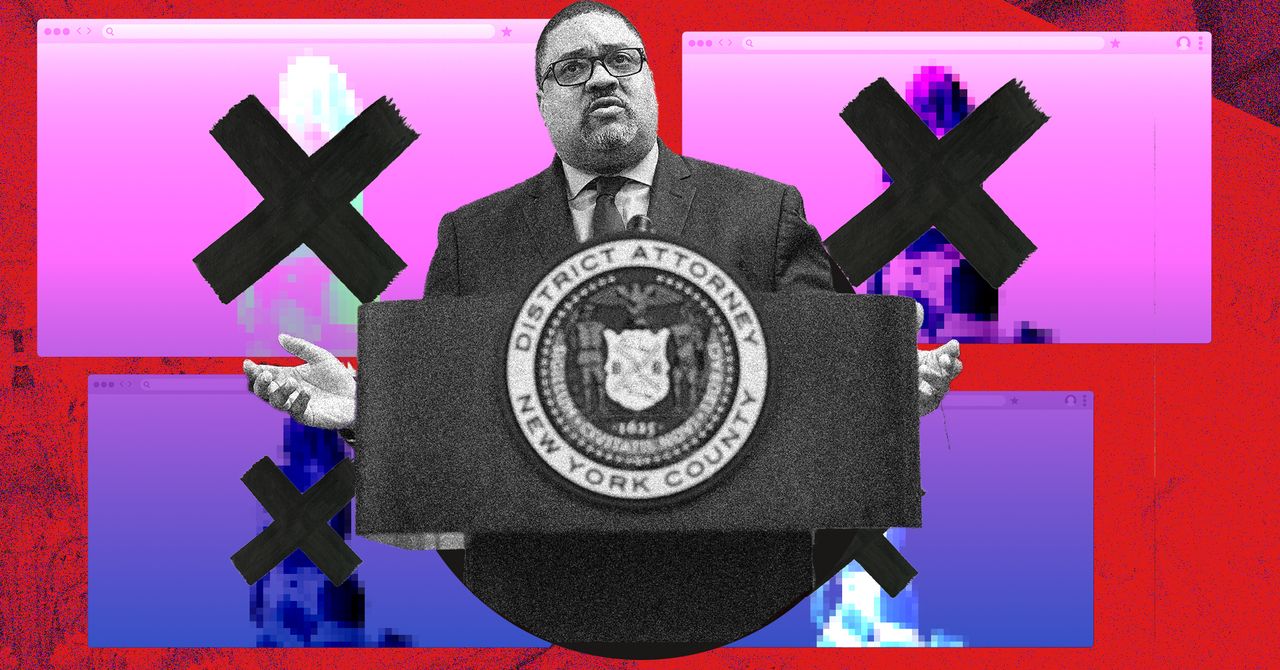
On Monday, September 14, 2026, the Manhattan District Attorney's Office announced it had seized 12 domain names belonging to websites that published, distributed and sold nonconsensual AI-generated sexual deepfakes. According to prosecutors, roughly 1,200 real people — overwhelmingly women, and primarily public-facing figures including actors, politicians, athletes, musicians, social media influencers and activists — were depicted on the sites without their knowledge or consent. WIRED called it likely the largest takedown of explicit deepfake websites to date.
Why It Matters
This is the enforcement model the last two years of deepfake legislation was building toward, and it works differently from everything that came before it. The TAKE IT DOWN Act gave platforms a 48-hour removal clock and law enforcement the authority to seize sites; the DEFIANCE Act created a private civil remedy; a dozen-plus states criminalized nonconsensual synthetic imagery. But content-level takedowns are a treadmill — material reappears faster than it can be reported. Killing the domain kills the storefront, the search ranking, the referral traffic and the payment funnel in one action. For the legitimate adult and sextech industry, the strategic value is real: the deepfake ecosystem has been the single most effective argument against the sector in state legislatures and with payment processors, and it is not an industry the legitimate sector wants to be conflated with. Every successful action against nonconsensual imagery that does not sweep in consensual adult content is a data point that targeted enforcement is possible. The open question is durability — operators can register new domains in minutes, and prosecutors have said they expect exactly that. Whether a state DA's office can sustain a whack-a-mole campaign at internet speed, and whether other jurisdictions replicate the state-court seizure playbook, will determine if this is a turning point or a very good press day.The legal mechanism is the notable part. Rather than issuing takedown demands for individual pieces of content — the approach that has defined deepfake enforcement since the technology emerged in 2017 — the DA's Cyber Crime Bureau went after the domain names themselves, under seizure warrants authorized by a New York State Supreme Court judge pursuant to New York's criminal procedure laws. That is a state-court action, not the federal domain seizure familiar from piracy and counterfeiting cases. WIRED independently observed several of the sites' homepages replaced by "THIS DOMAIN HAS BEEN SEIZED" notices in the days before the announcement.
"1,200 individuals had their faces and bodies stolen and turned into illegal pornography on 12 different websites – without their knowledge or consent," District Attorney Alvin L. Bragg Jr. said in a statement, urging potential victims to contact the office's cybercrime bureau. "These horrific violations of privacy follow victims into their careers and personal lives and take an immense toll on emotional and mental well-being." Investigations into the site operators and the individuals who uploaded material remain ongoing, and prosecutors said they will continue monitoring for attempts to reappear under new domains.
Neither the DA's office nor WIRED has publicly named the seized domains — WIRED withheld them consistent with its practice of not driving additional traffic to nonconsensual imagery sites. Researchers quoted in the coverage filled in the ecosystem picture: Leonie Oehmig of the Institute for Strategic Dialogue noted the seized sites do not appear reachable via VPN from other jurisdictions, arguing that "meaningful, coordinated enforcement is achievable even where regulation itself remains fragmented." Benjamin Shultz of the American Sunlight Project said most of the videos were existing pornographic films manipulated to swap in targets' faces, and that much of it appeared to be reposted from MrDeepFakes, the notorious platform taken offline after its operators were unmasked by reporters. On at least two seized sites, Shultz said, elected officials had dedicated profiles containing their name and position alongside a grid of manipulated videos.
Sources
- New York Seizes a Dozen Celebrity Deepfake Websites — WIRED
- New York Seizes 12 Domain Names Used to Sell AI-Generated Celebrity Deepfakes — Strategic Revenue
- Manhattan DA seizes a dozen celebrity deepfake websites — CNN
Update — 2026-09-16
Initial entry — story first created.