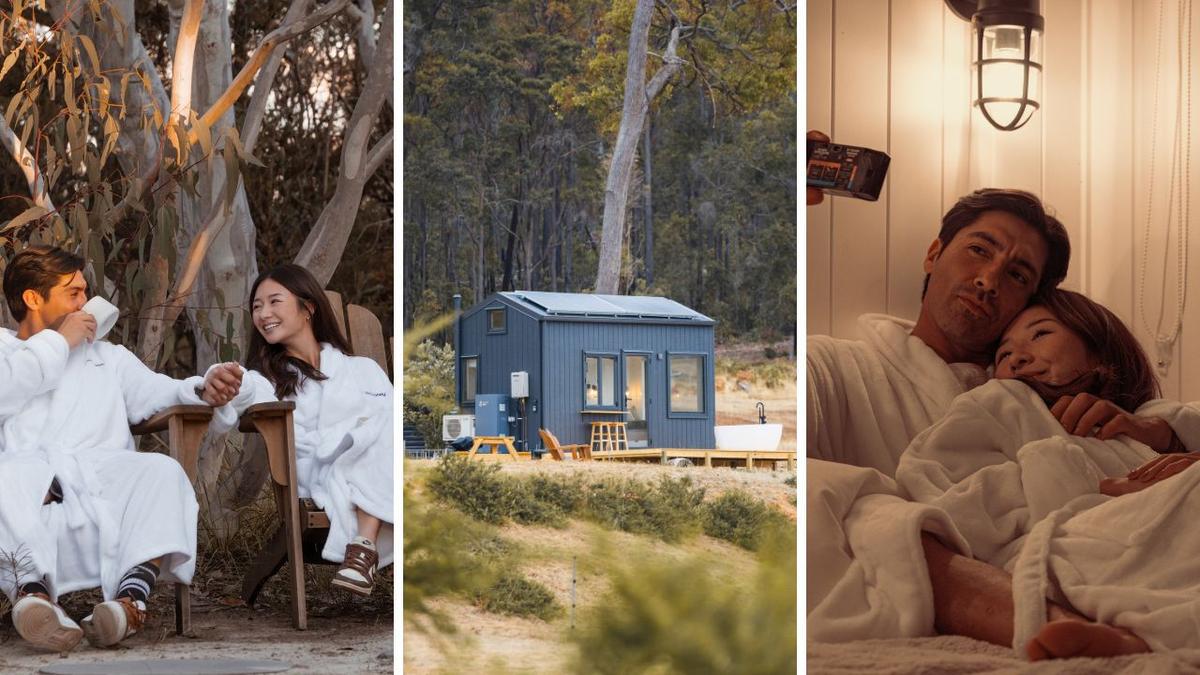
On October 13, 2026, Lovehoney launched DND ("Down N Dirty") in Australia, a pun on the phone's Do Not Disturb setting. It is a partnership with Into The Wild Escapes, which runs off-grid tiny-home cabins. The mechanic, reported by 7NEWS and Time Out: couples screenshot their average daily screen time at check-in and again at check-out, and the bigger the percentage drop, the bigger the discount Lovehoney gives on the stay. Cutting screen time by 50% or more earns a free night. Phones are swapped for a disposable camera and a journal, and every stay includes a Lovehoney "Reconnect Kit" valued at over A$250, sent before arrival. Kits are built around products such as the Pleasure Link Remote Control Couple's Kit, the Rose Clitoral Suction Stimulator and the High Roller remote-control rotating prostate massager, plus lubricants, massage oil and a bondage kit. Bookings open October 20 for stays from November 4 to December 22. Per Time Out, cabins are within a two-to-three-hour drive of major capitals, in the NSW Southern Highlands, Hunter Region, Barossa Valley, Toowoomba, Macedon Ranges, Bendigo and South West WA.
Why It Matters
This is a sex-toy brand buying a place in the travel and "digital wellbeing" pages, which are among the few mainstream channels where a pleasure company can advertise without fighting platform ad rules. Instead of paying for impressions it cannot easily buy on Meta or TikTok, Lovehoney bundles hero SKUs (a couples remote, its best-selling Rose, a prostate toy) into a hospitality experience that lifestyle media will cover for free. It also turns "partner time" into a measurable outcome, the same "couples' connection" positioning the category has leaned on since the pandemic, and ties it to the most culturally accepted anxiety going: screen time. The playbook is spreading. [LELO is selling its first advent calendar](/stories/lelo-couples-calendar-2026-guide) as a couples' occasion, [Durex is sponsoring a football club](/stories/durex-get-wood-rising-woodley), and [Tulipán launched a perfume](/stories/tulipan-condom-perfume-sex-recession) to fight the "sex recession." Sexual-wellness brands are increasingly selling *occasions* rather than products, partly because the occasion is far easier to advertise. The scale is small (a handful of cabins over seven weeks); the value is in the earned media.The campaign rests on Lovehoney's own research. Partnered Australians spend almost four hours a day on their phones but just 19 minutes in physical contact with their partner, giving the device "12 times the attention." Respondents said they would rather keep scrolling than go to bed at the same time as their partner (24%), have a proper conversation (23%) or initiate sex (12%). 52% said an off-grid escape with limited phone access would benefit their relationship. "That gap doesn't open up overnight. It creeps in through the scroll before bed," said Lovehoney sex and relationships expert Christine Rafe. 7NEWS did not publish the survey's sample size or fieldwork dates, so treat these figures as brand-commissioned.
Sources
- Lovehoney launches 'DND': The off-grid getaway where less screen time means a cheaper stay — 7NEWS (Oct 13, 2026)
- These off-grid Australian tiny homes are giving away free stays to couples who ditch their phones — Time Out Australia (Oct 13, 2026)
Update — 2026-10-13
Initial entry — story first created.