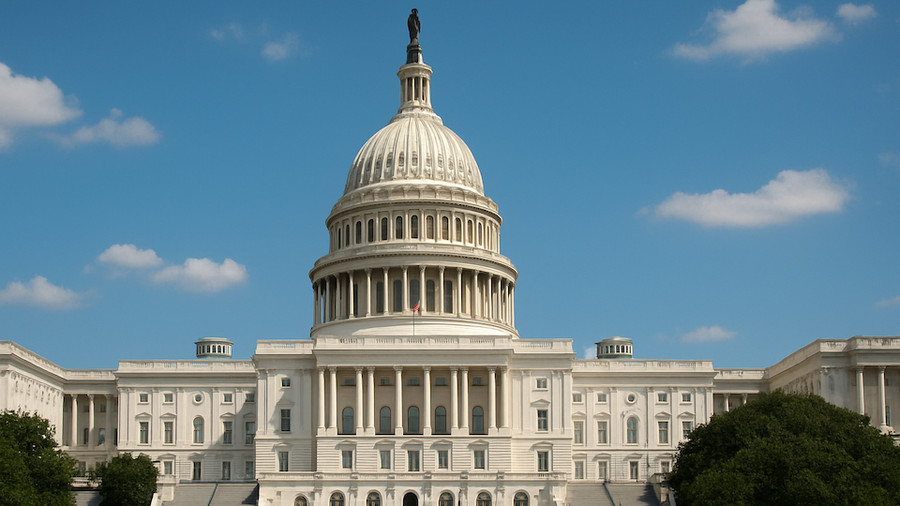
On Monday, June 29, 2026, the U.S. House of Representatives passed the Kids Internet and Digital Safety (KIDS) Act by a vote of 267 to 117 — including 104 Democrats in favor — advancing, for the first time, a federal age-verification mandate for adult websites through a full chamber of Congress. The KIDS Act is an omnibus package stitching together several online-safety bills, and buried inside it is an updated version of the SCREEN Act (Shielding Children's Retinas from Egregious Exposure on the Net), which would impose nationwide age-verification requirements on adult sites.
Why It Matters
This is the furthest a federal age-verification mandate for adult content has ever advanced, and it lands in the wake of the Supreme Court's decision in *Free Speech Coalition v. Paxton*, which upheld Texas's AV statute and unleashed a wave of state-level copycats. For adult platforms, payment processors, and third-party AV vendors, a federal floor layered on top of stricter state laws is arguably the worst of both worlds — more compliance surface, not less. The VPN-circumvention clause signals lawmakers are actively targeting the industry's main workaround. And because the whole package hinges on the unrelated KOSA duty-of-care fight, the fate of federal porn age-checks may ultimately be decided by a debate that has nothing to do with pornography.Under Title I of the bill, labeled "Shielding Minors From Obscenity," adult platforms would have to implement a "technology verification measure" — defined as technology that determines whether it is "more likely than not" that a user is a minor, explicitly going beyond simple self-declaration. Sites or their third-party verification vendors would also be required to take "reasonable measures" to counter circumvention, a provision aimed squarely at the widespread use of VPNs to dodge existing state age-verification laws. Non-compliance would be treated as a violation of the FTC Act's prohibition on unfair or deceptive practices, carrying civil penalties of up to $10,000 per violation.
Crucially for operators, the version that passed was softened from earlier drafts. The original language would have preempted and invalidated the roughly two dozen existing state AV laws; the amended text instead frames the federal standard as a floor, preempting state law only where it directly conflicts and explicitly allowing states to enact stricter requirements. That dashes industry hopes that a single federal statute might replace the current patchwork — attorneys like Corey Silverstein have described the divergent state laws as "absolute havoc" for compliance. Instead, existing state laws would stand, while sites reachable in states without AV laws would newly fall under the federal standard.
The bill now faces steep odds in the Senate, but the obstacle isn't the age-verification section — it's KOSA. Little attention has been paid to the AV provisions; opposition has instead centered on the KIDS Act's softening of the Kids Online Safety Act's "duty of care" language for social platforms, which drew objections from roughly 44 state attorneys general and a coalition of online-safety groups. The Senate is weighing a KOSA version that retains duty-of-care language, and if the two chambers reconcile, the age-verification provisions could either survive in a final package or fall by the wayside. Digital-rights group EFF, which opposes the package, warns the broader bill would "push online services to verify all users' ages" and imposes obligations that depend on knowing whether a user is under 17, disproportionately harming people of color, people with disabilities, and trans and nonbinary users through error-prone age-estimation systems.
Sources
- Federal AV Proposal Passes House, Faces Senate Opposition (XBIZ)
- The KIDS Act Would Require Age Checks To Get Online (EFF)
Update — 2026-07-01
{Initial entry — story first created.}