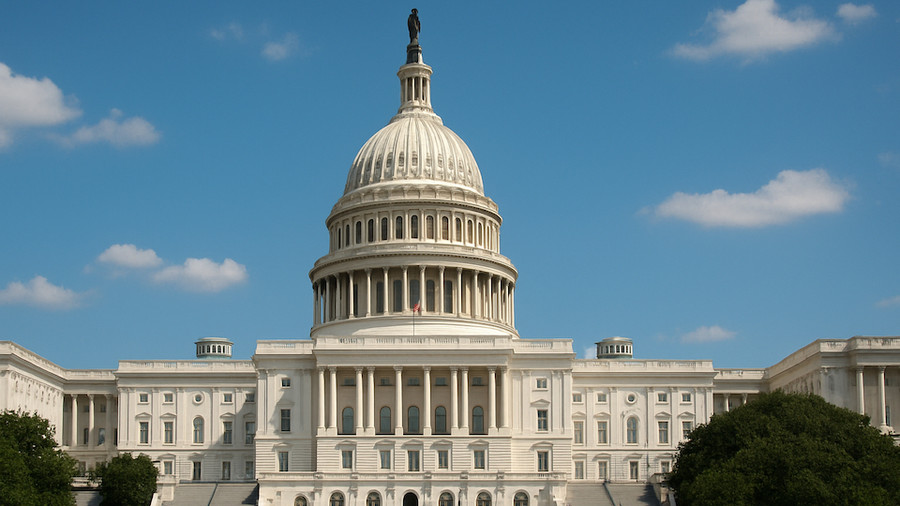
On Thursday, August 27, 2026, Rep. Michael Rulli (R-Ohio) introduced H.R. 10174, the Guaranteeing Rights Against Novel International Tyranny and Extortion (GRANITE) Act, a bill that would prohibit US courts from recognizing or enforcing "a foreign judgment, or a fine, order, or demand issued by a foreign court or a foreign state, enforcing a foreign censorship law." XBIZ reported the introduction on August 28, and trade group NetChoice published an endorsement the same day.
Why It Matters
For US-based adult platforms, creator sites and sextech companies, the compliance nightmare of the last two years has been jurisdictional: comply with Texas, comply with the UK, comply with France's Arcom sweep, comply with the DSA — each with different age-assurance standards and each with real money attached. GRANITE would not stop a foreign regulator from blocking a US site inside its own borders, but it would make the fines much harder to actually collect on US soil, changing the calculus on whether to geo-block versus comply. The bill has been referred to the House Judiciary Committee and has a long road. But it is not an isolated effort: Sen. Eric Schmitt (R-Mo.) signaled similar legislation last year, and Wyoming passed a state version through its House this year before it stalled in the Senate. Trump administration officials have repeatedly characterized European content laws as attacks on American speech, going as far as visa restrictions on EU figures the administration accuses of pressuring US platforms — which suggests executive-branch appetite if the bill advances. The irony worth flagging: the same Congress weighing bills like the SCREEN Act to mandate age verification domestically may be simultaneously legislating that foreign age verification mandates are censorship. Which one your company is subject to may end up depending entirely on where the server sits.The bill defines a "foreign censorship law" as any foreign law that has the primary purpose or substantial effect of restricting or penalizing expression; targets expression based on content, viewpoint or speaker identity; or compels disclosure that would reasonably chill expression — and that would conflict with First Amendment protections if recognized in the US. Per NetChoice, GRANITE would also give Americans facing such judgments an affirmative right to seek a federal declaration that the judgment is unenforceable, and would strip sovereign immunity as a shield for foreign states trying to collect.
The live question for this industry is whether age verification counts. The AV provisions of the EU's Digital Services Act and the UK's Online Safety Act are exactly the kind of foreign speech regulation the bill's authors have in mind — and the bill was conceived by attorney Preston Byrne, who has represented the forum 4chan against Ofcom's attempts to force it to age-gate. But Free Speech Coalition v. Paxton cuts the other way. The Supreme Court there held that requiring proof of age before accessing material obscene as to minors imposes only an incidental burden on adults, which suggests a well-tailored foreign AV law might fall outside GRANITE's definition entirely.
Two industry attorneys told XBIZ the answer is law-by-law. Lawrence Walters noted that "each foreign law would need to be independently evaluated against the holding of Paxton," and that "some foreign laws go far beyond sexual expression when defining 'harmful content,'" potentially shielding US operators from those judgments. Corey D. Silverstein agreed GRANITE could be a meaningful defense "particularly when their application depends on the content being accessed or when they require users to disclose identifying information as a condition of accessing protected speech" — while flagging that the harder hurdle is proving recognition would actually conflict with the First Amendment.
NetChoice's supporting brief points to the European Commission's December 2025 fine against X — roughly $140 million, the first formal non-compliance decision under the DSA — as proof that nine-figure penalties against US-headquartered platforms under speech-adjacent laws are no longer hypothetical.
Sources
- Anti-Censorship Bill Could Shield US Sites From Foreign AV Laws — XBIZ
- Guarding American Speech From Foreign Censors: Why Congress Should Pass the GRANITE Act — NetChoice
Update — 2026-08-29
Initial entry — story first created.
Update — 2026-09-11
A second bill lands, and this one names online safety laws explicitly. On September 10, 2026, XBIZ reported that Rep. Warren Davidson (R-Ohio) has introduced the Halting Overseas Mandates from Extraterritorially Reaching Onto National Territory (HOMEFRONT) Act of 2026 — the second Ohio Republican in roughly two weeks to file a foreign-censorship shield bill, after Rulli's GRANITE Act. Both would bar US courts from recognising or enforcing foreign judgments, fines, orders or demands that enforce a "foreign censorship law."
The definitions differ in a way that matters for this industry. GRANITE defines a foreign censorship law by reference to content, viewpoint or speaker identity. HOMEFRONT defines it as "a law of a foreign country that imposes liability for conduct that would be protected under the First Amendment to the Constitution of the United States if the conduct occurred in the United States" — and then, per XBIZ, specifically extends that to laws imposing restrictions related to online safety and "harmful" content. That is language written with the Online Safety Act and the DSA in the frame.
Davidson's office made the target explicit, stating that "the UK's Online Safety Act, which entered into force last year, purports to give Ofcom jurisdiction over essentially any online service in the world, whether based in the UK or not," and citing Ofcom's issuance of 197 information notices to businesses with US addresses — a figure disclosed in an April 6 freedom-of-information response. "Foreign governments have no business policing the speech of American citizens," Davidson said. "Foreign regulators are using fines and legal threats to pressure American companies into censoring speech protected by the First Amendment. The HOMEFRONT Act would make sure American courts and agencies cannot be used to enforce those penalties and give Americans subject to them the right to challenge them in federal court."
New mechanics beyond GRANITE. Per Reclaim The Net's September 9 review of the bill text, HOMEFRONT goes further procedurally than its predecessor: it would require a party seeking US enforcement of a foreign judgment to show both that the underlying conduct would be unprotected by the First Amendment if it had occurred domestically and that foreign personal jurisdiction met US constitutional due process standards. For online services it adds a Section 230 consistency test. It would bar the US government from assisting foreign investigations or enforcement against US persons for First Amendment-protected conduct, and bar extradition on that basis. It would let US persons sue a foreign government or regulator in federal district court for $25,000 in damages plus attorney's fees. And it would require the Attorney General to report annually to Congress on the number of foreign censorship attempts, compliance costs and penalties.
Still unresolved: does age verification count? Neither bill expressly includes or excludes AV laws, and XBIZ reports that neither Rulli's nor Davidson's office responded to queries on the point. The determination would fall to courts applying Free Speech Coalition v. Paxton, which upheld state AV mandates that only "incidentally" burden adults' protected speech — meaning a foreign AV regime narrow enough to clear the Paxton bar might well survive as non-censorship. Corey Silverstein told XBIZ the analysis cuts the other way as laws get broader: "The argument for HOMEFRONT protection becomes stronger where a foreign law reaches broader categories of lawful expression, employs an expansive definition of 'harmful content,' imposes particularly burdensome or privacy-invasive verification requirements, or otherwise restricts adult access more substantially than the Texas law upheld in Paxton."
Context since the original entry. The pressure this legislation responds to has only intensified: on September 3 Ofcom finalised a £700,000 fine against XGroovy, which then geoblocked the UK entirely, and issued a provisional contravention notice to ZD Media over ten domains. Ireland's Coimisiún na Meán opened its first-ever Online Safety Code investigation on September 8, targeting X. Two competing bills with overlapping intent and different definitions now sit in the House — which, if either advances, means the operative question for US adult operators becomes whose definition of "censorship" makes it into the final text.