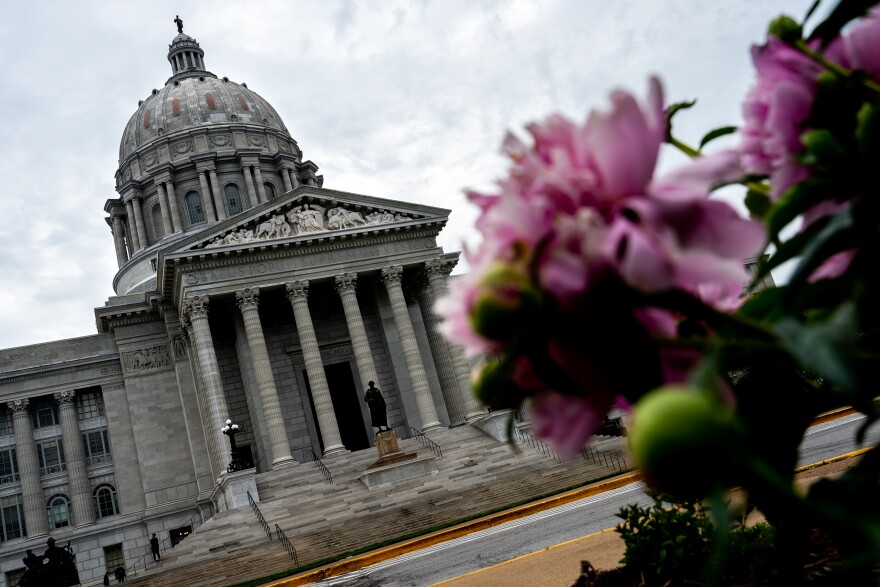
On May 13, 2026, the Missouri House voted 112–25 to approve a bill requiring commercial pornography websites to verify the age of every user through a third-party age-verification provider before granting access. The bill, sponsored by Republican Rep. Sherri Gallick of Belton, advanced from the Senate (which passed it unanimously the same week) and now sits on the desk of Republican Governor Mike Kehoe, who is widely expected to sign. Civil penalties for noncompliant sites scale to $10,000 per day, plus an additional $250,000 if any minor is shown to have accessed sexually explicit content on the platform.
Why It Matters
Missouri is the 2026 marginal data point that turns "state-by-state age verification" from a patchwork into something closer to a national requirement by default. With most adult platforms now needing simultaneous compliance with TIDA (federal), age-verification statutes in 24+ states, the EU Digital Services Act, the UK Online Safety Act, and Australia's regime, the operational baseline for any adult-content platform has shifted decisively toward "build verification infrastructure" rather than "block by jurisdiction." For the sex-tech industry, the secondary effect is more consequential: brands marketing alongside or to adult-content audiences (creator economy tools, teledildonics, cam integrations, payment processors) are increasingly entangled in the same regulatory compliance regime as the content platforms themselves.The bill codifies an existing Missouri Attorney General regulation. Since December 2025, Attorney General Catherine Hanaway has been administratively enforcing an age-check rule against commercial websites where sexually explicit material constitutes more than one-third of total content — the same one-third threshold used in the Texas HB 1181 statute upheld at the Supreme Court last year. The pending bill removes any administrative-vs-statutory ambiguity by placing the requirement directly in Missouri law, and adds the per-day civil-penalty structure that gives plaintiffs and the AG clearer enforcement remedies.
Floor debate produced a familiar split. Republican supporters framed the bill as a child-safety measure consistent with the post-Paxton wave of state age-verification laws now in effect across roughly two dozen states. House Minority Leader Ashley Aune (D-Kansas City) led the opposition, arguing that age verification requirements predictably push major platforms to geo-block the state rather than comply — driving traffic to smaller, less-moderated sites that are more likely to host child sexual abuse material and nonconsensual content. That argument has been borne out empirically in states where Pornhub has blocked access (Texas, Louisiana, Virginia, Australia), with measurable traffic shifts to lower-tier platforms and major VPN-download spikes.
With Missouri added, the state-level age-verification map now covers roughly 24 jurisdictions and adds a fresh test case for whether platforms continue to block (Aylo's approach) or comply (xHamster's approach). The bill's June effective date — assuming Governor Kehoe signs in the next several weeks — falls squarely between the federal TAKE IT DOWN Act's May 19 platform compliance deadline and the Aylo-Utah VPN lawsuit's September trial calendar, putting platform-compliance teams in an unusually compressed regulatory window.
Sources
- Bill requiring porn sites to verify user ages heads to Missouri governor — Missouri Independent
- Porn site users in Missouri will have to prove they are at least 18 — St. Louis Public Radio
- Missouri Age Verification Bill Surges Forward as Senate Votes Unanimously — JRL Charts
- Porn site users in Missouri will have to prove they are at least 18 — KCUR
Update — 2026-05-14
Initial entry — story first created.
Update — 2026-07-09
On July 8, 2026, Missouri Governor Mike Kehoe announced he will sign House Bill 1839 — the age-verification legislation covered above — into law as part of a package of 22 public-safety bills, with an effective date of August 28, 2026. The final bill requires commercial websites and social media platforms where more than one-third of content is "sexual material harmful to minors" to use a third-party provider for "reasonable" age verification (digital ID, government ID, or commercially reasonable data-based verification), and bars those third-party verifiers from retaining identifying user information. Civil penalties remain as previously reported: up to $10,000 per day of noncompliance, $10,000 per violation for data retention by verification providers, and up to $250,000 if a minor is shown to have accessed covered material due to noncompliance. The bill passed the Missouri Senate 32-0 and the House 112-25, with 20 Democrats and five Republicans opposed and 11 Democrats voting "present." It formally codifies the enforcement rule Attorney General Catherine Hanaway has run administratively since December 2025 — the rule that already prompted Pornhub to block Missouri entirely rather than comply. Bill sponsor Rep. Sherri Gallick (R-Belton) and opponents including Rep. Eric Woods (D-Kansas City), who warned VPNs make the law easy to evade, restated their May positions. The signing lands just over a year after the Supreme Court's 6-3 ruling upholding Texas's parallel statute, which Missouri's law explicitly follows as a template.
New Sources
- Missouri governor to sign bill requiring porn websites to verify users are 18 or older — KCUR
- Missouri mandates age verification for porn sites — Springfield News-Leader
Update — 2026-07-13
The bill is now law. Missouri Governor Mike Kehoe signed the age-verification measure during the week of July 7, 2026, as part of a broader package of bills, with the age-verification provisions taking effect August 28, 2026. Per KY3's reporting on the signed law, covered commercial entities — including social media platforms — where more than one-third of content qualifies as "sexual material harmful to minors" must use a third party to confirm users are 18 or older via government ID, and those third parties are barred from retaining any identifying user data. Attorney General Catherine Hanaway can sue noncompliant businesses for up to $10,000 per day, with an additional $10,000 per instance of improperly retained user data and up to $250,000 if a minor is shown to have accessed covered material. Internet service providers, search engines, and cloud providers are explicitly exempt from liability. Kehoe framed it as family- and public-safety legislation; the Electronic Frontier Foundation's Aaron Mackey, its Free Speech and Transparency Litigation Director, criticized the measure as overbroad. With the signature, Missouri joins the roughly two dozen states enforcing Texas-style age-verification mandates in the wake of the Supreme Court's Paxton ruling, and the August 28 effective date sets a fresh block-or-comply decision point for major platforms.
New Sources
- New Missouri law requires age verification on pornographic websites — KY3
- Kehoe signs 19 bills into Missouri law — St. Louis Public Radio
Update — 2026-08-29
It's live. Missouri's age-verification law took effect Friday, August 28, 2026, as scheduled. St. Louis Public Radio's Sarah Kellogg reported the same morning that users must now prove they are at least 18 before accessing sexually explicit content, with verification handled by a third party — digital recognition or ID upload — and those third parties barred from retaining identifying information.
Attorney General Catherine Hanaway, whose December 2025 administrative rule the statute codifies, framed the milestone plainly: "We're now joining the community of states who really care about kids and are protecting them online." She said that other than Pornhub's decision to block Missouri users last year, she has seen no complaints since the rule took effect: "We haven't had concerns about it being difficult. We haven't had concerns about noncompliance." She added that codification mattered because a future attorney general could have simply repealed the rule.
On enforcement, Hanaway confirmed the AG's office will act on complaints rather than proactive sweeps, and will target companies rather than users: "We have no desire to go after individual users. Our efforts would be targeted at investigating the companies to make sure that they are actually requiring the age verification."
The Free Speech Coalition's counter. Mike Stabile restated the displacement argument — that blocking compliant, moderated platforms leaves "pirate sites, sites outside the country, sites that might not take down revenge porn or child sex abuse material" — and warned about scope creep: "These laws were trained on porn because nobody's going to stand up for the rights of you know pornographers. These laws get passed with this vague terminology, and then that terminology is used to threaten other types of speech."
Stabile also made the device-level case that has become FSC's preferred alternative, arguing consumers are willing to age-verify on the phone or laptop where the data stays local: "I scan my face to go into my bank account, right? Knowing that that information stays on the device, and it doesn't have this impact of sending everybody to foreign sites." That position now has infrastructure behind it — Google's Play Age Signals API began its global rollout in July 2026 — and it lines up directly against Utah's opposite bet, where the deemed-location provision tries to make VPN circumvention the platform's problem rather than the device's. Both sides concede the VPN gap: Stabile notes VPN usage surges in every state that passes one of these laws, and Hanaway acknowledged "you will have individual users who are able to circumvent the technology."