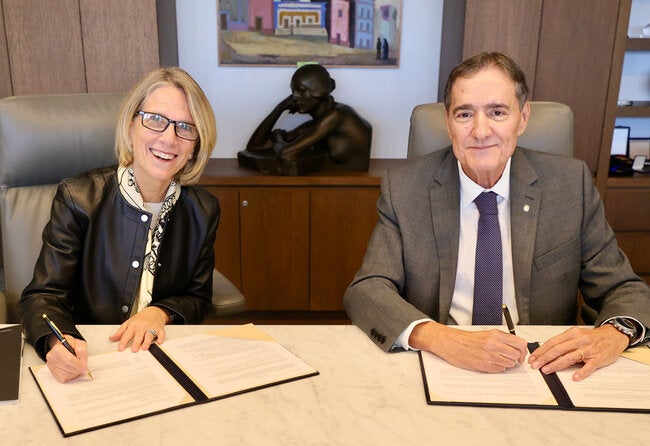
On September 15, 2026, Gilead Sciences and the Pan American Health Organization announced an agreement to accelerate access to twice-yearly lenacapavir for HIV prevention as pre-exposure prophylaxis across all PAHO Member States in Latin America and the Caribbean. The mechanism is the important part: the deal routes lenacapavir through PAHO's Regional Revolving Funds, the pooled-procurement machinery that member countries already use to buy vaccines and essential medicines, creating a single coordinated purchasing pathway instead of fourteen separate national negotiations.
Why It Matters
Long-acting PrEP is the most consequential thing to happen to sexual health delivery since PrEP itself, and the bottleneck has never been the molecule — it's procurement. Pooled regional purchasing is how you turn a headline drug into a stocked clinic shelf, and PAHO's Revolving Funds are the rare mechanism with a track record of doing it at scale. For anyone modeling sexual health markets in Latin America, this changes the assumption set: the question shifts from whether these countries can access lenacapavir to how quickly national programs move on adoption and implementation. There's a second-order effect worth tracking for the wider sexual wellness sector. Every incremental expansion of effective, low-friction HIV prevention reshapes the condom, STI testing and sexual health telehealth markets around it — historically by reducing condom use among PrEP users while increasing routine STI screening contact, since injectable PrEP requires regular clinical touchpoints. Companies selling testing, screening subscriptions or sexual health services in the region should read a twice-yearly injectable as a new, recurring, clinic-anchored moment in the customer journey — and one that arrives without any of the daily-adherence marketing burden that oral PrEP carried.The agreement covers 14 countries that sit outside Gilead's existing lenacapavir voluntary licensing agreements — Argentina, Brazil, Chile, Colombia, Costa Rica, Ecuador, El Salvador, Guatemala, Mexico, Panama, Paraguay, Peru, Uruguay and Venezuela — complementing the generic access routes already operating elsewhere in the region. That gap is exactly where middle-income countries usually get stranded: too wealthy to qualify for licensed-generic pricing, too price-sensitive to absorb originator list prices. Gilead cites a 13% increase in new HIV infections in Latin America and the Caribbean between 2010 and 2024, alongside persistent gaps in PrEP utilization.
"The agreement between Gilead and PAHO reflects our shared commitment to help countries move as quickly as possible from scientific innovation to real-world access to HIV prevention and public health impact," said Johanna Mercier, Gilead's Chief Commercial & Corporate Affairs Officer. PAHO Director Dr. Jarbas Barbosa was more pointed about the implementation problem: "The Americas today have increasingly effective tools to prevent HIV, but these innovations will have an impact only if they reach the people who need them." Gilead also said it continues to explore opportunities with Brazil's Ministry of Health toward local production of lenacapavir in Brazil.
The clinical basis is the PURPOSE 2 trial, which evaluated twice-yearly lenacapavir for PrEP. The practical appeal of a twice-yearly injectable over daily oral PrEP is adherence — two clinic visits a year instead of 365 pills, with none of the disclosure risk of a pill bottle at home. That is a sexual health product as much as an infectious disease one, and its addressable population is defined by behavior and stigma rather than diagnosis.
Sources
- Gilead and PAHO Announce Milestone Partnership to Accelerate Access to Twice-Yearly Lenacapavir — Gilead press release via Investing News Network
- PAHO opens a new pathway to access lenacapavir for HIV prevention in Latin America and the Caribbean — PAHO
Update — 2026-09-18
Initial entry — story first created.
Update — 2026-10-03
The regional lane is reaching Africa's manufacturing base. On October 2, 2026, South African Health Minister Dr Aaron Motsoaledi said the country is preparing to make generic lenacapavir under a voluntary licence from Gilead, Johannesburg broadcaster POWER 98.7 reported. Motsoaledi said Gilead's first round of voluntary licences went to four Indian companies, one in Pakistan and one in Egypt, and no African firm, even though Southern and Eastern Africa carry most of the world's HIV burden. "After hard negotiations, Gilead agreed to give the seventh license," to a South African company. A selection team chaired by Dr Thembisile Xulu (now Director-General of Health, formerly CEO of SANAC), with UNITAID and WHO participating, has shortlisted three South African manufacturers and sent their details to Gilead. South Africa wants more technology transfer than the Indian licensees received, Motsoaledi said, because "we consume 25 percent of all ARVs produced in the world. But we basically produce nothing from scratch."
In a Bhekisisa opinion piece published October 1, the Aurum Institute's Vinodh Aroon Edward flagged the trade-off. South Africa began rolling out the six-monthly jab on June 5, 2026, and cheaper generics made elsewhere are expected from 2027, so waiting for a locally made version could delay access. Local production would reduce the continent's dependence on imports, but its viability depends on price, guaranteed buyers and what licensees are actually permitted to make.
Why it matters: Long-acting PrEP is moving from a few licensed generic makers to a regional manufacturing map. PAHO is pooling purchases in Latin America, Merck has licensed African makers for its monthly pill, and Gilead now has an African licensee for lenacapavir. For the sexual-health market, the cost of preventing HIV is falling on a predictable schedule, starting in 2027.
New Sources
- South Africa to manufacture generic HIV prevention drug lenacapavir — POWER 98.7
- Would homegrown LEN cost more? Why SA should still make the HIV prevention jab — Bhekisisa
Update — 2026-10-07
Demand is outrunning supply where the shot has actually landed. Zimbabwe's Herald reported on October 7, 2026 (republished by Zimbabwe Situation) that the country will begin a nationwide lenacapavir scale-up in January 2027, with a first batch of 23,000 doses already in the country under US-funded support. The pilot started in February 2026 with 2,000 doses across 12 sites and has recorded about 4,700 initiations. Most of the first consignment was used within two weeks, forcing the health ministry to hold back stock so early users could get their second injection. Uptake now averages about 500 new initiations a week. AIDS and TB unit director Dr Owen Mugurungi said "the majority of people who are now on Lenacapavir had never used PrEP before." Users skew female and aged 24–45, and only 13 side effects were reported across nearly 5,000 injections, mostly injection-site reactions.
The access fight is widening. An October 1 Al Jazeera explainer puts US list pricing at about $28,000 per person per year, against roughly $40/year expected for generics, with large-scale generic rollout from 2027. Gilead says it will supply enough lenacapavir for up to three million people through 2028. MSF says that falls well short of the roughly 20 million people who need PrEP of any kind, and is urging countries excluded from Gilead's voluntary licences to consider compulsory licensing, as Brazil did with efavirenz in 2007.
Why it matters: Zimbabwe's numbers are the clearest real-world signal so far that long-acting PrEP reaches people daily pills never did. Most new users being PrEP-naive is the market-expansion case that investors in the US PrEP-telehealth sector (Grindr–Freddie, MISTR) are betting on. It contrasts with the LSE/Duke data Afterglow covered yesterday, which showed outreach NGOs in the same country losing much of their capacity after the aid cuts. The drug is arriving faster than the delivery network can be rebuilt.