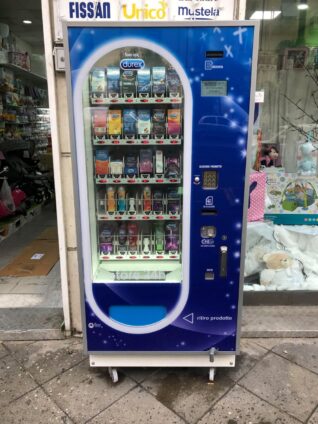
On July 27, 2026, the Ghana AIDS Commission announced it will begin deploying condom vending machines nationwide in the final quarter of 2026, as part of a national condom and lubricant strategy aimed at strengthening HIV prevention. The announcement came during a dissemination meeting in Accra on Ghana's 2026 HIV Estimates and Projections, where stakeholders reviewed the country's epidemic and gaps in the national response.
Why It Matters
Most sexual wellness product-access stories in this publication are about shelf space at Ulta or Boots. This is the same problem — discovery, discretion, distribution — with the stakes turned up and the budget turned down. Ghana's programme is an unusually clear natural experiment in whether unattended retail can solve the privacy barrier in a high-stigma, low-income context, and the honest admission that version one failed on coin theft rather than demand is the most useful data point in the announcement. It's a hardware problem, not a behavioural one. There's a commercial read too. The global condom category has spent 2026 dealing with latex supply shocks and a wave of counterfeits — the EU's anti-fraud office dismantled a 200,000-unit fake condom network in July. Public-sector bulk procurement programmes like Ghana's are a meaningful share of global condom volume, and they are also exactly the channel counterfeiters target. Whoever wins these tenders needs to be able to prove provenance, not just price. Watch the Q4 rollout for whether the anti-vandalism redesign holds, because the answer determines whether a dozen other national programmes copy the model or quietly shelve it.The machines are to be installed at strategic public locations — lorry stations, mosques, stadiums and shopping malls — specifically so people can obtain condoms privately, without the face-to-face transaction with a vendor that stigma makes into a barrier. The Commission also plans to extend the programme into washrooms at ministries, departments, agencies and financial institutions under its national HIV and wellness policy.
Director-General Kharmacelle Prosper Akanbong said hardware will be matched to local conditions: "The machines will not all be the same. Depending on the peculiar characteristics of a local population, the machine deployed could be electronically operated or manually administered." He was candid about why this is a second attempt. Ghana previously ran machines dispensing three condoms for 50 pesewas (roughly four US cents), and the programme collapsed under vandalism — "People were forcefully emptying the machines to take the coins," Akanbong said. The new units are to incorporate anti-tampering measures. He added that condom shortages reported last year have been resolved after additional government procurement.
WHO country office technical lead for HIV, TB and hepatitis Dr. Kafui Senya used the meeting to call for sustained effort on reducing new infections and eliminating stigma, while National AIDS and STIs Control Programme manager Dr. Emmanuel Akwoulo Agyigewe Teviu urged stakeholders to close persistent prevention gaps.
Sources
- Ghana to roll out condom vending machines nationwide by end of 2026 — Asaase Radio
- Ghana plans nationwide condom vending machine rollout to fight HIV — Vending Times
Update — 2026-07-31
{Initial entry — story first created.}