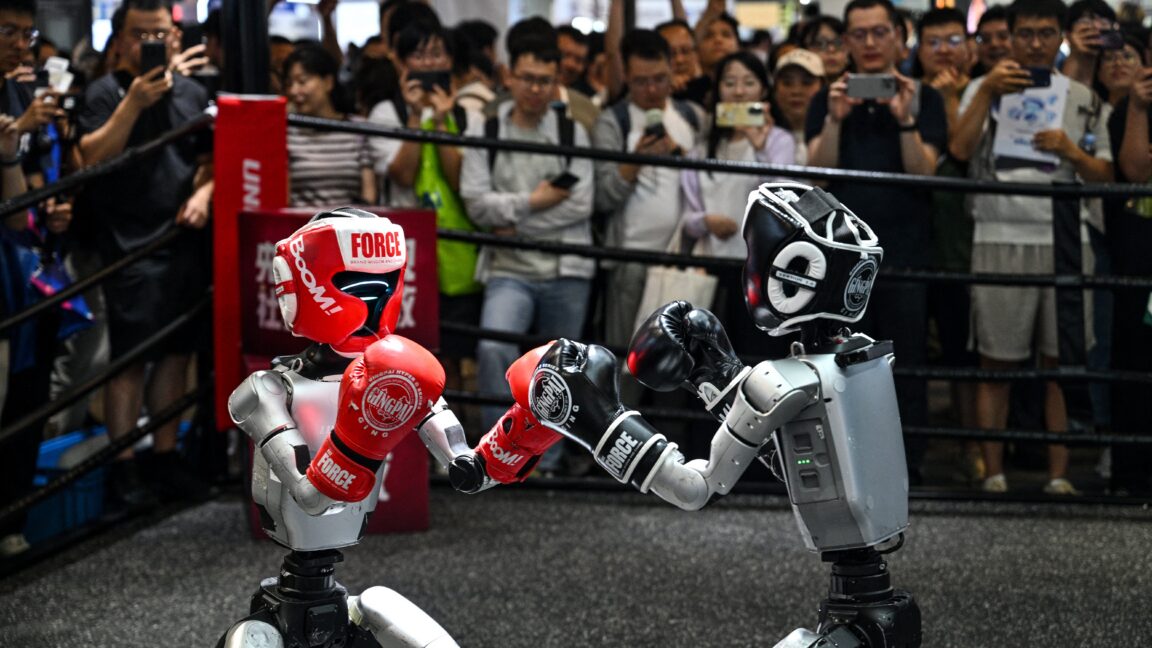
On July 28, 2026, the FCC added "foreign-produced advanced robotic devices" — along with power inverters — to its Covered List of equipment deemed to pose an unacceptable risk to US national security. The practical effect is immediate and blunt: new models in the covered category can no longer receive FCC equipment authorization, which makes them ineligible to be imported or marketed for use or sale in the United States. It is the third such category-wide action in eight months, following all foreign-produced drones in December 2025 and all foreign-produced routers in March 2026.
Why It Matters
The pleasure hardware industry manufactures in Shenzhen. That is not a preference, it is the entire supply chain — motors, silicone tooling, Bluetooth modules, battery assemblies, final assembly. Any US regulatory action that redefines "foreign-produced connected hardware" as a national security category deserves this sector's full attention, and the definition adopted here is startlingly close to describing an app-connected sex toy: sensors, Bluetooth above 200 kbps, onboard or cloud AI models. The saving grace, for now, is "mobile." As written, the covered category requires a device that moves around on the ground, and it explicitly exempts fixed or stationary robots. A vibrator, a stroker, an app-connected wearable — none of these are autonomous mobile robots, and the 4.4-pound threshold excludes nearly the entire category regardless. Companion robotics is the segment genuinely exposed: humanoid and quadruped units are named in the definition, which means Chinese-made companion androids of the kind UBTech and its peers began commercial sales of this summer now face an import wall in the US market, and domestic firms like Realbotix inherit a protected home field they may struggle to convert given their own reputational headwinds. The real risk is precedent creep. Three category-wide Covered List additions in eight months — drones, routers, robots — establishes a template the agency has shown every willingness to reuse, and pairs it with a Buy American Act definition of foreign-produced that sweeps in allied manufacturing. Connected consumer devices that collect intimate behavioural data, transmit it to overseas servers and run adaptive algorithms are an obvious candidate for a future "unacceptable risk" determination, particularly given the sector's genuinely poor security history. Brands with app ecosystems should be documenting data residency, encryption and supply chain provenance now, while it is a competitive differentiator rather than a compliance emergency.The definitions are expansive. Per the FCC order, an "advanced robotic device" is a mechanical mobile device — including autonomous mobile robots, humanoid robots and quadrupeds — that moves on the ground and operates either autonomously or under remote human control, has sensors that perceive its environment, has network connectivity such as Bluetooth or satellite links exceeding 200 kbps in either direction, and runs software or AI models onboard or in the cloud. Devices weighing under 4.4 pounds (including any docking station) fall outside the ban, as do fixed or stationary robots, trains, drones, underwater vehicles, connected road vehicles, and anything the FDA classifies as a device — a carve-out that covers surgical robots, prostheses and mobility aids.
The most consequential drafting choice is the definition of "foreign-produced." As Covington & Burling's tech-policy team notes, for the first time in a Covered List addition the FCC and national security agencies have defined that term as synonymous with anything that does not qualify as a "domestic end product" under the Buy American Act. That is a far broader net than "made in China." Ars Technica's Jeremy Hsu confirms the ban applies to robots produced in nominally allied countries including Japan, South Korea and Germany. China's Ministry of Commerce called the action "discriminatory and suppressive," warned of supply chain disruption and hinted at retaliation.
Existing FCC-authorized models can continue to be imported and sold — the ban is forward-looking, not retroactive — and the Department of Defense (rebranded the Department of War under the current administration and referenced as such in FCC documents) retains authority to exempt specific robots or classes of robots. But the direction of travel is unmistakable. Analysts are split on the merits: Rush Doshi of the Council on Foreign Relations called it "one of the most significant actions taken so far in support of the US robotics ecosystem," while Ars Technica's framing raises the possibility the ban hinders rather than helps domestic robotics by cutting off the cheap research platforms US labs actually use.
Sources
- FCC Restricts Imports of New Foreign-Produced Power Inverters and Advanced Robotic Devices with Additions to its Covered List — Inside Global Tech (Covington & Burling)
- Who wins and who loses after US bans foreign robots? — Ars Technica
Update — 2026-08-03
Initial entry — story first created.