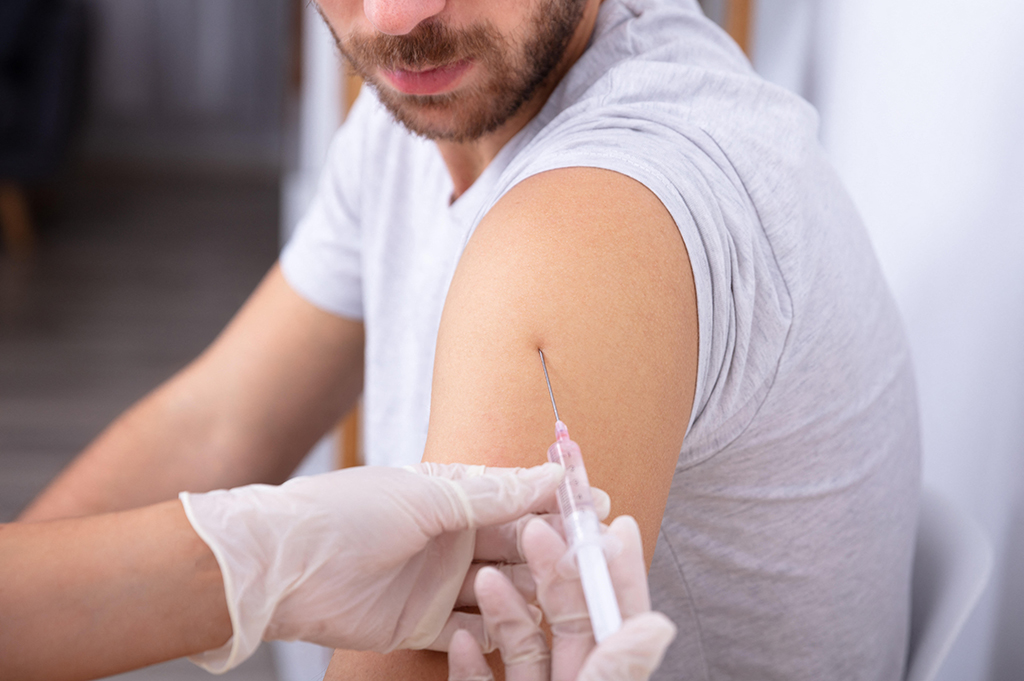
On August 11, 2026, The Pharmaceutical Journal reported that UK high-street chain Boots has launched a private gonorrhoea vaccination service across 160 stores — a £220 course of two 4CMenB (meningitis B) doses available to anyone aged 18 and over — positioned explicitly as an option for adults who cannot access the jab on the NHS. The move commercializes a prevention tool that the NHS began rolling out in August 2025 through sexual-health clinics, where the vaccine is free but restricted to gay and bisexual men with a recent bacterial STI or multiple recent partners, a targeting decision made by the Joint Committee on Vaccination and Immunisation. Boots superintendent pharmacist Claire Nevinson framed community-pharmacy access as a way to "break the chain of transmission," while Terrence Higgins Trust's Taku Mukiwa cautioned that the two MenB doses offer only around 30–40% protection and work best alongside condoms and regular testing.
Why It Matters
The commercialization of STI prevention on the high street is a structurally significant moment for sexual wellness: Boots is effectively productizing a public-health intervention that the NHS rations by risk category, betting there's consumer demand from people who fall outside eligibility but want protection. That mirrors the broader mainstreaming of sexual health into everyday retail — the same shelves now carrying vibrators and lubricant. But the ECDC data underneath is the real story for the sector: a genuine, multi-year rise in transmission across Europe is a demand tailwind for the entire prevention-and-diagnostics stack (at-home testing kits, condoms, PrEP telehealth, and now vaccines), while declining condom use signals a behavioral shift that wellness brands, educators, and public-health bodies will all be racing to address. The equity tension — pay-to-protect vs. free-but-restricted — is likely to define how sexual-health commercialization is debated for the next several years.The Boots launch lands squarely against a worsening continental backdrop. On August 9, 2026, The Economist — drawing on European Centre for Disease Prevention and Control (ECDC) data first reported in May — detailed that Europe recorded roughly 100,000 gonorrhoea cases in 2024, more than three times the 2015 figure, while syphilis cases more than doubled over the same period to about 46,000. Chlamydia, the most common STI, was the only major infection to return to its 2015 level. "There is a real increase in transmission," Dr. Stella Bivol, who heads the WHO's European office for STIs, told The Economist — explicitly rejecting the idea that the surge is merely an artifact of expanded testing.
The drivers analysts cite are a mix of behavioral and structural. A WHO study of 250,000 15-year-olds across Europe between 2014 and 2022 recorded a significant decline in condom use, the most convincing single explanation, though data on adults over 20 (who account for most infections) remains thin. Uneven surveillance obscures the true scale — Romania, population 19 million, implausibly reported just 24 chlamydia cases in 2024 — and antibiotic-resistant gonorrhoea strains are complicating treatment in higher-testing countries. Most alarming, congenital syphilis cases doubled between 2023 and 2024 to 140, concentrated in Bulgaria, Portugal, and Hungary.
For the sexual-wellness industry, the confluence is telling: rising STI transmission is reshaping demand for at-home testing, condoms, PrEP, and now retail vaccination, even as the pricing gap (£220 privately vs. free-but-rationed on the NHS) raises equity questions that Guy's and St Thomas' pharmacist Stephanie Katiyar flagged directly — warning that private provision should "complement rather than create inequalities in access to prevention."
Sources
- Boots launches private gonorrhoea vaccination service — The Pharmaceutical Journal
- Sexually Transmitted Infections Surge Across Europe — To Vima (reporting ECDC/Economist data)
Update — 2026-08-12
{Initial entry — story first created.}
Update — 2026-10-11
The randomised trials have now been pooled, and they don't help the vaccine's case. A meta-analysis published online in Sexually Transmitted Infections (BMJ, ms. sextrans-2026-057145, indexed October 10, 2026) combines four randomised trials of 4CMenB in 1,397 men who have sex with men. Gonorrhoea incidence was 45.1 vs 50.2 cases per 100 person-years in the vaccinated and control groups, a meta-incidence rate ratio of 0.88 (95% CI 0.74–1.05). The confidence interval crosses 1, so there is no statistically significant protection. The authors note the earlier observational studies suggested protection and that national programmes were built on them, and say future work should test whether effects differ in women and lower-risk groups.
This follows the GoGoVax trial, presented at CROI in February and published in July, which found identical incidence of about 48 per 100 person-years in both arms. In its July 31 programme FAQ, UKHSA acknowledged "concerns about the evidence base" but said England's programme continues. It cited observational and modelling evidence, including South Australia's estimated 46% effectiveness in adolescents and a 2024 meta-analysis of observational studies pooling about 33–34%, and said UKHSA will report real-world effectiveness to the JCVI "later in 2026 to 2027." Uptake has been fast. UKHSA's provisional data show sexual health services reported 11,943 first doses and 11,129 second doses in Q1 2026 alone, from 78% of reporting clinics.
What changed for this story: When we first covered it in August, Boots was charging £220 for a two-dose course sold as gonorrhoea protection to adults outside NHS eligibility. The pooled randomised evidence now points to a modest effect at best in the highest-risk group. That makes this a consumer-claims question as well as a clinical one. Boots's "gonorrhoea vaccination" framing, and any private provider copying it, will be judged against RCT data rather than observational data. In the UK, the JCVI review is now the event that could change NHS policy and private positioning together. Condoms, testing and doxyPEP remain the evidence-backed prevention options, and that supports demand for the at-home testing and prevention products this story first highlighted.
New Sources
- Randomised trials of meningococcal B (4CMenB) vaccination for the prevention of gonorrhoea — Sexually Transmitted Infections (BMJ), key messages via NYU Information for Practice (Oct 10, 2026)
- National gonorrhoea vaccination programme using 4CMenB vaccine: frequently asked questions — UKHSA / GOV.UK (Jul 31, 2026)
- Sexually transmitted infections quarterly report, England: provisional data, September 2026 — UKHSA / GOV.UK
- Meningococcal B vaccine fails to prevent gonorrhea, trial finds — CIDRAP (Feb 27, 2026)