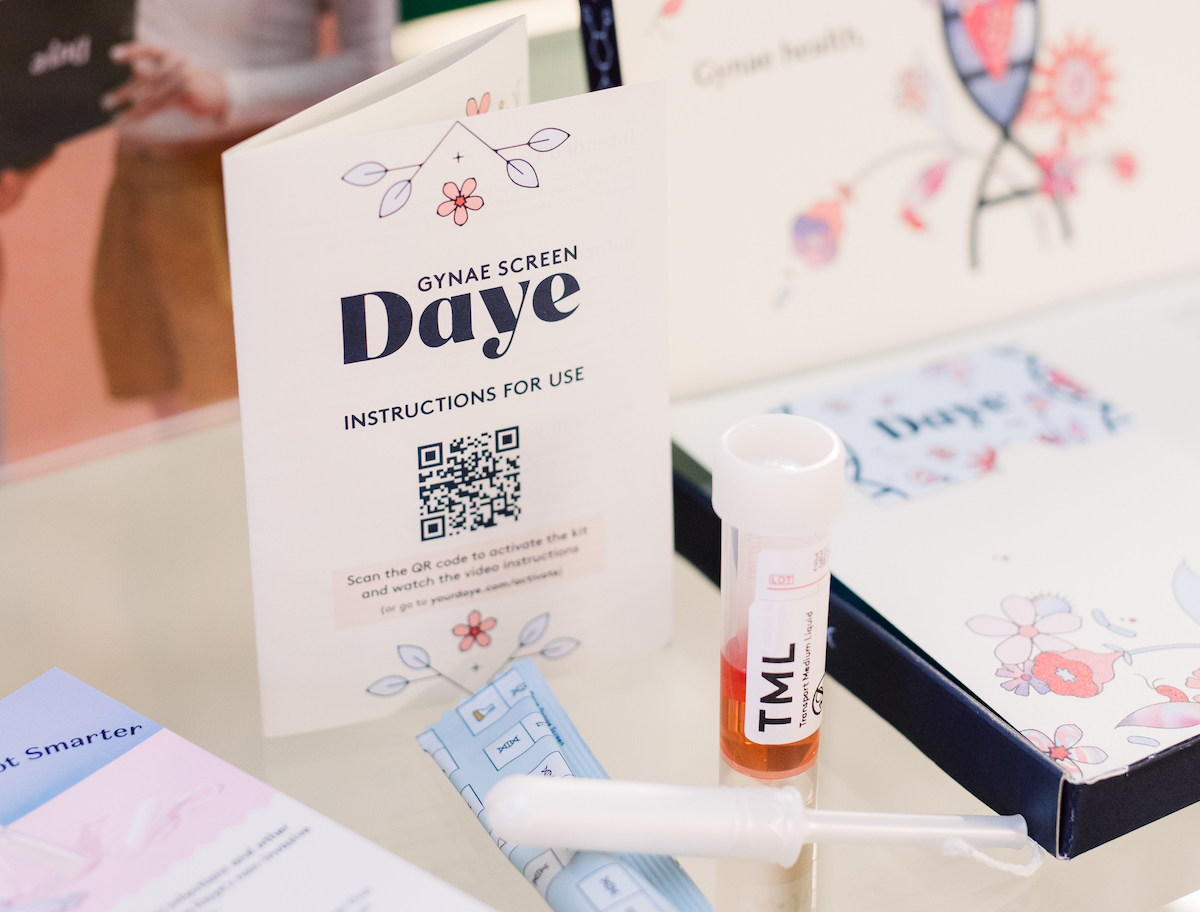
On July 14, 2026, London-based femtech company Daye — best known for its diagnostic tampon — published a paper arguing that cervical cancer screening is ignoring a signal it could already be measuring: the vaginal microbiome. Co-authored with researchers at UCL, Queen Mary University of London, and the London School of Hygiene and Tropical Medicine, and led by Michelle Gomes, the paper appeared in Frontiers in Network Physiology under the title "Predictive modeling for cervical cancer: existing AI approaches and the emerging role of vaginal microbiome."
Why It Matters
Cervical cancer screening is undergoing a global shift toward self-collection and HPV-primary testing, and whoever owns the sample owns the platform. Daye's play is to make its tampon the collection layer for a whole stack of vaginal-health diagnostics — microbiome, STI, HPV — rather than a one-off product. If microbiome data eventually earns a place in validated risk models, self-collection devices that already capture it would have a durable moat. For investors and health systems, the paper signals where at-home gynecological diagnostics are heading: away from single-analyte tests and toward multi-factor, potentially AI-driven risk profiles built on samples women collect themselves.The underlying biology is well established. Lactobacillus-dominant vaginal microbiomes appear protective, while dysbiotic, anaerobe-rich environments are associated with HPV persistence and higher-grade cervical disease. Yet, as the authors note, no validated cervical cancer risk model currently in clinical use incorporates vaginal microbiota at all. Screening has traditionally asked a binary question — is HPV present? — while the paper's argument is that risk actually emerges from a network: the virus, the immune system, the vaginal environment, vaccination status, and behavior all interacting. A better question, the authors contend, is whether the environment is one in which the virus can persist.
The practical hook is what makes this more than an academic think-piece. Daye's Diagnostic Tampon can read the microbiome from the same self-collected sample already taken for HPV screening, meaning the additional signal could be captured at effectively no extra burden to the patient or the lab. That positions Daye's core hardware not as a standalone consumer product but as an on-ramp to richer, multi-factor risk models — potentially ones enhanced by the AI approaches the paper reviews.
The paper is a framing document as much as a clinical result: it lays out how existing predictive models could be extended rather than presenting a finished, validated tool. But by putting its name on peer-reviewed work with three respected UK academic institutions, Daye is doing what a growing cohort of femtech firms are doing — building scientific legitimacy around a self-collection device.
Sources
- Daye Research Makes the Case for Adding the Vaginal Microbiome to Cervical Cancer Risk Models — Femtech Insider
- Predictive modeling for cervical cancer: existing AI approaches and the emerging role of vaginal microbiome — Frontiers in Network Physiology
Update — 2026-07-16
{Initial entry — story first created.}