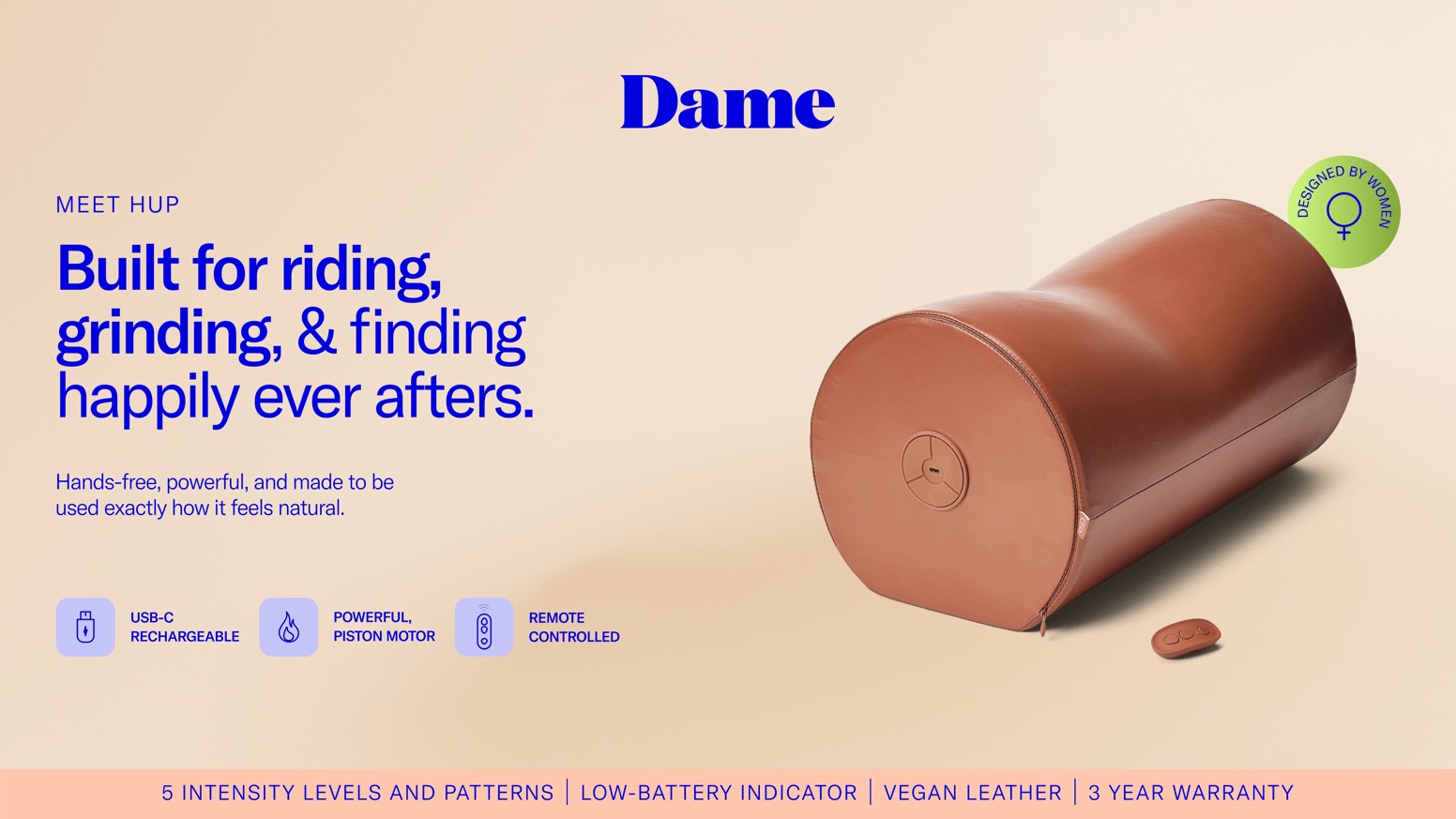
On November 10, 2026, Brooklyn-based Dame Products launched a Kickstarter campaign for Hup, a vibrating pillow built for riding and grinding. It is the company's first rideable product, and Dame is pitching it directly at a category its rep told XBIZ is "largely dominated by machines priced above $1,000." Backers can reserve one for $364. The campaign is all-or-nothing, with a $30,000 goal and a deadline of December 10, 2026. When we checked the page on launch day it showed $17,141 pledged by 45 backers, with 29 days left, and Kickstarter had tagged it a "Project We Love."
Why It Matters
Ride-on devices have been one of the few pleasure-product categories still priced like capital equipment: corded, heavy, four figures and hard to hide. A design-led brand bringing the format to about a third of that price, and disguising it as home décor, tests whether "big toy" demand exists beyond enthusiasts. For retailers, a rideable that doesn't look like a machine can be merchandised next to wellness and home goods. For competitors, a $364 benchmark from a brand with Walmart and Target distribution puts pressure on premium ride-on pricing. Watch whether Hup clears its $30K goal comfortably. A strong result would likely push other mainstream brands to try their own non-anatomical, furniture-adjacent "big toys" in 2027.Dame's campaign page calls Hup a vibrating pleasure pillow "powered by a massage gun." The asymmetrical body is meant to move with the user, and the shorter side has a textured ridge for concentrated friction. It is built from dual-density silicone, soft outside with firmer support underneath, and Dame says the shape was designed around the full internal anatomy of the clitoris rather than only the visible part. According to XBIZ, the outer cover is easy-clean vegan leather in two colorways, Sage and Copper, so that the pillow "reads as a sculptural throw pillow rather than a sex toy." Dame contrasts this with existing rideables, which it describes as "much more expensive, obvious sex machines that require plug-in, corded charging."
The pricing is deliberate. Dame says it kept margins low so Hup could sell below other full-body pleasure devices. The risk section is unusually frank: Dame calls itself an established company with reliable vendors and tested prototypes, and says schedule slippage during a first production run is the main risk to backers. Delivery dates were not part of the material we could verify.
This is a return to how Dame started. The Eva hands-free vibrator began as a crowdfunding project before the brand moved into mainstream retail, as our Eva II guide notes. Crowdfunding works well for Dame: it tests demand for an unusual form factor before any inventory exists, and it creates a launch moment on a platform that, unlike Meta or TikTok, will host a sex-toy campaign without forcing the brand to talk around what the product is for.
Sources
- Dame Launches Crowdfunding Campaign for 'Hup' Vibrating Pillow — XBIZ (Rick Thomas, Nov 10, 2026)
- Hup: A Vibrating Pillow — Dame Products on Kickstarter (campaign page, viewed Nov 11, 2026)
Update — 2026-11-11
Initial entry — story first created.