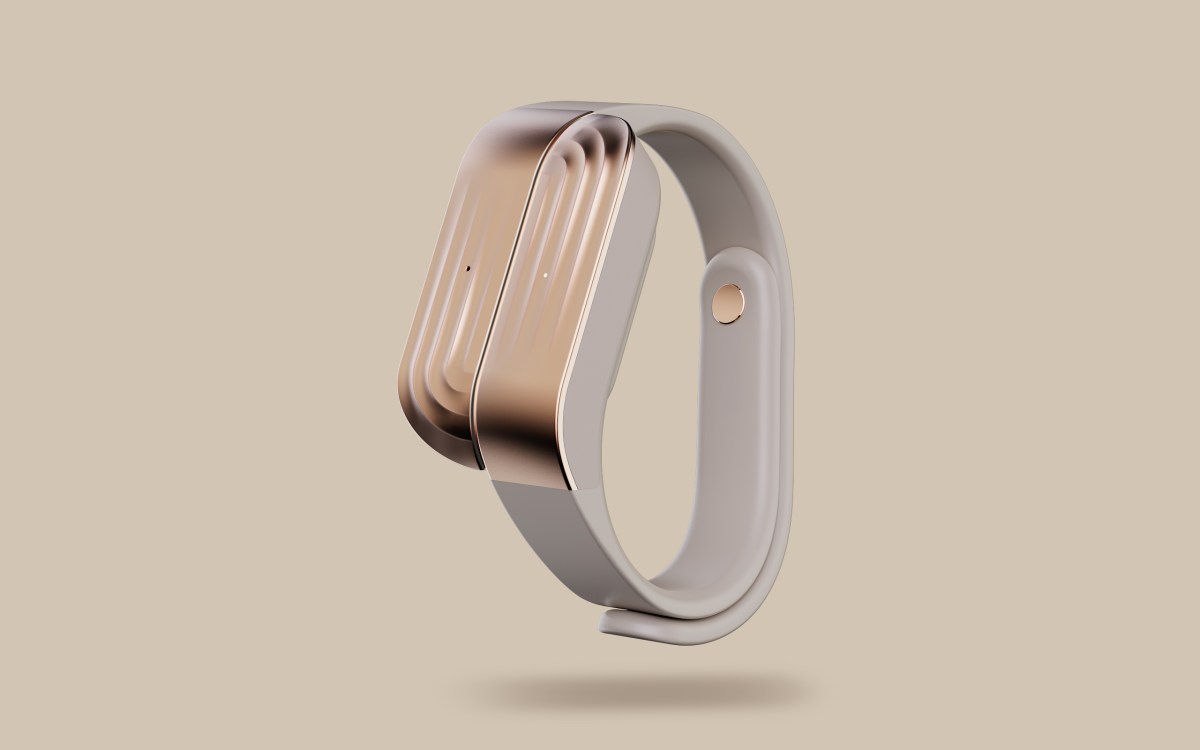
On June 17, 2026, Stanford graduates Jenny Duan and Abhinav Agarwal announced that their startup, Clair Health, had raised $11.6 million to build a noninvasive wearable that continuously tracks women's hormones. The round was led by Khosla Ventures, with participation from a16z speedrun, Brydge Club, Treehub, Cartan Capital, AGI House, Insiders VC, and 23andMe co-founder Anne Wojcicki. Business Insider ran the founders' pitch deck on July 5, keeping the story in circulation into this week.
Why It Matters
Hormonal health is one of femtech's largest unmet needs and a natural bridge between fertility, perimenopause, and sexual wellness — dryness, libido, and mood all track hormonal shifts. A well-capitalized, brand-name investor group (Khosla, a16z speedrun, Wojcicki) signaling conviction in continuous hormone sensing suggests the category is graduating from apps and test strips toward genuine hardware. The technical claims — a "biomagnetic" sensor and voice-based cycle classification — are unproven until the device ships and is independently validated, so the $369 price and subscription model will be tested against whether the readings hold up. For the broader industry, Clair is another data point that investors increasingly see women's hormonal data, not just period logging, as the defensible layer in femtech.Clair's pitch is that mainstream wearables — the Apple Watch, Pixel Watch, and even hormone-adjacent rings like Oura — lean on gyroscopes, optical/PPG sensors, and temperature sensors that simply can't read hormonal signals. The Clair device packs 10 biosensors, including what the company describes as a novel biomagnetic sensor, and pairs the hardware with an AI model trained to classify menstrual-cycle phase, inflammation and bloating markers, energy levels, and perimenopause-related fluctuations. Notably, the app uses voice-based onboarding, with the company claiming its AI can infer a user's cycle phase from a few minutes of conversation and let women describe symptoms in their own words rather than checkbox-style logging.
The company is testing with a closed beta group and plans to ship in November 2026 at $369 for the device plus a $9.99 monthly subscription; preorders are open now. Clair says it has data partnerships covering several million electronic health records to train models around endometriosis, PMDD, perimenopause, and cycle irregularities. Treehub investor Mary Minno framed the appeal bluntly: perimenopausal women are "still getting blood draws to understand the efficacy of hormone treatments," and Clair aims to surface that information without the needle.
Clair enters a crowded and fast-moving continuous-hormone-monitoring race. Level Zero Health is pursuing a continuous glucose-monitor-style approach, Hormona relies on at-home tests, and Estonia's Muun Health (covered here July 9) is chasing a hormone-reading smart patch, while Oova recently integrated Oura Ring data into its hormone-intelligence app. The common thread: everyone is chasing the holy grail of turning episodic, lab-bound hormone snapshots into a continuous, at-home data stream.
Sources
- TechCrunch — Two Stanford grads raise $11M to build a noninvasive wearable for hormone tracking
- Business Insider — Read the pitch deck these Stanford grads used to raise $11.6 million for a wearable device to track women's hormones
Update — 2026-07-13
{Initial entry — story first created.}