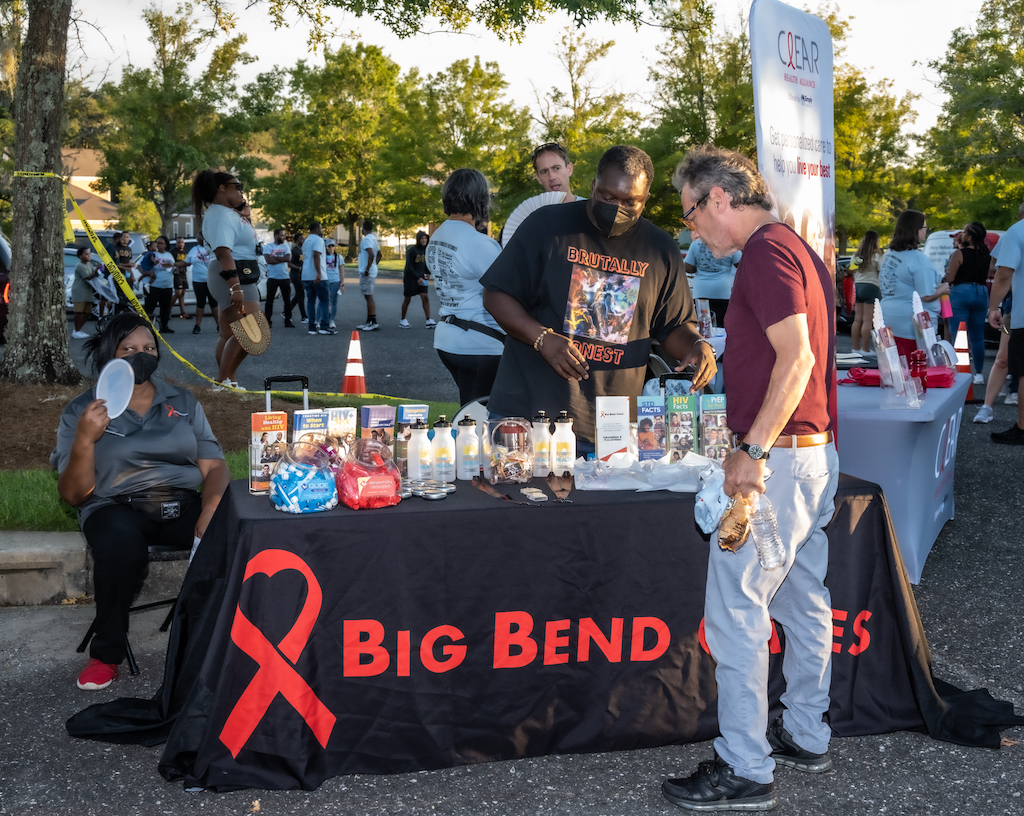
The week ending October 1, 2026, nearly 100 US community-based organizations (CBOs) lost their federal HIV-prevention grants, Stateline reported. The CDC's main five-year direct-to-CBO grant (PS21-2102) was not renewed. Instead, the administration is routing one-time supplemental money through state and local health departments under a separate mechanism (PS24-0047). Since 2021 the direct program has paid nearly $240 million to 96 community organizations in 31 states, D.C., Puerto Rico and the US Virgin Islands. The groups used it for HIV and STI testing, PrEP navigation and linkage to care. When asked why, HHS referred Stateline to the Office of Management and Budget, and neither OMB nor the White House responded.
Why It Matters
Most of the private sexual-health market treats the community-clinic layer as invisible plumbing, but it is where many first HIV tests and PrEP starts happen, especially in the South and among Black and Latino gay and bisexual men. Pulling federal money away from that layer and into state bureaucracies leaves a gap in access. The companies we've covered this month are positioned to fill it: Grindr's newly acquired Freddie and in-app PrEP, MISTR's free-testing offer to state ADAP programs, and at-home STI-test makers. Their pitch to state health departments ("we'll do testing and PrEP navigation at scale, paid per patient") now has a ready buyer holding a one-time grant and short of contracting capacity. The risk is that telehealth and community clinics do not serve the same people. CBOs reach people who do not download an app or have insurance, and losing 340B status removes the margin that let them serve those patients for free. Watch which states pass through the most money, whether any award contracts to commercial telehealth providers, and whether new-diagnosis numbers move in 2027 in the jurisdictions that pass through the least.The headline number is higher, but less of it is likely to reach the groups that did the work. The National Alliance of State and Territorial AIDS Directors (NASTAD) told Stateline that about $90 million will go to state health departments through May 2027, roughly double the ~$48 million a year the old CBO grant paid out. But health departments are only encouraged to pass money on: at least 25% in high-burden Ending the HIV Epidemic jurisdictions and 10% elsewhere, with no requirement. KFF estimated in August that CBOs would need about 35% of the new money just to stay level, and NASTAD puts it closer to 50%. Texas plans to pass along about 23% ($1.2 million of a $5.24 million award). Houston's Allies in Hope expects to lose $441,000 and at least three staff. PowerHouse Charlotte, which offered free HIV and STD screening aimed at gay Black men for 16 years, announced in August that it will close. KFF found that in Minnesota and Oregon, CBOs could not be made whole even if the states passed along 100% of their grants.
The change also causes timing and pricing problems. Health departments typically need 45 to 90 days to set up new contracts, so there is a funding gap that NASTAD's Emily Schreiber said could not be closed by the September 30 deadline. And because CBOs will no longer receive federal money directly, some will lose eligibility for 340B discounted drug pricing. That revenue stream has quietly paid for much of their PrEP and testing work. The direct-to-CBO approach dated to the late 1980s.
Sources
- Community groups lose HIV-prevention money as feds redirect dollars to states — Stateline
- The Future of CDC HIV Prevention Funding for Community Organizations — KFF (Aug. 4, 2026)
- Community groups lose HIV-prevention money as feds redirect dollars to states — Times West Virginian (Stateline syndication)
Update — 2026-10-03
Initial entry — story first created.