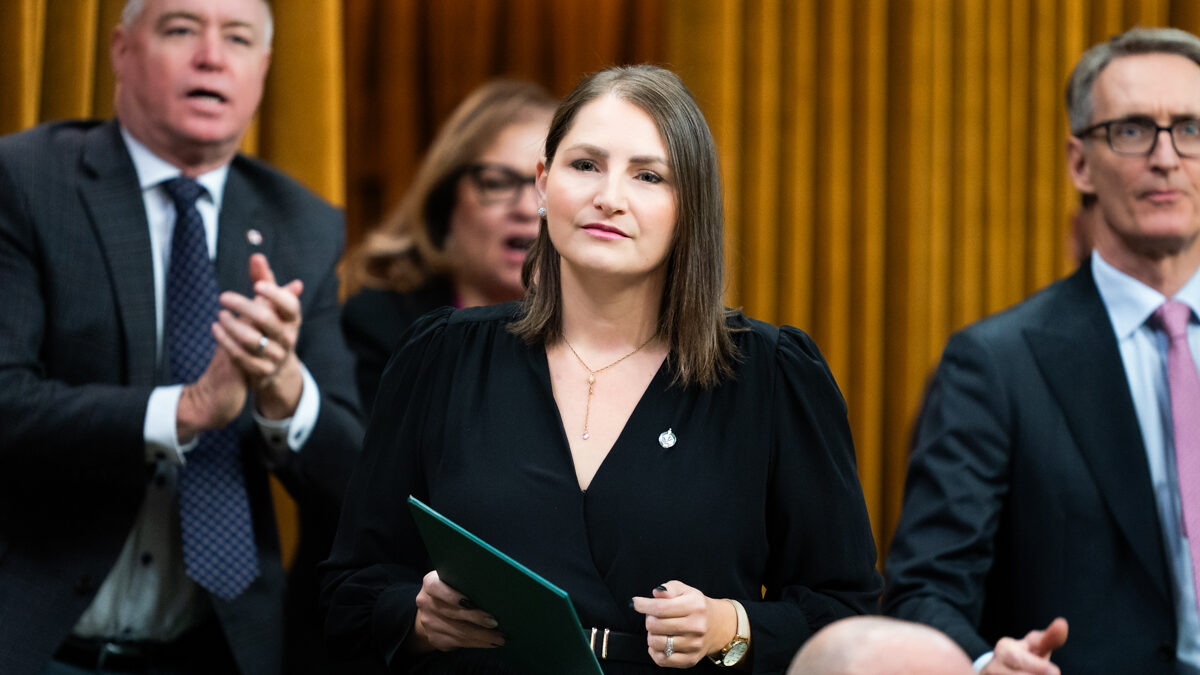
On September 18, 2026, larongeNOW reported that Bill S-209 — the Protecting Young Persons from Exposure to Pornography Act — is scheduled for its first hour of House of Commons debate on September 24, 2026, sponsored in the lower chamber by Battlefords–Lloydminster–Meadow Lake MP Rosemarie Falk. The bill originated in the Senate under Sen. Julie Miville-Dechêne; Parliament's LEGISinfo record lists it as a Senate Public Bill in the 45th Parliament, 1st session, titled "An Act to restrict young persons' online access to pornographic material."
Why It Matters
Canada has been the conspicuous gap in the North American age-verification map. Roughly two dozen U.S. states now have mandates, the UK's Online Safety Act regime is actively fining and geoblocking, the EU is drafting its own tiered scheme, and Australia has built an enforcement apparatus with executive liability attached. A federal Canadian statute would close a large, wealthy, English- and French-language market that adult platforms have been serving without age gates while geoblocking jurisdictions next door. Two design choices set S-209 apart from the American state laws and are worth watching closely. First, the arm's-length third-party requirement plus mandatory data destruction is a direct answer to the "honeypot" critique that privacy advocates — EFF among them — have aimed at U.S. mandates: the bill is structured so the porn site never holds the identity document. Whether that survives contact with implementation is another question, but it is a materially different architecture from asking a tube site to check IDs itself. Second, the ISP-blocking remedy via Federal Court order means enforcement does not depend on reaching a foreign operator. That is the mechanism that gives the bill teeth against sites that would otherwise simply ignore a Canadian notice — and the mechanism most likely to draw Charter litigation. For operators, the practical read is that the compliance surface keeps widening while the technical requirements keep diverging. A platform now needs one approach for Texas-style state laws, another for Ofcom, another for whatever the EU Kids Act becomes, and potentially a fourth for a Canadian regulation that does not yet exist and will be written after the statute passes. The regulation-later structure is the genuine uncertainty here: the bill sets the standard but defers the method, so even passage would not tell the industry what it actually has to build.The mechanics matter more than the politics. S-209 would make it an offence for an organization to provide pornographic material online to someone under 18 for commercial purposes, with a defence available where the organization has implemented a prescribed age-verification or age-estimation method. Penalties run to a maximum $250,000 fine for a first offence and up to $500,000 for a subsequent one. Falk described the standard as "specific but not prescriptive" — the permitted methods would be set later by federal regulation, and could include ID-based verification or age estimation technology. Critically, the bill requires any approved method to be highly effective, operated by a third party at arm's length from the companies commercially providing pornography, privacy-protective, limited to strictly necessary personal information, and required to destroy data collected for verification once the process completes.
Enforcement escalates rather than starting at the site level. The federal government could designate an enforcement authority to issue a non-compliance notice where it has reasonable grounds to believe an offence occurred; the organization gets 20 days to comply. If it does not, the enforcement authority may apply to Federal Court for an order requiring internet service providers to prevent young people in Canada from accessing the material. There is a defence for material with legitimate scientific, medical, educational or artistic purpose.
Falk's framing is the now-familiar one — she compared the requirement to age checks for alcohol, cannabis and cigarettes, said children are typically first exposed at around 10 or 11, and called it "a public health and public safety concern." She also acknowledged the bill's long institutional history: an earlier version was still moving through Parliament when then-prime minister Justin Trudeau prorogued it. September 24 is the first of two allotted hours; MPs vote after the second on whether to send it to committee.
Sources
- ‘Protecting kids': Online porn age-check bill sponsored by MP Falk heads to Commons debate — larongeNOW, September 18, 2026
- Bill S-209, 45th Parliament, 1st session — LEGISinfo, Parliament of Canada (official bill record)
Update — 2026-09-21
Initial entry — story first created.