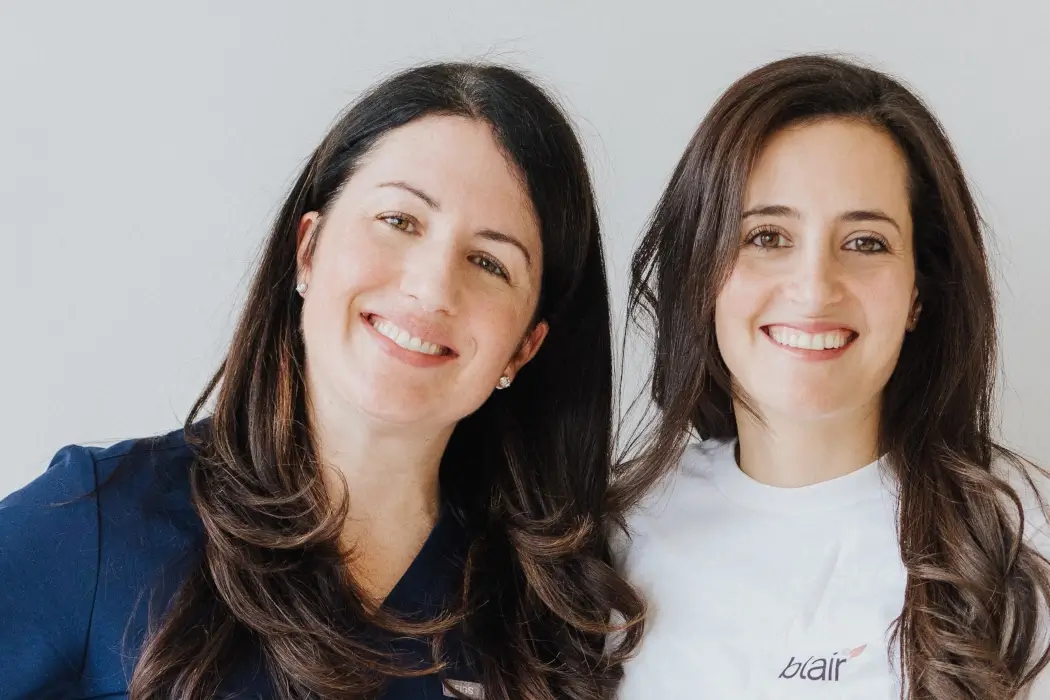
On September 22, 2026, Toronto-based Blair Health announced a C$4.24 million pre-seed round — its first institutional financing, closed in July — co-led by the Business Development Bank of Canada's Thrive Venture Fund, Montréal's Accelia Capital and Ontario telehealth platform Ogaei, with support from the Ontario Centre of Innovation's Life Sciences Innovation Fund and undisclosed angels. The oversubscribed round, structured as SAFEs and convertible notes, brings total capital raised to C$4.5 million.
Why It Matters
Menopause care sits directly on top of sexual wellness — vaginal dryness, painful sex, reduced desire and genitourinary syndrome of menopause are core presenting complaints, and the products that address them (lubricants, moisturisers, dilators, local estrogen, and increasingly off-label testosterone) are the category's fastest-growing shelf. Whoever controls the clinical front door controls where those patients get routed. Blair's bet is that the front door is a nurse practitioner running an encoded pathway, not a specialist clinic or a DTC telehealth brand. That is a structurally different competitive position from Midi, Evernow or Gennev, which built their own clinician networks and sell care directly. Blair sells infrastructure to providers who already have the patients, which makes its distribution the existing primary-care system rather than paid acquisition. It also explains why the employer channel scaled so fast: benefits buyers are purchasing access, not a brand. Two things to watch. First, the 98.7% clinical accuracy claim is doing a lot of load-bearing work and is currently self-reported — the credibility of the encoded-pathway model across Canada and the six US states it has entered will depend on whether that survives external scrutiny. Second, this is the third Canadian women's-health round Afterglow has tracked this week, after Bird&Be's $13M USD Series A on the same day. Canadian femtech is having a genuine moment, and both rounds share an investor: BDC's Thrive Venture Fund. Thrive is quietly becoming the anchor LP of the Canadian women's-health sector, which is worth noting for anyone modelling who gets to set terms in the next up-round.Blair's pitch is narrower and more interesting than "another menopause telehealth startup." The company is not trying to hire more specialists or route patients to them faster; it is trying to encode what specialists know into clinical pathways that nurse practitioners and family physicians can execute themselves, with subspecialist oversight reserved for complex cases. Co-founder and CEO Madge Rumman — previously a product leader at Cadre and PayBright — told BetaKit that through the platform "women get specialist-grade care for perimenopause and menopause, pelvic health and urology, nutrition and weight management, without the long wait for a specialist." The company was founded in December 2024 with co-founder and chief medical officer Dr. Lindsay Shirreff, a certified obstetrician-gynecologist.
The menopause pathway is the proof case, and the numbers Blair puts on it are specific. In Canada's public system, women can wait up to two years for a menopause appointment. Blair says its menopause pathway performs at 98.7% clinical accuracy and that it can train a provider to deliver it in under four hours. The same architecture has since been extended into urology and pelvic health, led by Dr. Sarah Peltz, and into clinical nutrition and weight management, led by Dr. Pooja Singhal. These are Blair's own figures and have not been independently published or peer-reviewed.
The commercial shape is the part investors appear to have bought. Since launching direct-to-consumer in May 2025, Blair has grown to more than 2,300 users across every Canadian province and six US states. Between 55% and 65% of steady-state visits are follow-ups — a longitudinal retention profile rather than a one-and-done prescription funnel. And the employer channel, piloted across professional services, hospitality and financial services organisations, went from close to zero a year ago to roughly half of revenue in the first half of 2026, converting into recurring annual contracts. The new capital funds engineering and product, US and Canadian commercial expansion, and growth of clinical operations, the provider network and a 12-person team.
Investor framing was consistent on the underserved-market thesis. Roxanne Turcotte, SVP of Inclusive and Government Funds at BDC, called expanding access to specialised care "a significant opportunity to improve outcomes for women while building innovative healthcare businesses." Accelia Capital partner Catherine Poulin-Filion was more pointed about differentiation: "What stood out to us was the team's ability to rethink how care can be delivered rather than simply digitizing an existing model." Rumman's own framing of the constraint is the sharpest line in the announcement: digitising existing specialists "only goes so far" when there simply are not enough of them.
Sources
- Blair Health secures $4.2 million to make specialized women's care more accessible — BetaKit
- Blair Health Raises C$4.2 Million Pre-Seed To Close Specialist Gap In Women's Health — Pulse 2.0
Update — 2026-09-24
{Initial entry — story first created.}