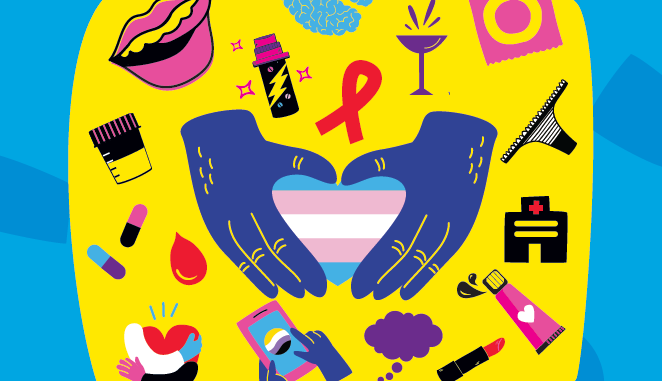
On September 15, 2026, the Kirby Institute at UNSW Sydney released the second Australian Trans and Gender Diverse Sexual Health Survey at the joint Australasian HIV&AIDS and Sexual and Reproductive Health Conferences in Melbourne — the largest study of its kind ever conducted in Australia, with 4,388 participants recruited across every state and territory in 2025. That is three times the participation of the first survey in 2018, and it produces the country's only national dataset on sex, relationships and health for trans and gender diverse people.
Why It Matters
The trans-inclusive design conversation in sextech has been running for years on assertion — that gendered product categories, gendered marketing and gendered clinical intake forms push people away. This is the first dataset large enough to price that claim. A 59% reduction in the odds of recent STI testing among people who experienced unaffirming care is the kind of effect size that changes procurement decisions, not just brand positioning. For telehealth platforms, sexual health services and femtech companies whose intake flows force a binary gender selection and then route care from it, the survey supplies the counterfactual: the cost of that design choice shows up as people not getting tested. For the pleasure products industry the signal is about where growth actually sits. Afterglow has tracked the steady migration toward gender-neutral toy design, non-anatomical forms and de-gendered category pages — and this data suggests the audience is both larger and more commercially engaged than the industry's marketing spend implies, with 74% in satisfying relationships and sexual satisfaction up 42% in seven years. The non-binary findings are the sharpest brief: services and products built around "rigid ideas of gender" fail this group specifically, and it is the group showing the worst health outcomes. The context that should temper any celebration is the 51% sexual violence figure, unchanged since 2018 and roughly triple the general-population rate. Better care experiences and better sexual satisfaction have not moved it. Consent-centred product design, safety features in dating and intimacy platforms, and community-led services are operating against a baseline of violence that improved clinical culture has not touched.The headline findings are genuinely positive. Seventy-four percent of respondents reported satisfying romantic relationships, and the share satisfied with their sexual lives rose 42% between 2018 and 2025. "It's really encouraging to see that trans and gender diverse people in Australia are leading fulfilling intimate lives," said Teddy Cook, study co-lead and Adjunct Senior Lecturer at the Kirby Institute. "We also found low rates of depression and high rates of gender satisfaction, which speaks to our community's resilience and the positive lives people are building." More than half — 55% — reported receiving affirming sexual health care, up from 36% in 2018, with gains across sexual health clinics, community-led services, general practices and hospitals. One in five, however, still reported unaffirming care, most commonly among non-binary respondents.
Buried in the STI section is the single most useful number in the report for anyone designing a sexual health service. STI testing remains low: only one in three respondents had been tested in the year before the study, while diagnoses of chlamydia, gonorrhoea and syphilis increased. Study co-investigator Mai Nguyen put the mechanism on the record: "people who reported unaffirming care had 59% lower odds of a recent STI test than those with affirming experiences, underscoring the importance of respectful care." That is a direct, quantified link between clinical culture and a clinical outcome — not a values argument, a testing-rate argument. Findings from the nationally representative Australian Study of Health and Relationships released alongside it show trans and gender diverse people have higher STI rates than cisgender counterparts.
PrEP uptake doubled between surveys, from 1.9% in 2018 to 4.0% in 2025, but remains low, and many respondents reported receiving inaccurate or confusing PrEP information from healthcare providers. "PrEP is an incredibly effective and safe HIV prevention tool, but more work is needed to demonstrate its safety and utility for trans and gender diverse people at risk of HIV," said co-investigator Jorj Kelly. Non-binary respondents fared worst across the board — less affirming care, the largest STI increases, less diagnostic testing and lower condom use. "Non-binary people deserve access to safe and inclusive services, but they are currently falling through gaps of services built around rigid ideas of gender," said Mish Pony, CEO of Flat Out and a study co-investigator. And the survey's grimmest finding did not move at all: 51% of respondents had experienced sexual violence or coercion, roughly three times the rate other studies estimate for the broader Australian population (about 14%), with half also reporting intimate partner violence.
Sources
- Largest trans sex and health survey highlights resilience and progress — Kirby Institute, UNSW Sydney
- Australian Study of Health and Relationships — ASHR
- STI rates remain high in Australia's latest sexual health data — Kirby Institute, UNSW Sydney
Update — 2026-09-19
{Initial entry — story first created.}