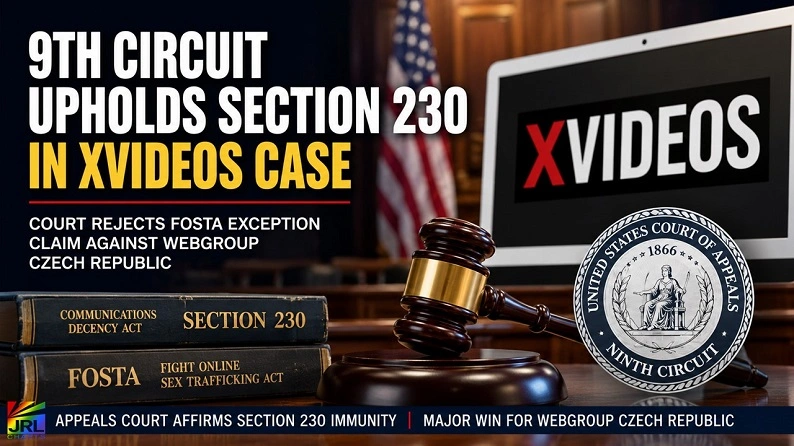
On August 18, 2026, the U.S. Court of Appeals for the 9th Circuit upheld a lower court's ruling that Section 230 of the Communications Decency Act shields WebGroup Czech Republic — the EU-based parent of tube sites XVideos and XNXX — from liability over illegal videos of a plaintiff filmed when she was a minor and uploaded to its platforms by a third party. The decision, reported by XBIZ and JRL Charts, leaves the industry's most important liability shield intact in a case the National Center on Sexual Exploitation had backed as a vehicle to pierce it.
Why It Matters
This lands in the same month Aylo agreed to a proposed $120 million settlement of two "Children of Pornhub" class actions — and the contrast is the story. Aylo bought certainty and wrote compliance obligations into a consent framework; WebGroup litigated and won on the law. For platform operators, the ruling reaffirms that FOSTA is a narrow keyhole, not a door: plaintiffs must plead specific knowledge and participation, not just the presence of illegal content plus ignored takedown requests. That has practical consequences for anyone building in the adult-content stack. It suggests notice-and-takedown responsiveness remains the operative legal posture, and that the current litigation wave against tube sites will keep running into a pleading wall unless Congress amends FOSTA — which, given the SCREEN Act's recent stumble in Senate Commerce and the broader appetite for platform regulation, is not implausible. Expect NCOSE and allied groups to shift energy toward legislative fixes and state-level enforcement, the same pattern already visible in Texas's registry-lock tactics. For payment processors and insurers pricing adult-platform risk, a durable Section 230 shield is a meaningfully different actuarial picture than a Aylo-style settlement exposure.The plaintiff, identified in court records as Jane Doe, tried to route around Section 230 using the exception created by FOSTA, the 2018 Allow States and Victims to Fight Online Sex Trafficking Act. FOSTA strips the shield when a platform's conduct amounts to a violation of the federal criminal sex-trafficking statute — but under existing Ninth Circuit precedent, merely alleging illegal material appeared on a website doesn't clear that bar. A plaintiff must establish that the defendant knowingly benefited from and knowingly assisted, supported or facilitated a sex-trafficking venture, which the court described as requiring "actual knowledge and a causal relationship between affirmative conduct furthering the sex-trafficking venture and receipt of a benefit."
The panel found Doe hadn't met that standard. Despite the complaint's use of the term "sex traffickers," the ruling notes she did not allege the person who uploaded the videos actually trafficked her within the statutory definition, nor did she adequately establish WebGroup's knowledge of trafficking. On the notice question, the court observed that while Doe alleged she "reached out to XVideos and XNXX multiple times over the years, beginning in at least 2017," she did not allege she alerted WebGroup to the circumstances of sex trafficking until her attorney sent a cease-and-desist letter in 2020 — at which point the company removed her videos. "Doe fails to adequately allege WebGroup's knowledge of and participation in sex trafficking activities for the FOSTA exception to apply," the ruling concludes.
NCOSE chief legal officer Dani Pinter served among the attorneys representing Doe. The U.S. District Court for the Central District of California had ruled against the plaintiff in 2025; this appeal affirms that outcome.
Sources
- Appeals Court Upholds Section 230 Immunity in XVideos Case — XBIZ
- XVideos Scores Major Section 230 Victory as 9th Circuit Rejects FOSTA Challenge — JRL Charts
Update — 2026-08-19
Initial entry — story first created.