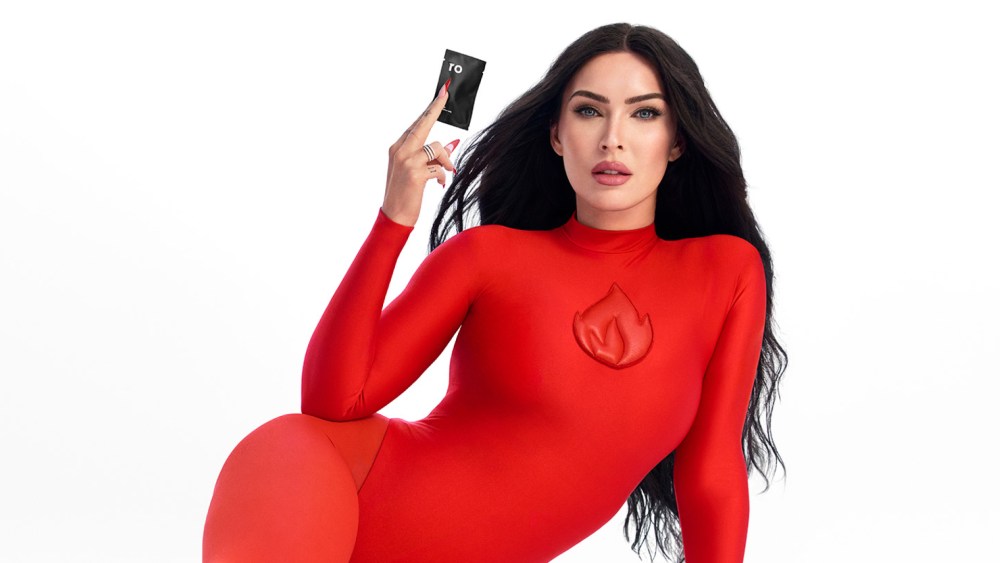
On October 1, 2026, telehealth company Ro launched "Megan Fox Is Ro Sparks," the first celebrity campaign for its compounded erectile-dysfunction drop. In the ad, Fox plays the product itself. She wears a red catsuit with the Sparks logo and describes, in the first person, what the medication contains and what it does. "Hi, I'm not Viagra," she says in a line quoted by The Hollywood Reporter. Adweek reports that the campaign is running on linear TV, streaming and paid social, with a Times Square takeover and tear-away posters across New York City starting October 5. Variety says Ro will also test the tear-away concept in Los Angeles.
Why It Matters
Compounded "dual-action" ED products used to be a niche of smaller telehealth players. This summer MISTR launched its sildenafil-plus-tadalafil lozenge and Shed added three combination formulas, and both stories are in our archive. Ro now has a prime-time, celebrity-fronted campaign for one. That makes the compounded combination a mass-market ED format rather than an edge case. It also sharpens the competition with Hims & Hers. Both companies ran Super Bowl ads this year, and both now market proprietary, non-FDA-approved ED formats that the other cannot copy exactly. The exposure that comes with it is just as large. A national campaign tells a mass audience that a compounded drug is the fast option. Ro's own disclosures say such drugs are "not FDA-approved and do not undergo FDA safety, effectiveness, or manufacturing review." The supply chain behind compounded ED drugs is already under scrutiny. In September we covered an FDA warning letter to an Indian maker of sildenafil and tadalafil ingredients whose products were imported for US compounding. A campaign this visible will invite questions about claims like "hard in 15 mins," and possibly from regulators as well as viewers. For brands across the category, the creative choice is worth noting too: ED marketing has moved from personal patient testimony to playing up the product's sex appeal. Expect copycats.Ro Sparks is a single sublingual drop that combines sildenafil and tadalafil, the active ingredients in Viagra and Cialis. Ro's product page labels it "Compounded medication. Not FDA-approved." It promises an erection in about 15 minutes on average once the drop dissolves, and says it can last up to 36 hours because of the tadalafil. Pricing is $12 a dose on a monthly subscription, from $48 for four doses to $168 for fourteen, with quarterly plans also available. The same page says almost 2 million members have been treated for ED through Ro.
The casting was a deliberate strategy. Adweek reports that Ro's in-house marketing team found in consumer research that men respond better to ED marketing when a woman delivers it. Ro's earlier celebrity work for its GLP-1 business used actual patients, including Serena Williams and Charles Barkley. This campaign leans on Fox's sex-symbol persona instead. "Megan Fox has the ability to take the topic of ED out of a commercial and into the zeitgeist, into the shows, into the feed, where people are already talking about sex," Ro co-founder and chief product officer Saman Rahmanian told Variety. "That's where the stigma lives and that's where it has to be challenged." He said Fox signed a long-term deal and could appear in Ro advertising for the next one to two years.
Sources
- Megan Fox Is the ED Treatment In New Ro Sparks Campaign — Adweek
- Megan Fox Commercial for Ro Eases Taboos Around Erectile Dysfunction — Variety
- Megan Fox's New Role? Promoting Erectile Dysfunction Pills for Ro in All-Red Ensemble — The Hollywood Reporter
- Ro Sparks product page — Ro
Update — 2026-10-02
Initial entry — story first created.
Update — 2026-10-19
The ad hits the playoffs, and the backlash. Ro's Megan Fox spot has become one of the two ads at the centre of a controversy over "soft porn" commercials during Major League Baseball's postseason. It started on Monday, October 12, when Provo, Utah father of five Taylor Murphy posted, "Hey MLB — wanna get more kids watching baseball? Maybe start with the commercials." His father, former NL MVP Dale Murphy, shared it. On Tuesday, October 13, Los Angeles Dodgers outfielder Alex Call posted on X: "Can we please get the soft porn ads off playoff broadcasts, TBS, Fox, NBC, @MLB? My son wants to watch baseball with Dada, but how do I justify that when a half-naked women could come on screen anytime??" The main target was Sydney Sweeney's near-nude ad for prediction market Novig, but the Deseret News reports that "a Megan Fox commercial for a sexual-dysfunction product has also drawn fire." Commenters called for networks to drop gambling, sexual-dysfunction and horror-film ads. Sports Business Journal reports that fans cheered Call when he was introduced before NLCS Game 3, and that the league had not responded publicly.
What changed: Ro bought prime sports inventory for a compounded ED drug and got exactly the "zeitgeist" moment co-founder Saman Rahmanian wanted. It is now also a reference point for ad-standards complaints. The criticism is mostly about the sexualised creative, not ED treatment itself, but the two are getting lumped together, along with gambling ads, in calls for "G-rated" breaks. That matters for the whole men's-health telehealth category, which relies on sports audiences: Ro and Hims both ran Super Bowl ads this year. Broadcaster standards departments, not regulators, are the near-term risk. If networks tighten placement rules around family-heavy live sports, ED brands lose their most efficient reach. We have seen no sign yet that Ro is pulling or changing the spot.
New Sources
- How 'soft porn' ads became part of the conversation around the MLB playoffs — Deseret News (Oct 16, 2026)
- Dodgers' Alex Call gets cheers after Sydney Sweeney ad remarks stir debate — Sports Business Journal (Oct 15, 2026)
- Dodgers' Alex Cole urges removal of sexualized postseason ads from MLB broadcasts — Chosun Biz (Oct 15, 2026)