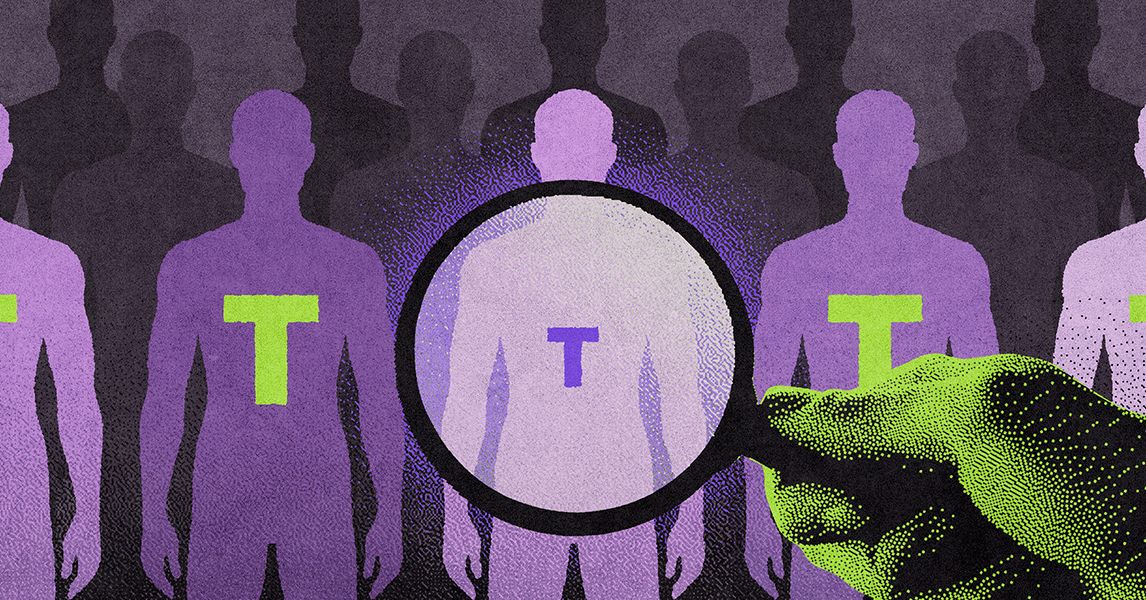
On October 21, 2026, Hims & Hers Health (NYSE: HIMS) launched injectable and oral testosterone replacement therapy (TRT) for eligible men. The company calls it "the largest expansion" of its men's health program since it entered the testosterone category. There are three new options. The first is a compounded subcutaneous injection taken twice a week. The second is generic testosterone cypionate, a commercial product injected into muscle once a week. The third is Kyzatrex, an FDA-approved oral testosterone capsule, which Hims says brings "up to 96%" of men to normal levels within 90 days. These sit alongside the existing Testosterone Rx+ line, which is based on enclomiphene and works by stimulating the body's own production rather than replacing the hormone.
Why It Matters
TRT has been one of men's health's fastest-growing cash-pay categories, and the largest DTC platform has now entered it directly. Epic Research data showed U.S. [testosterone prescribing at an all-time high](/stories/testosterone-prescribing-resurgence-2026) after the boxed warning was removed. The [Pentagon's screening order](/stories/pentagon-testosterone-screening-troops) has kept "low T" in the political news. Hims' entry should push smaller turnkey TRT clinics toward lower prices and better lab standards, and squeeze branded self-pay programs like [LifeMD's Xyosted deal](/stories/lifemd-xyosted-self-pay-telehealth). There are also risks. Controlled-substance telehealth draws DEA, state-board and FTC attention at the same moment Hims is defending an [FTC data-sharing lawsuit](/stories/hims-ftc-data-privacy-lawsuit) and a [securities class action](/stories/hims-securities-class-action-board-probe). Its lead-plaintiff deadline is **November 2**. The clinical evidence is mixed. A [358,957-patient eBioMedicine cohort](/stories/offlabel-testosterone-cardiovascular-ebiomedicine) found higher cardiovascular risk when testosterone is started without documented deficiency, and the BMJ has [warned about Britain's private TRT boom](/stories/bmj-private-testosterone-uk-warning). Hims' "test everyone, treat the symptomatic" model is reasonable on paper. Whether it holds up depends on how strictly the symptom screening is applied as revenue grows, and on how the compounded injectable fares under FDA's compounding rules.The care pathway is built around testing. Men start with an online intake, then collect a capillary blood sample at home with a Tasso device, an FDA-cleared push-button collector worn on the upper arm. Hims' lab runs a panel the company describes as 22 biomarkers, including total and free testosterone, SHBG, an advanced lipid panel and glycemic markers. WIRED counted 21. A licensed provider then reviews the results in a live visit. WIRED's Kate Knibbs reports that this is Hims' first foray into prescribing controlled substances. Testosterone is Schedule III, so unlike its GLP-1 or estrogen products, it can't be prescribed through an asynchronous questionnaire. A video consultation is required before prescribing and again for ongoing monitoring.
The company is pitching scale. Pete Stahl, MD, Hims' SVP of Men's Health, told WIRED he wants to "cast as wide a net, and get as many people tested, as possible." He described low testosterone as a "powerful biomarker" that is "really underdiagnosed." The release says that as of Q2, testosterone was scaling faster than any Hims specialty except weight loss, three quarters after launch. It also cites a Hims-commissioned August 2026 survey of 2,000 U.S. men by Culture Co-op: 79% said more energy matters more to them than more muscle, and only 45% were familiar with specific low-T treatments. WIRED puts Hims' customer base at 2.9 million. COO Mike Chi framed the launch around provider relationships and follow-up labs.
Stahl also set a limit on prescribing: "If you're asymptomatic, it doesn't matter what your testosterone level is, you're not going to get treated on our platform." That matters because the category has a poor record. WIRED points to a 2022 undercover study in which six of seven digital clinics offered TRT to men who reported normal hormone levels. Baylor urologist Mohit Khera told WIRED that telehealth TRT can expand access "as long as it's monitored appropriately." He also warned that testosterone "can cause infertility, and you don't give it to someone trying to conceive."
Sources
- A New Era for Testosterone Care: Hims Launches New Injectable and Oral TRT Options — Hims & Hers Newsroom (Pete Stahl, MD, Oct 21, 2026)
- Hims Expands Testosterone Care with Injectable and Oral TRT, Its Largest Men's Health Launch to Date — Business Wire via Morningstar (Oct 21, 2026)
- Telehealth Giant Hims Wants to Test Every Dude for Low Testosterone — WIRED (Kate Knibbs, Oct 21, 2026)
Update — 2026-10-22
Initial entry — story first created.