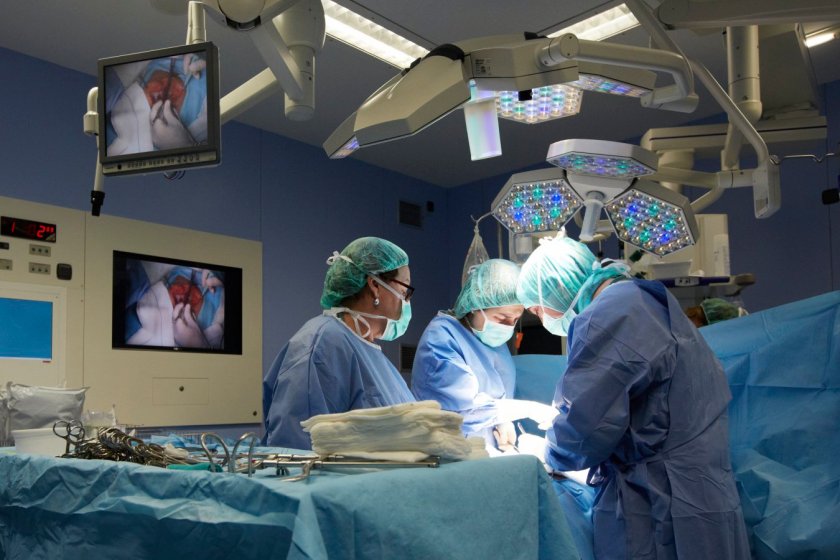
On October 1, 2026, New Scientist reported on an unusual add-on to prostate cancer surgery. During the operation, surgeons wrap thin sheets of dried amniotic membrane from donated placentas around the delicate nerves that run along the prostate, with the aim of speeding the return of erections. According to New Scientist, a review of thousands of surgeries suggests that men who received the wrap achieved an erection within about one week of surgery, compared with about two weeks for men who did not. "To help men get better erections, we're using donations [of placentas] from women," Shirin Razdan, a surgeon at HCA Florida Kendall Hospital in Miami, told the magazine.
Why It Matters
Erectile dysfunction after prostatectomy is among the most common and least-discussed side effects in men's cancer care, and it creates a large, well-defined patient population for the ED market: PDE5 inhibitors used for "penile rehabilitation," vacuum devices, injections and implants. A surgical adjunct that shortens the gap between surgery and first erection could change that pathway. Earlier function may mean earlier and more successful rehab, but it could also reduce how long men depend on post-op ED products. The bigger story is the regenerative-medicine angle. Amniotic membrane products are already used in wound care and ophthalmology. If urologists adopt them as a nerve wrap, expect tissue-product suppliers to market directly into urology. Expect the evidence debate seen elsewhere in the ED market (shockwave therapy, PRP "P-shots") to follow, with randomized data the key thing to watch before anyone sells this as a cure.The idea is that the cavernous nerves controlling erection are often stretched, bruised or damaged during radical prostatectomy, even with nerve-sparing technique, and recovery can take months or longer. Placental tissue contains growth factors and anti-inflammatory components that researchers think may support nerve repair. Nigeria's Vanguard, following up on October 3, added caveats. Reaching the first erection sooner does not prove that full sexual function comes back, does not show how long any benefit lasts, and does not isolate the membrane as the cause. Whether the procedure adds cost or risk is also still an open question.
Afterglow could not access the full New Scientist article or the underlying paper. The figures above are the publicly available summary, and the study design, including whether it was a retrospective comparison, is not confirmed. Treat the result as an early signal, not established practice.
Sources
- Placenta wrap hastens erection recovery after prostate surgery — New Scientist
- Dried placenta may help men regain erections faster after prostate surgery – Study — Vanguard
Update — 2026-10-03
Initial entry — story first created.
Update — 2026-10-13
A second nerve wrap reports results, this time a commercial device. On October 12–13, 2026, ASX-listed Orthocell (ASX:OCC) reported early clinical results for Remplir, its collagen nerve-repair wrap, used in robotic nerve-sparing prostatectomy. This is the same post-surgery erectile-recovery problem the placenta-membrane approach targets. The data are thin. In an initial five-patient case series (ages 57–69, advanced cancer with nerve preservation limited to one side), three of the four men with erectile function before surgery showed some return of function within 12 months: one using oral medication and two reporting partial recovery with additional treatment. Three of five regained full urinary continence without pads within six months. Remplir was implanted in all five without technical complications or significant extra operating time, and no device-related complications were reported over about 12 months.
The commercial claims are the bigger story. Orthocell says no additional regulatory approvals are needed to use Remplir in prostatectomy in the seven jurisdictions where it is already approved, including the U.S. It says the device has already been used in more than 300 Australian prostatectomies, and it puts U.S. volume at about 115,000 prostatectomies a year, which it says lifts its addressable market from US$1.6B to US$2B. MD Paul Anderson: "This pilot did what a first series should... The next step is a larger, adequately powered, prospective trial."
Read: two very different wraps, a donated-placenta amniotic membrane and a manufactured collagen conduit, are now competing for the same nerve during prostatectomy. Neither has randomised evidence that it restores erections better than nerve-sparing technique alone, and a five-patient series with no control arm cannot show that. Proactive Investors also discloses a commercial relationship with Orthocell. What is new is that this is now a device sales story. Because Remplir is already cleared, surgeons can adopt it off the back of case series, which makes the planned prospective trial the evidence to watch.