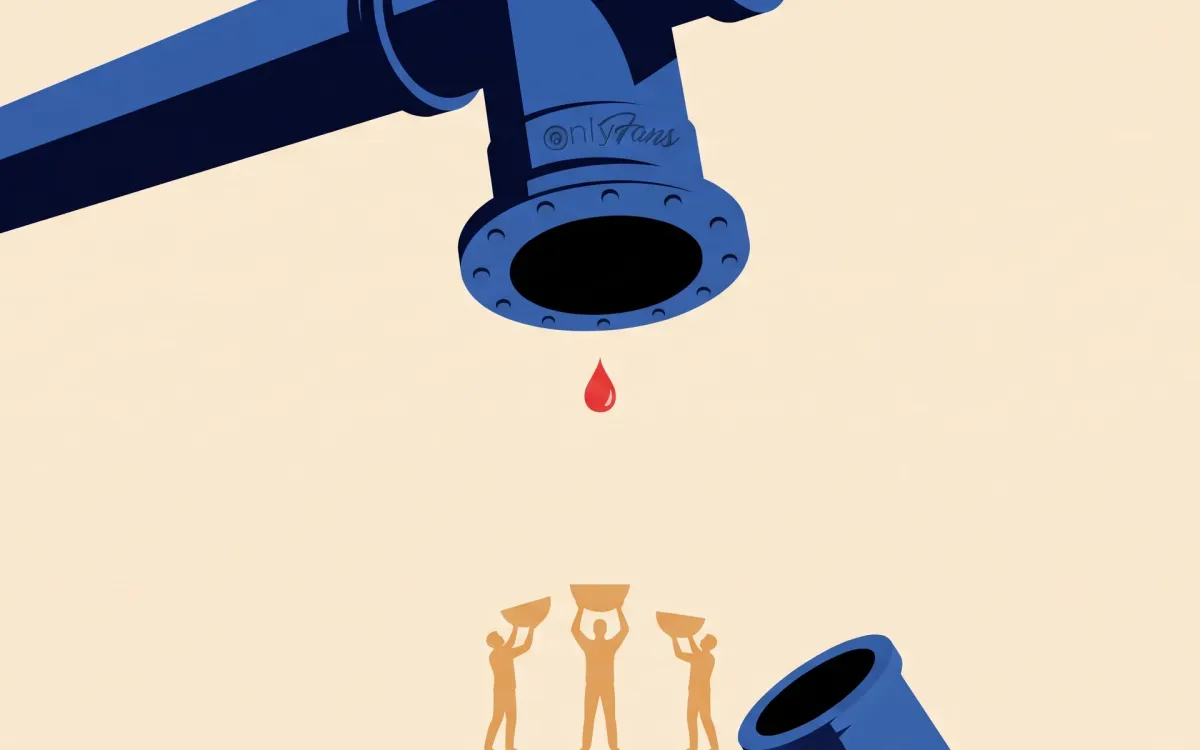
On August 12, 2026, two women who spent 2019 and 2020 recruiting creators onto OnlyFans filed a proposed class action against the platform's owner, alleging that a referral commission the company advertised in capital letters as lasting for "LIFETIME" was cancelled once the traffic it generated was no longer needed. The complaint, docketed as Hardesty v. Fenix International Limited, case 8:26-cv-02189 in the U.S. District Court for the Central District of California, Southern Division, names Fenix International Limited and subsidiary Fenix Internet LLC.
Why It Matters
This is a contract case, but it is also a referendum on how creator-economy platforms treat the people who bootstrap them. Referral and affiliate programs are the standard growth mechanism across adult content platforms, cam sites and pleasure-product retail alike, and they are almost always framed as advertising rather than contract — which is precisely the ambiguity being litigated here. A ruling that "LIFETIME" in promotional copy creates an enforceable unilateral contract would ripple well beyond OnlyFans. It also lands during a busy legal season for Fenix. CourtListener records show *Hardesty* is at least the third federal suit filed against Fenix International Limited in 2026, following matters in the Western District of Texas and an earlier Central District of California case. For a company that has repeatedly been floated as an IPO candidate, a certified class of early recruiters claiming a permanent revenue share is exactly the sort of contingent liability that shows up in a prospectus.Plaintiffs Alison Hardesty of Huntington Beach, California, and Erika Heidewald, now in Manor, Texas, bring claims for breach of contract, promissory estoppel pleaded in the alternative, and conversion, with counsel from Hagens Berman Sobol Shapiro LLP. Jurisdiction is asserted under the Class Action Fairness Act on the basis that the class exceeds 100 members and the amount in controversy exceeds $5 million.
The mechanics at issue: OnlyFans launched in 2016 with a program paying a referring user 5% of the gross revenue produced by any creator who signed up through their link. Critically, that 5% came out of the platform's own 20% cut rather than the creator's 80% — meaning Fenix handed a quarter of its own take to whoever made the introduction. Per the complaint as reported by PPC Land, promotional material stated referrers would "earn 5% on all income, from any user who joins via [their] link" for "LIFETIME," with a companion graphic reading "This is every user, every payment, every month..." and the Partners page adding that "Unlike other well known referral programs this is not a one off payment."
The filing argues the program was central to solving OnlyFans' cold-start problem, citing founder Tim Stokely's own public account of using a referral programme to populate the marketplace. Figures drawn from Fenix's annual reports in the complaint track the result: subscribers rose from 13 million in 2019 to 188 million in 2021, creators from 348,000 in 2019 to more than 1.6 million by end of fiscal 2020, with platform transactions up 553% during 2020 to $2.4 billion. For roughly two years the offer existed only as advertising — accepted, the plaintiffs argue, by performance — before Fenix folded it into its Terms of Service around March 2018 at clause 15.2. The plaintiffs contend Fenix never reserved a right to revoke those terms retroactively.
Sources
- OnlyFans owner faces class action over 5% lifetime referral commissions — PPC Land
- Hardesty v. Fenix International Limited, 8:26-cv-02189 — CourtListener docket
Update — 2026-08-20
Initial entry — story first created.