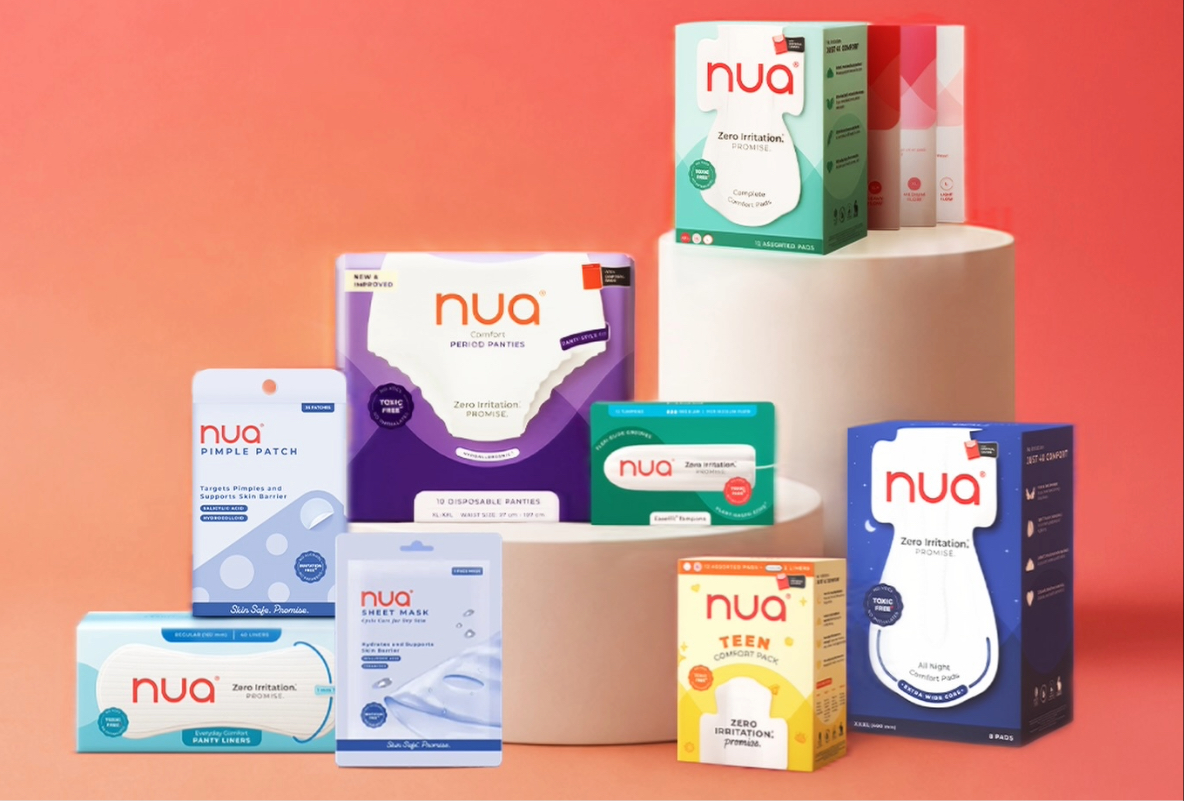
On September 7, 2026, Mumbai-based women's wellness brand Nua announced a $50 million Series C led by Peak XV Partners and Filter Capital, with participation from existing investors Mirabilis Investment Trust and Footpath Ventures. The round includes both primary capital and a secondary component, giving partial exits to Kae Capital, Lightbox VC and existing angel investors — a detail worth noting, because secondaries in a femtech round signal that early investors can now find buyers for their positions, historically the category's weakest link. Entrackr reports the company has raised roughly $71.5 million to date, including a $4 million (Rs 35 crore) pre-Series C led by Mirabilis in February 2025.
Why It Matters
Femtech's persistent complaint has been that the sector could raise seed money on mission and then stall at growth stage. A $50M Series C into an Indian period-care company, led by Peak XV — the former Sequoia India franchise — is a counterexample at exactly the stage where the category usually thins out. The partial exits for Kae Capital and Lightbox matter just as much: liquidity for early femtech investors is what recycles capital back into the next cohort of founders. Geographically, this is a reminder that the growth in intimate consumer health is not primarily a Western story. Three million monthly customers in India is a scale most US and European sexual wellness brands will never approach, built through a channel mix — pharmacy chains plus DTC — that looks nothing like the Sephora-and-Target playbook dominating North American coverage. For investors doing diligence on the sexual wellness and femtech adjacency, the operating lesson is that distribution through trusted health retail, paired with an owned data and community layer, is producing the category's larger outcomes. The intimate hygiene and period care segment remains the most reliable on-ramp to a broader women's health franchise.Nua, founded in 2017 by Ravi Ramachandran, sells across period care, maternity care and everyday intimate wellness through a direct-to-consumer business and retail partners including Apollo Pharmacy and Wellness Forever. The company says it reaches more than 3 million women and girls every month. Nua claims to have scaled its annualised revenue run rate from Rs 100 crore to Rs 500 crore over the past 24 months while remaining profitable — a combination of growth and profitability that is rare in consumer DTC. According to Peak XV, Nua is now the second-largest online player in India's women's wellness category. The fresh capital is earmarked for brand building, distribution expansion, and R&D and new product development.
The structural story here is the expansion beyond physical product. Nua runs its own period tracking app and a community platform called SecretKeeper, which puts it in the same architectural category as Flo or Clue — consumer goods brand plus data layer plus community — rather than the pure-play pad-and-tampon business the category started as. That combination is what justifies a growth round at this size, and it is also what attracts regulatory attention to intimate data handling in a market where India's Digital Personal Data Protection framework is still bedding in.
The round lands in a notably busy fortnight for women's health capital formation. Norway's DNB launched what it bills as the world's first retail women's health equity fund on September 2, Healthy Moms, Healthy Babies America committed $100M to maternal healthcare on September 11, and the FemTech Association Asia published research on September 7 showing Singapore's femtech startup count doubling to 50. Capital is moving into the category from several directions at once — strategic, institutional and philanthropic.
Sources
- Nua Secures $50M to Scale Feminine Hygiene Business — Femtech Insider
- Women's wellness brand Nua raises $50 Mn led by Peak XV, Filter Capital — Entrackr
Update — 2026-09-15
{Initial entry — story first created.}