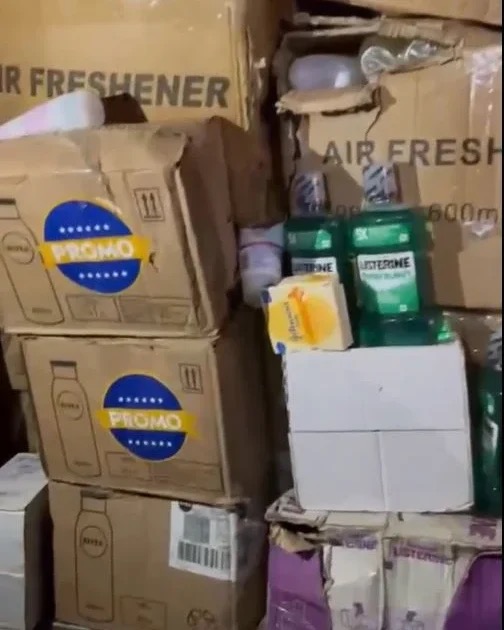
On Saturday, November 7, 2026, Nigeria's National Agency for Food and Drug Administration and Control (NAFDAC) announced the results of a weekend enforcement raid on Igbudu Market near Warri, Delta State, and issued a blunt consumer warning about K-Y Jelly. Officers from NAFDAC's Asaba Zonal Office, backed by the Department of State Services, the Nigerian Army and the market union, acted on intelligence about counterfeit regulated products. They removed suspected fakes carrying the Listerine, Nivea and SC Johnson brand names, along with K-Y Jelly lubricant.
Why It Matters
When a regulator says an entire branded category on shelves is presumptively fake, the problem is the supply chain, not a few bad batches. A famous brand that has gone years without authorised distribution leaves a gap that counterfeiters fill under the same name. For sexual-wellness brands, it is a reminder that pulling out of or neglecting a market doesn't make the brand disappear. Someone else keeps selling it, and the brand takes the reputational hit when it fails. It also shows why **traceability** matters. This same week pjur announced its medical-device lubricants are now publicly listed in the EU's **EUDAMED** database, so consumers and pharmacists can check a product against an official register. In markets without that infrastructure, enforcement depends on raids like this one. Earlier this week, Kenya's regulator warned against inserting cetirizine tablets for "tightening," another case of people turning to unsafe products in place of legitimate ones. Together they point to unmet demand for trustworthy, affordable intimate-care products across West and East Africa.The lubricant warning is the unusual part. NAFDAC said the product's marketing authorisation holders had told it that the last authorised supply of K-Y Jelly into Nigeria was more than five years ago. "Any KY Jelly in the market you see today is suspect," a NAFDAC official told ThisDay, urging consumers not to buy it because its source can't be verified. Punch, quoting the agency's Facebook statement, carried the same caution. NAFDAC also denied social-media reports that its officers were chased out of the market, saying the union cooperated and the team "visited all the shops."
NAFDAC did not say what the suspect lubricant contains, and it hasn't published lab results. That is the core risk with counterfeit intimate products: the buyer can't know the formulation, osmolality, preservatives or microbial contamination of something applied to mucosal tissue. K-Y is a Reckitt brand (it sits alongside Durex in the portfolio Reckitt recently put through UK menopause-friendly MTick certification). Neither the coverage nor NAFDAC names the marketing authorisation holder, and Reckitt has not commented publicly on the Nigerian market.
Sources
- NAFDAC Raids Delta Market, Seizes Suspected Fake Nivea, Listerine, KY Jelly Products — ThisDay (Sylvester Idowu, Nov 9, 2026)
- NAFDAC seizes suspected fake Nivea, Listerine products in Delta market — Punch (Nov 8, 2026)
- pjur Medical Devices Now Registered in the European EUDAMED Database — YNOT (Nov 6, 2026)
Update — 2026-11-09
Initial entry — story first created.