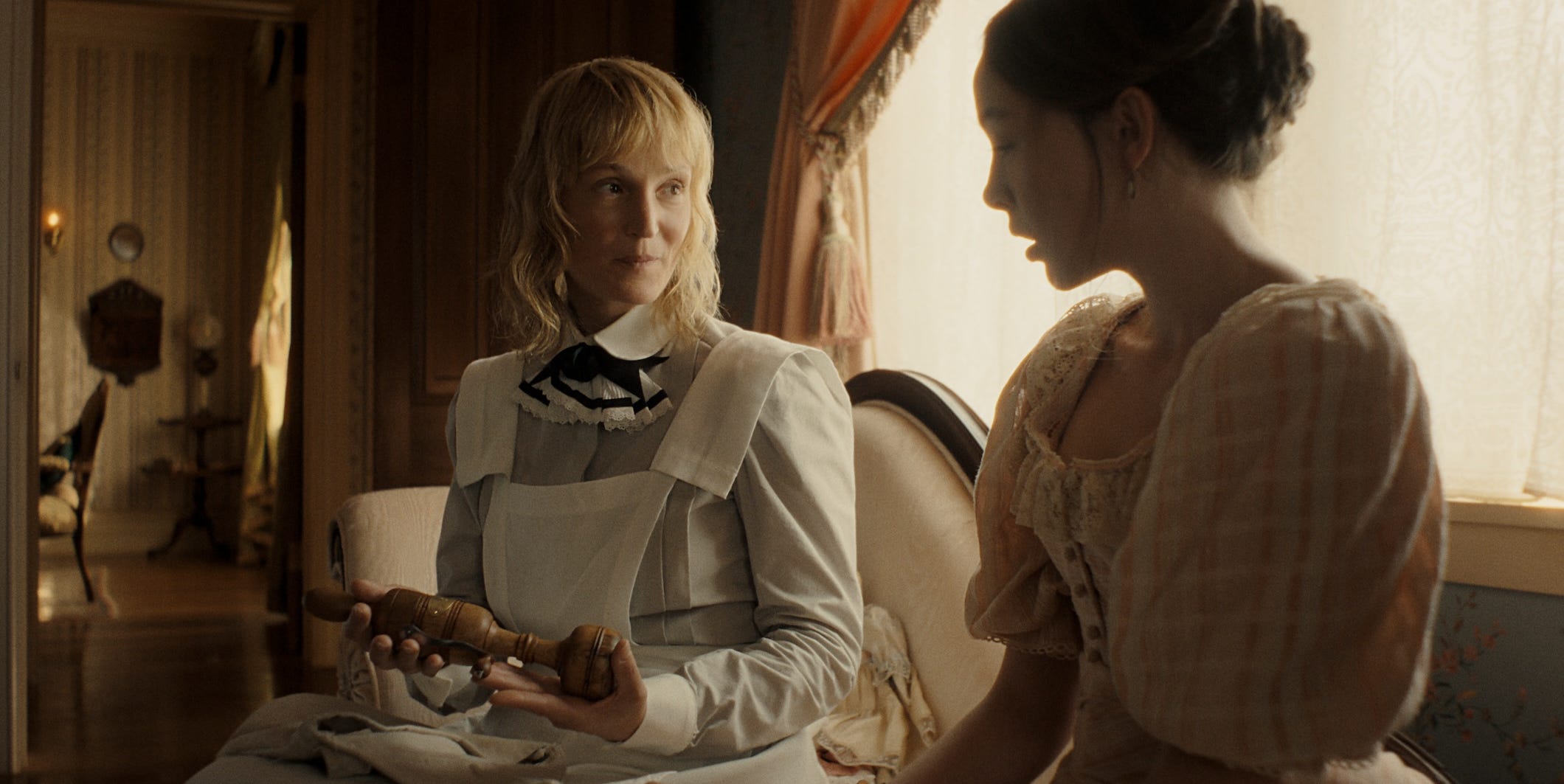
On September 20, 2026, Cosmopolitan's Brit Dawson published a fact-check of the two 19th-century sex devices that appear in Monster: The Lizzie Borden Story, which premiered on Netflix in mid-September — and the answer turns out to be a clean split: one is documented, the other is largely a myth the show borrowed wholesale from the internet. Mashable covered the same scenes on September 17–18 as part of its broader fact-versus-fiction breakdown of the Ryan Murphy series.
Why It Matters
This is a small story with a real industry consequence: the pleasure industry's most-cited piece of heritage marketing is, at best, unsettled history. "Doctors invented the vibrator to treat hysteria" has been deployed in brand copy, museum exhibits, press releases and founder keynotes as shorthand for legitimacy — the idea that this technology was always medical and only later got stigmatized. When a mass-audience Netflix series dramatizes the myth and mainstream outlets fact-check it in the same week, that framing gets less usable. Brands leaning on it should expect to be corrected. The Veedee half of the story is the more interesting commercial precedent anyway, and it's the one that's actually documented. A device sold explicitly as a general-purpose therapeutic massager, marketed for headaches and wrinkles, whose sexual application spread by word of mouth without the manufacturer ever naming it, is a strategy the industry has been running continuously ever since — from the Hitachi Magic Wand's "personal massager" branding to the fruit-shaped vibrators now designed specifically so social platforms can't tell what they're for. The euphemism isn't a historical curiosity. It's the same censorship workaround, 120 years older.The Veedee is real. In episode 1, the Borden family's maid Bridget Sullivan introduces Lizzie to a hand-cranked wooden device — it looks like a pepper grinder — as a remedy for severe period pain. That device existed. Per the Science Museum Group, cited by Cosmopolitan, a 1903 Veedee instruction manual described the device as being for "curative vibration, vibratory massage, nerve stimulation, and blood circulating." The late-1800s therapeutic context was that massage was believed to treat almost anything: the Veedee was marketed for headaches, colds, digestive complaints and flatulence, and the same manual pitched it as a beauty tool for double chins, baldness and wrinkles. It was not sold as a sexual device. As Dawson puts it, its sexual utility — like the Hitachi Magic Wand's decades later — appears to have been a happy accident rather than a design goal.
The Chattanooga is mostly not. In episode 2, Bridget orders a steam-powered contraption for Lizzie — essentially a dildo on a crank-driven arm. Cosmopolitan couldn't verify it. A 1999 New York Times article suggests a "Chattanooga" did exist and cost $200 plus freight in 1904, and a 2022 blog post describes a two-meter, coal-fired appliance requiring two men to shovel for it — which Dawson flags as sounding too absurd to be true. More usefully, she identifies what the prop actually appears to be copied from: an unverified photo circulating online labeled "The Manipulator," attributed to Dr. George Taylor, a real American physician and inventor who did write the first book recommending massage for gynecological problems, in 1871. Her conclusion is that the show's device is part real 19th-century vibrator, part fiction about 19th-century vibrators.
The bigger correction underneath both. Dawson explicitly notes that many of the stories about early vibrators being invented or routinely used by doctors to treat female "hysteria" are likely myths. This matters because that narrative — physicians inducing "hysterical paroxysm" as standard medical practice, which the show stages as backstory — has been the single most repeated origin story in popular sex-toy history for two decades, propagated by the 2011 film Hysteria and a great deal of casual writing. Historians of medicine have been pushing back on it for years. Notably, the devices never actually get used on screen in Monster; they function as period texture and as a vehicle for the show's invented intimate relationship between Lizzie and Bridget, which has no historical evidence behind it.
Sources
- Yes, Those Wild 19th-Century Sex Toys in 'Monster' Were Sort of Real — Cosmopolitan (via AOL)
- What 'Monster: The Lizzie Borden Story' gets right (and wrong) about the Borden murders — Mashable
Update — 2026-09-22
Initial entry — story first created.