On October 15, 2026, the Council of Europe announced that its Committee of Ministers has adopted a new recommendation urging member governments to provide comprehensive sexuality education that is "age-appropriate, inclusive and science-based." It asks states to give that education a legal or policy basis and to fund it with "adequate financial, material and human resources" in every educational setting, public or private, formal or non-formal. The most pointed line is aimed at opt-outs: "Exemptions to comprehensive sexuality education, in law or in practice, undermine the protection of children from various forms of violence." The Council also says it recognises "parents' responsibility for child's upbringing."
Why It Matters
Committee of Ministers recommendations are not binding. Even so, a pan-European body has now explicitly linked sex education to online-harms policy and called opt-outs a protection failure. Governments facing pressure over porn age-verification and deepfake abuse now have an official text that treats education, not just blocking, as part of child safety. That helps the sex-ed and consent-education platforms in our [Section P coverage](/stories/three-decades-cse-evidence-review), and it pushes back on the trend we flagged in Australia, where proposed online-safety harm definitions threatened to [sweep up sex and HIV education](/stories/australia-esafety-duty-of-care-escalation). The open question is the gap between endorsement and delivery. The recommendation asks for money and statutory footing, and many member states have neither, while some face organised resistance to exactly the "inclusive" content the text calls for.The recommendation presents sex education as violence prevention. The Committee of Ministers says it is gravely concerned that rapid technological change has made children more vulnerable. It points to "the ever-earlier exposure of children to pornographic content and child-sexual-abuse materials, which may serve as a primary source of information on sexuality, thereby fostering distorted perceptions of bodies and relationships." The curriculum it describes covers consent, bodily integrity, personal autonomy, boundaries and power dynamics. Children should learn to recognise and respond to sexual and technology-facilitated violence, whether it happens online or offline and whether it comes from adults or other children, and should know how to reach reporting and support services. The text also recommends teaching what consent means and what the legal age of consent is.
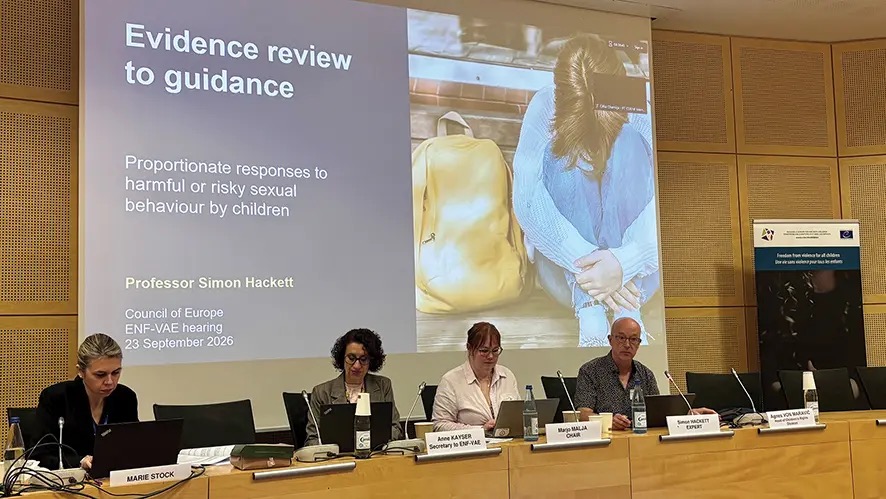
Children were consulted. According to the Council, the recommendation reflects input from 245 children and young people aged 9 to 22 in 12 countries. They described current sex education as "limited, optional, biology-focused and insufficiently adapted to their age," with consent, boundaries, violence prevention, diversity and online risks under-covered. They asked for teaching that starts early, develops with age, is based on reliable evidence and takes place in "safe, non-judgmental settings." Georgia Today notes that the recommendation follows a September 23 hearing on preventing sexual violence among children held by the Council's ENF-VAE committee, and that it is addressed to all 46 member states.
Sources
- Sexuality education about consent and boundaries in relationships helps protect children from violence from early age — Council of Europe (Oct 15, 2026)
- Council of Europe Urges Comprehensive Sexuality Education to Protect Children from Violence — Georgia Today (Oct 15, 2026)
Update — 2026-10-19
Initial entry — story first created.