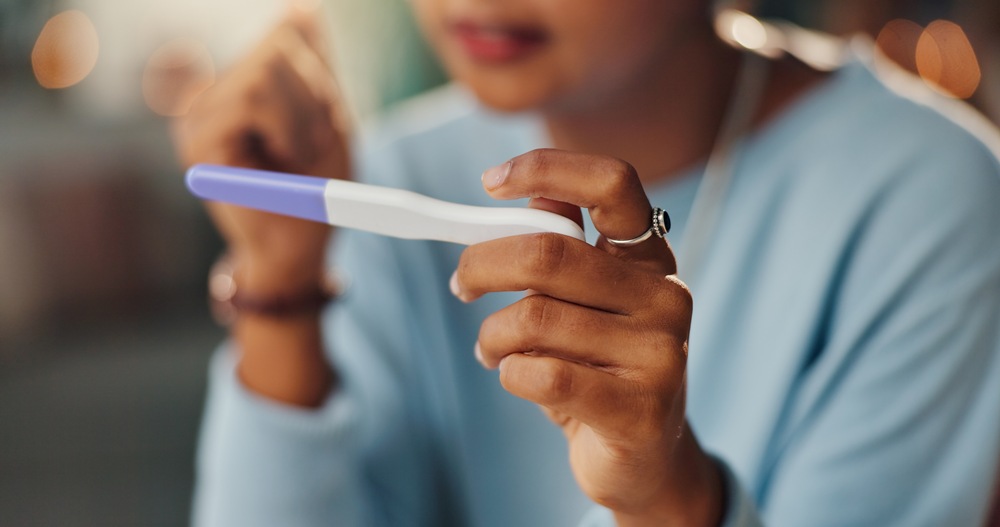
On September 18, 2026, FemTech World reported on a clinical validation study finding that the Mira at-home hormone monitor identifies ovulation with accuracy closely matching hospital-grade ultrasound — the peer-reviewed paper, "Validating ovulation prediction and confirmation with the Mira monitor: blinded ultrasound and serum hormone comparison," was published in Reproductive BioMedicine Online (Vol. 53, Issue 5, article 105881) on July 18, 2026, by Bouchard, Bedaiwy, Talhouk, Nakhuda, Yong and Doyle-Baker. The study followed 121 ovulatory cycles over 18 months and included 890 transvaginal ultrasound scans, comparing the device's readings against both ultrasound-confirmed ovulation and blood serum testing.
Why It Matters
Femtech's credibility problem has never been the hardware — it has been the evidence base. Cycle-tracking apps and ovulation tests have been sold to tens of millions of people on algorithmic claims that were rarely tested against a clinical reference standard, and the sector has paid for that in regulatory scepticism, clinician distrust and a persistent discount when investors compare it to diagnostics. A STARD-compliant blinded ultrasound comparison across 890 scans is precisely the type of study that closes that gap, and it is the kind of paper a company can take into a payer or FDA conversation rather than a marketing deck. Two numbers in the study should change product roadmaps beyond the company that commissioned the validation. First, 11% of cycles in women with regular periods were anovulatory — a population-level finding that undermines the core assumption behind date-based prediction and means a meaningful share of users of calendar apps are being told they ovulated on a day they did not ovulate at all. Second, in 12.4% of cycles ovulation happened *before* the LH peak, which is a structural blind spot for the single-threshold LH strip that still dominates the drugstore shelf. Quantitative multi-hormone monitoring is not a premium feature in that light; it is the fix for a known false-negative mode. The commercial read-through extends past fertility. Afterglow has tracked the steady migration of hormone measurement into adjacent categories — perimenopause staging algorithms, wearable progesterone patches for IVF monitoring, continuous hormone sensing — all of which depend on the same premise this paper tests: that non-invasive at-home hormone data can stand in for clinic-grade measurement. A validated 96% agreement with ultrasound on a specific, hard endpoint makes that premise substantially easier to defend. Note the appropriate caveat: this validates ovulation detection in ovulatory cycles, not pregnancy outcomes or contraceptive efficacy, and it should not be read as either.The headline result: the day of ovulation as confirmed by repeated ultrasound fell within one day of the luteinising hormone peak detected by the device in 96% of cycles studied. The authors say this is the first time a quantitative, multi-hormone at-home monitor has been validated against blinded ultrasound under STARD guidelines, the internationally recognised standard for reporting diagnostic accuracy research. The device measures four analytes from urine: LH, the oestrogen metabolite E13G, the progesterone metabolite PDG, and follicle-stimulating hormone. Readings from first-morning urine samples tracked blood serum levels drawn within 90 minutes, with the strongest correlation for LH, followed by the progesterone and oestrogen metabolites, and a weaker but still notable link for FSH.
The findings inside the data are arguably more consequential than the accuracy headline. Among participants with typically regular periods, 11% of cycles were anovulatory — no egg released at all. In a further 12.4% of cycles, ovulation occurred while LH was still climbing rather than after it peaked, a pattern the researchers say calendar-based apps and single-day yes/no tests would likely miss entirely. Rising oestrogen signals were detectable roughly five to six days before ovulation, reflecting natural ovarian follicle development and offering an earlier fertile-window warning than LH-only methods.
The authors position all of this against a stagnant consumer category: existing fertility trackers have largely relied on simpler binary hormone readings or date-based algorithms that, as they put it, have gone essentially unchanged for a quarter of a century. Same research group, related work: a companion paper in Journal of Ovarian Research (July 13, 2026) modelled fertile window differences across the reproductive lifespan using quantitative urine hormone monitoring, and an earlier Reproductive BioMedicine Online paper refined the ultrasound criteria for identifying ovulation using corpus luteum formation with dominant follicle collapse.
Sources
- At-home ovulation test nearly as accurate as ultrasound, research finds — FemTech World
- Validating ovulation prediction and confirmation with the Mira monitor: blinded ultrasound and serum hormone comparison — Reproductive BioMedicine Online, PMID 42600546
Update — 2026-09-19
{Initial entry — story first created.}