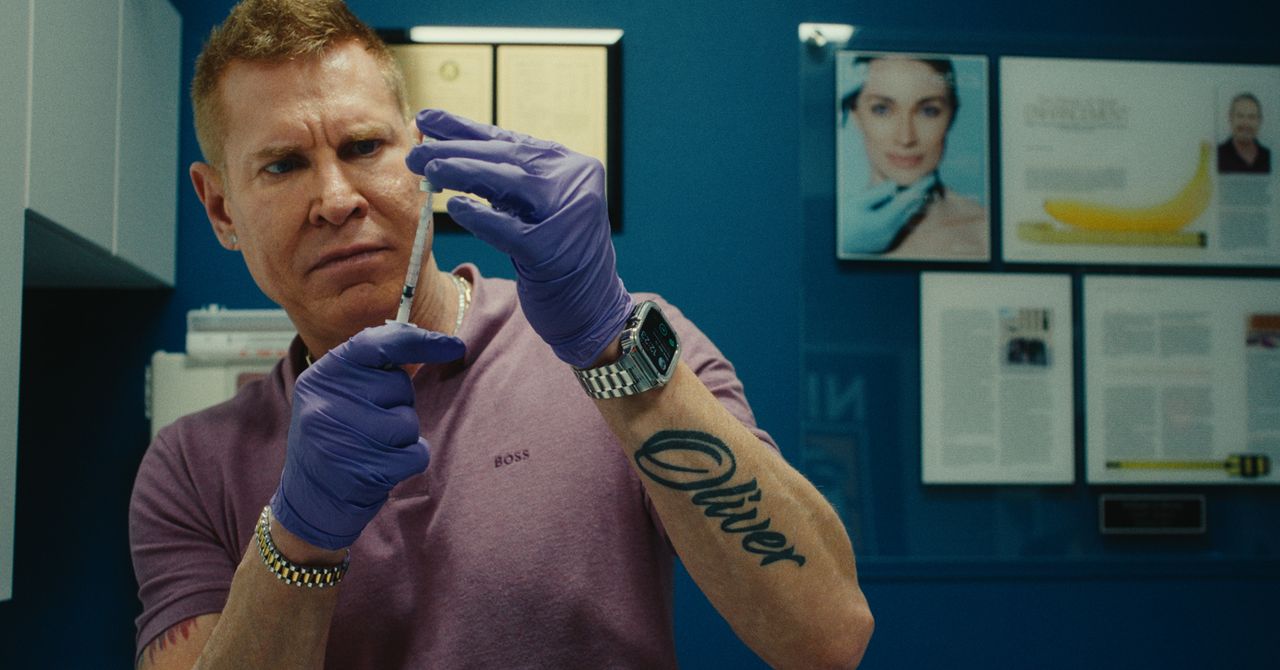
In the last week of October 2026, Daniel Lombroso's documentary Manhood, distributed by World of Wonder, opened in US theaters. WIRED (Oct 30) and The Guardian (Oct 31) both used it as a way into the fast-growing, lightly regulated business of non-surgical penile girth enhancement. The film follows Bill Moore, who runs AdvancedYou, an anti-aging and "biohacking" clinic in a Dallas strip mall. Moore sells PhalloFill, a dermal-filler injection procedure that adds girth but not length, and says he wants to make it "as commonplace as Botox." The Guardian notes that Moore is not a doctor. WIRED reports that PhalloFill has expanded to 32 clinics across the US.
Why It Matters
Penile fillers sit in the same grey zone as other male-optimization services: cash-pay, run out of med-spas, not marketed through urology, and sold on confidence rather than clinical need. Men's-health telehealth has spent years trying to legitimize ED and TRT as medicine. A mainstream documentary about a non-physician-led filler chain with recurring revenue gives regulators and plaintiffs an easy template, and it lands weeks after *The Lancet*'s men's-health series called out products that sell "performance-oriented masculinities" ([our Oct 31 story](/stories/lancet-mens-health-manosphere-series)). For the evidence-based side of the market (implants, vacuum devices, PE and ED therapeutics), the film is both a risk and an opening. The risk is guilt by association. The opening is the gap between what men are paying for and what urologists say actually helps. The only systematic data so far on the surgical alternative, the [first meta-analysis of Penuma/Himplant sleeve implants](/stories/penile-sleeve-implants-meta-analysis), puts numbers on both gains and explants. The injectable side has nothing comparable. Watch for state medical boards and the FDA's device and cosmetic-filler rules to start asking who is allowed to inject what, and where.The economics look like a subscription. WIRED reports the girth procedure costs $2,500–$4,000 per visit, that men are encouraged to come back three, four or five times, and that keeping the result means a visit once a year for life. The Guardian describes Moore selling outpatient enhancement procedures for $15,000 and $20,000 "a pop." The two outlets may be describing different packages, and neither breaks the pricing down further. Lombroso told WIRED that about 75% of the men he saw undergoing the procedure were straight and mostly "conservative-leaning," and that what they had in common was "this deep feeling of shame and social isolation." The film's central subjects include a gay former OnlyFans creator who arrives after a botched procedure elsewhere and an out-of-work father of five who moves his family in with an ex to pay for treatment.
Clinicians in the film are blunt. Board-certified urologist Paul Perito says the technique has moved from urologists into "the hands of corporate marauders." Prosthetic urology specialist Alex Tatem puts it this way: "I can fill your penis with filler, but I cannot fill the hole in your heart." Morag Yule, identified by WIRED as president of the Society for Sex Therapy, tells the magazine: "Insecurity is big business." WIRED adds context: the International Society of Aesthetic Plastic Surgery reports that men have outpaced women as the fastest-growing demographic for plastic surgery in the US. The Guardian cites a 2024 analysis of US Google searches showing rising interest in penile-enhancement injections from 2013 through 2022.
Sources
- Male Insecurity Over Penis Size Is a Booming Business — WIRED (Oct 30, 2026)
- 'Never big enough': inside the booming penis enlargement industry — The Guardian (Andrew Lawrence, Oct 31, 2026)
Update — 2026-11-01
Initial entry — story first created.